Te Whakaata o te Onepū

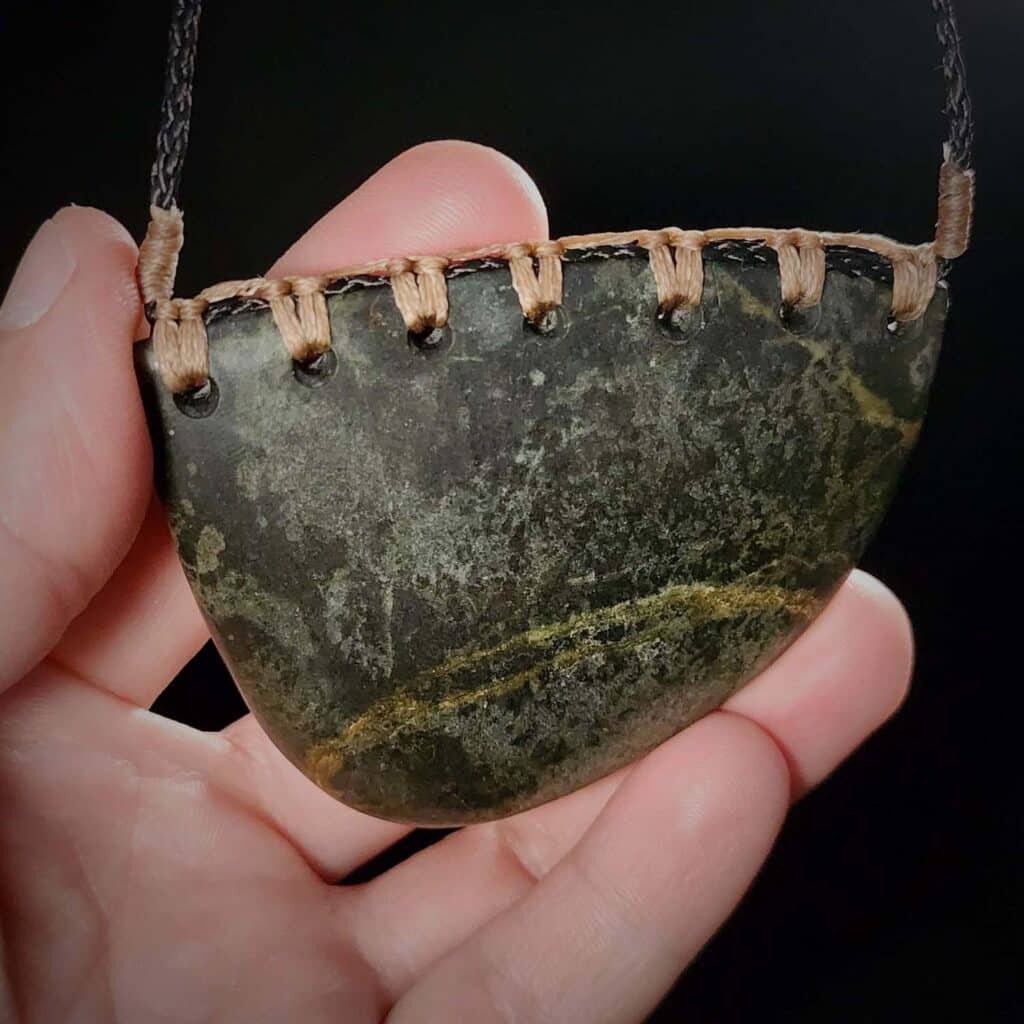
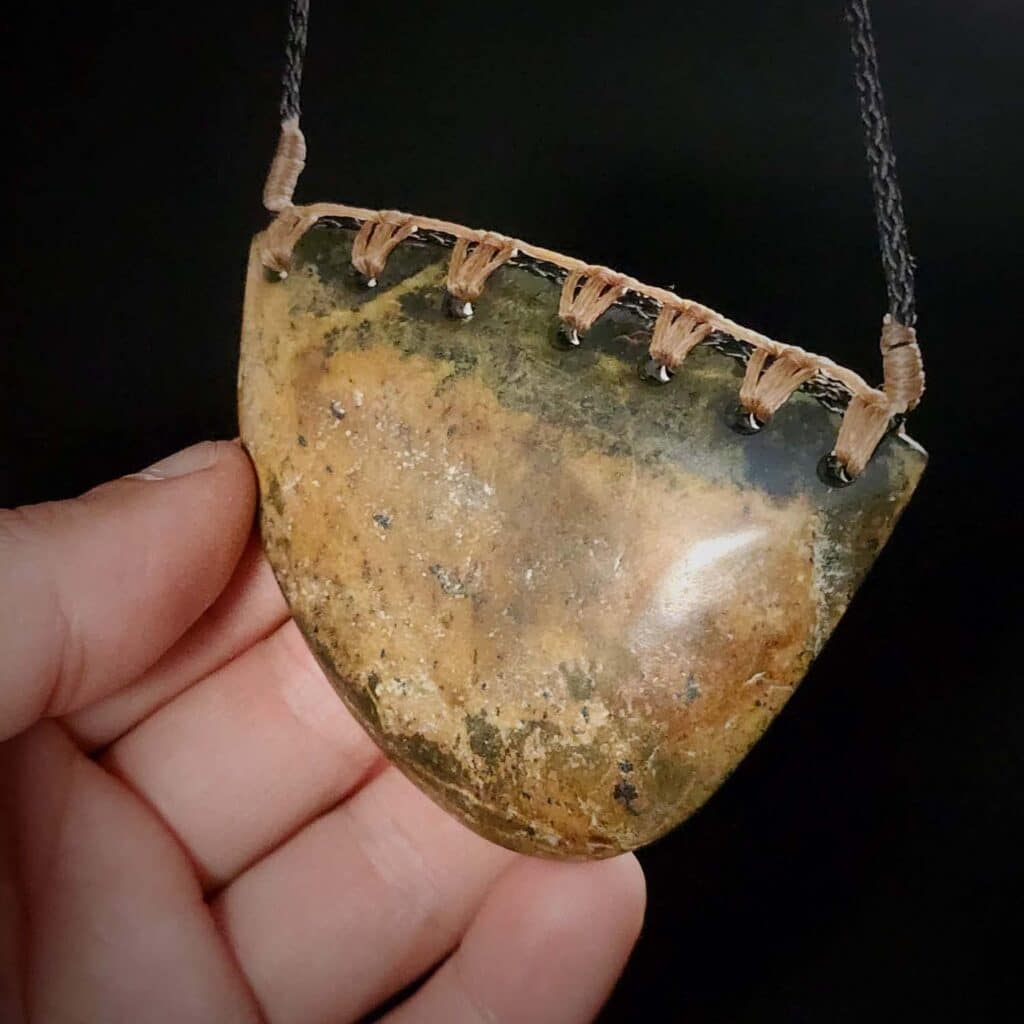
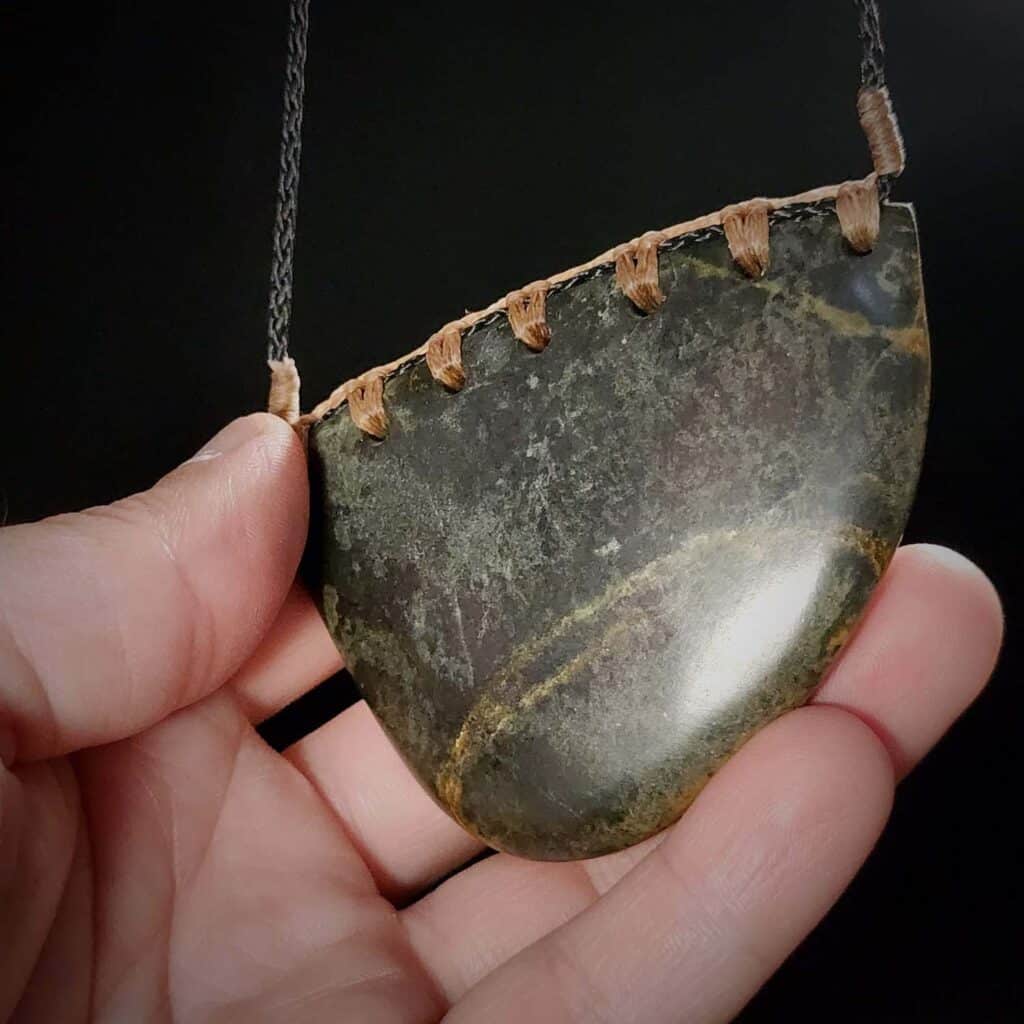
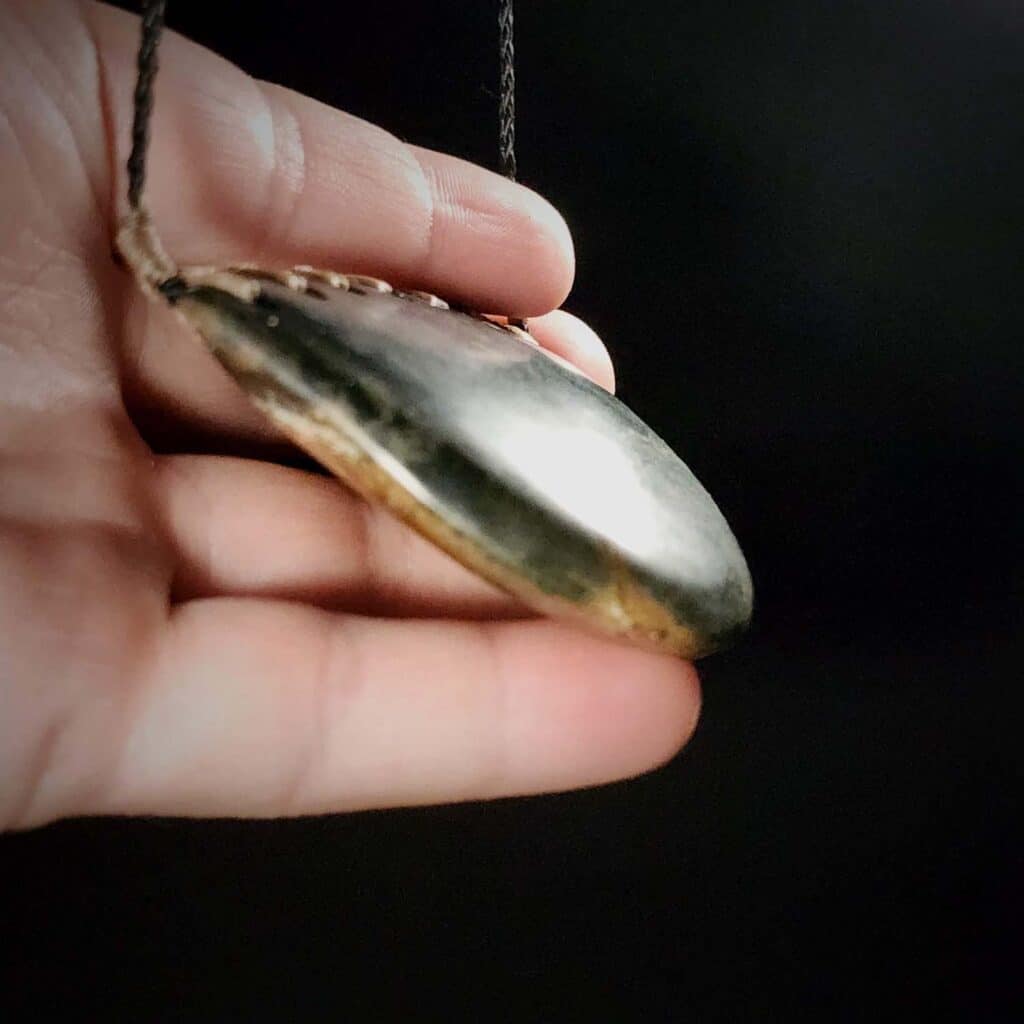
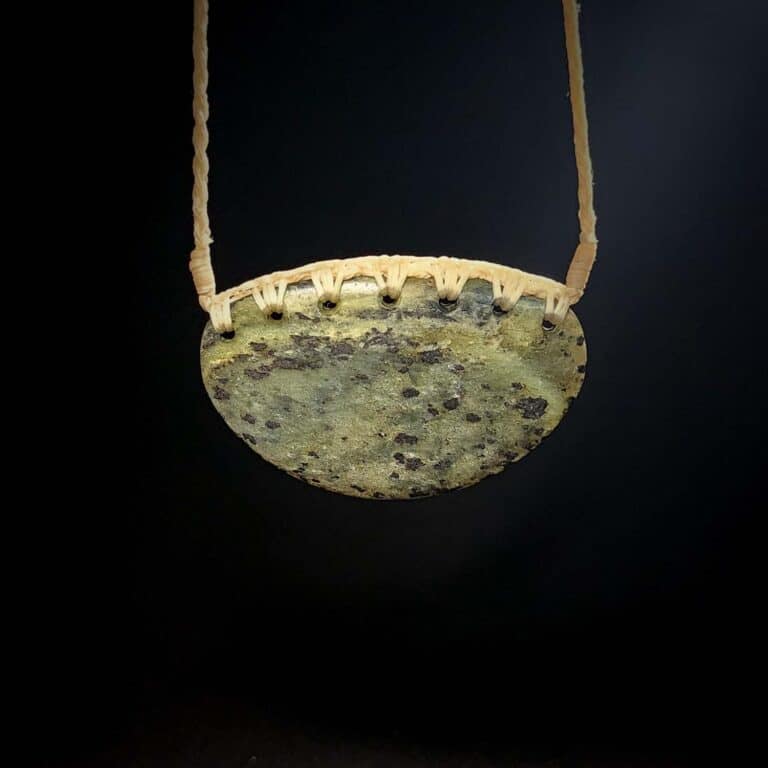
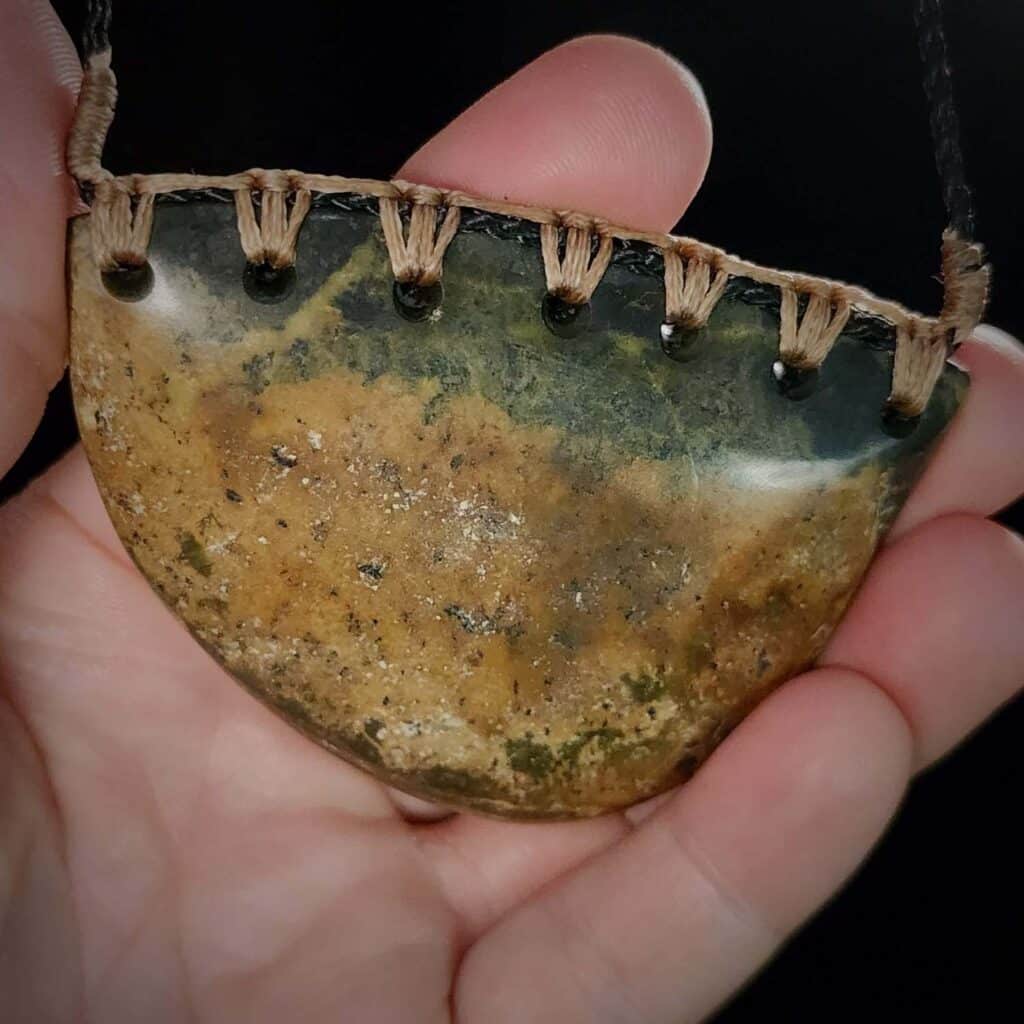
I found this stone myself, a smooth pebble of Serpentine Pounamu washed up on a beach here in Aotearoa. After carrying it home and cutting into it, I discovered rich layers of green and earthy brown inside, framed by a textured orange rind. I carved it into a Kōuma 8cm by 6cm, a traditional breastplate design, and finished it with a three-hole ringbolt lashing in brown, using a black braided cord to echo the dark outer rind.
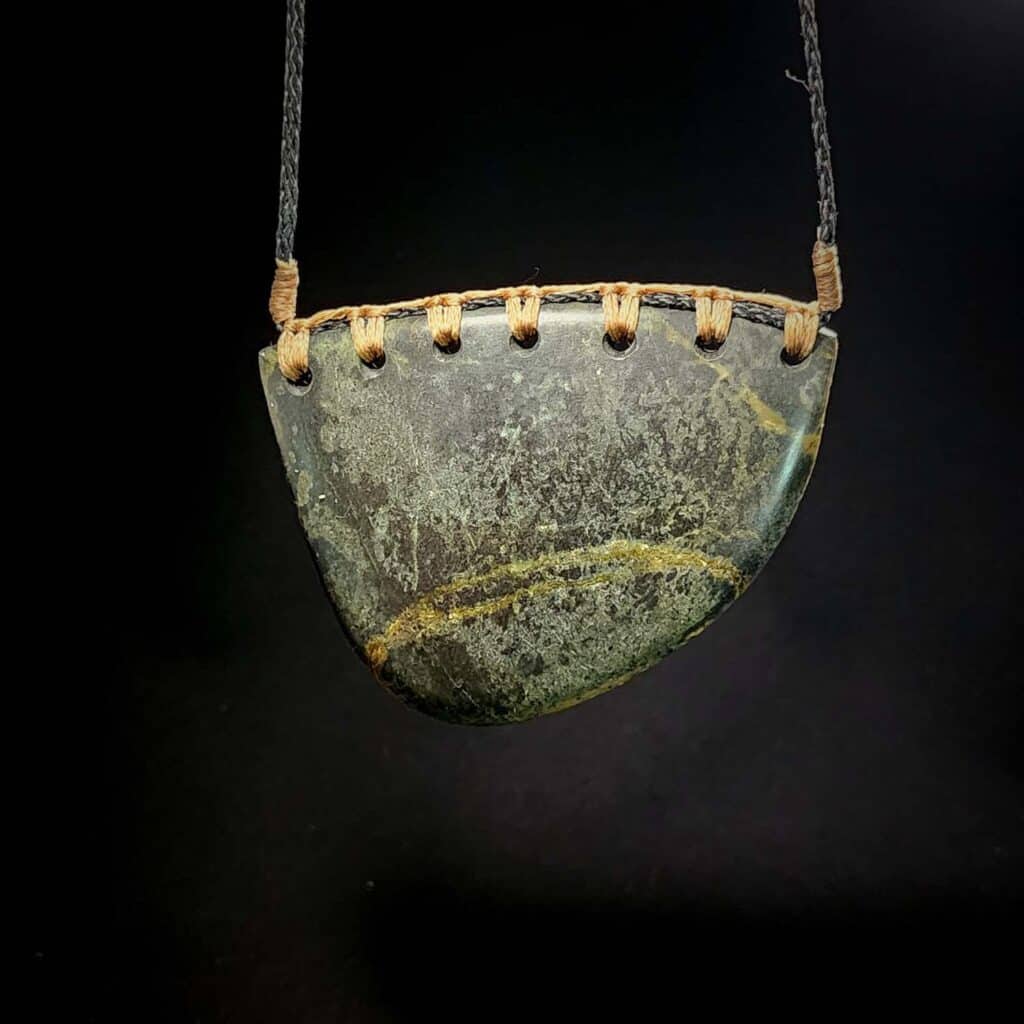
The name of this taonga, Te Whakaata o te Onepū, reflects its origin and appearance. The rind carries the rough texture and colouring of sand, while the polished face offers a reflection—both literal and symbolic. It’s a reminder to look beneath the surface, to remember where we come from, and to carry our inner strength quietly.

I filmed the full process of transforming this stone – from the beach to the finished taonga – and you can watch that on my YouTube channel.

Kōuma refers to the sternum – the central bone of the chest. A Kōuma breastplate rests close to the heart, symbolising protection, inner strength, and connection to the ancestors. The coolness of the Pounamu against the chest serves as a reminder of grounding, calm, and strength through challenge.
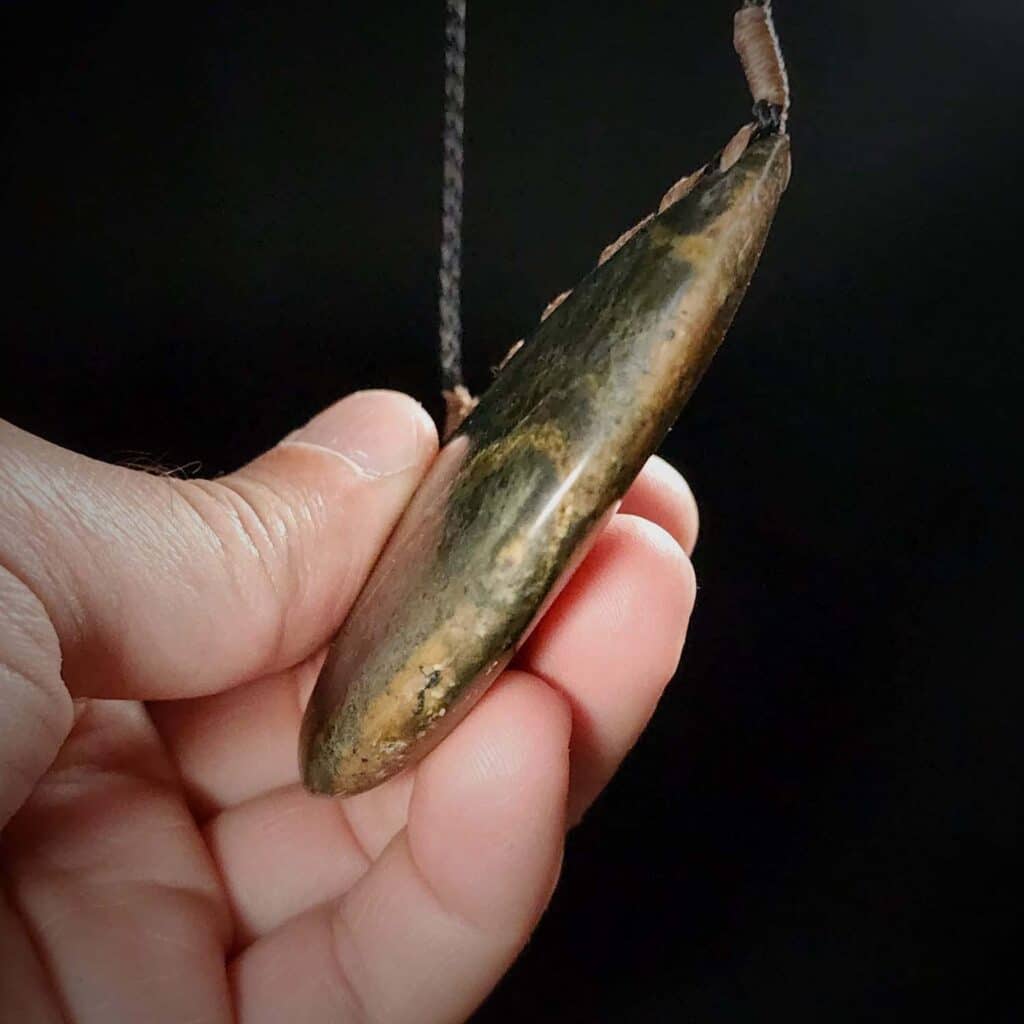
Although Serpentine is a different mineral from nephrite, in New Zealand it is still classified as Pounamu. It holds cultural and spiritual value and is protected under the same laws. This piece reminds me how much value can lie beneath the surface of something humble and overlooked, like a pebble on the beach. It connects directly to the land, the sea, and to those who take time to notice what others might walk past.
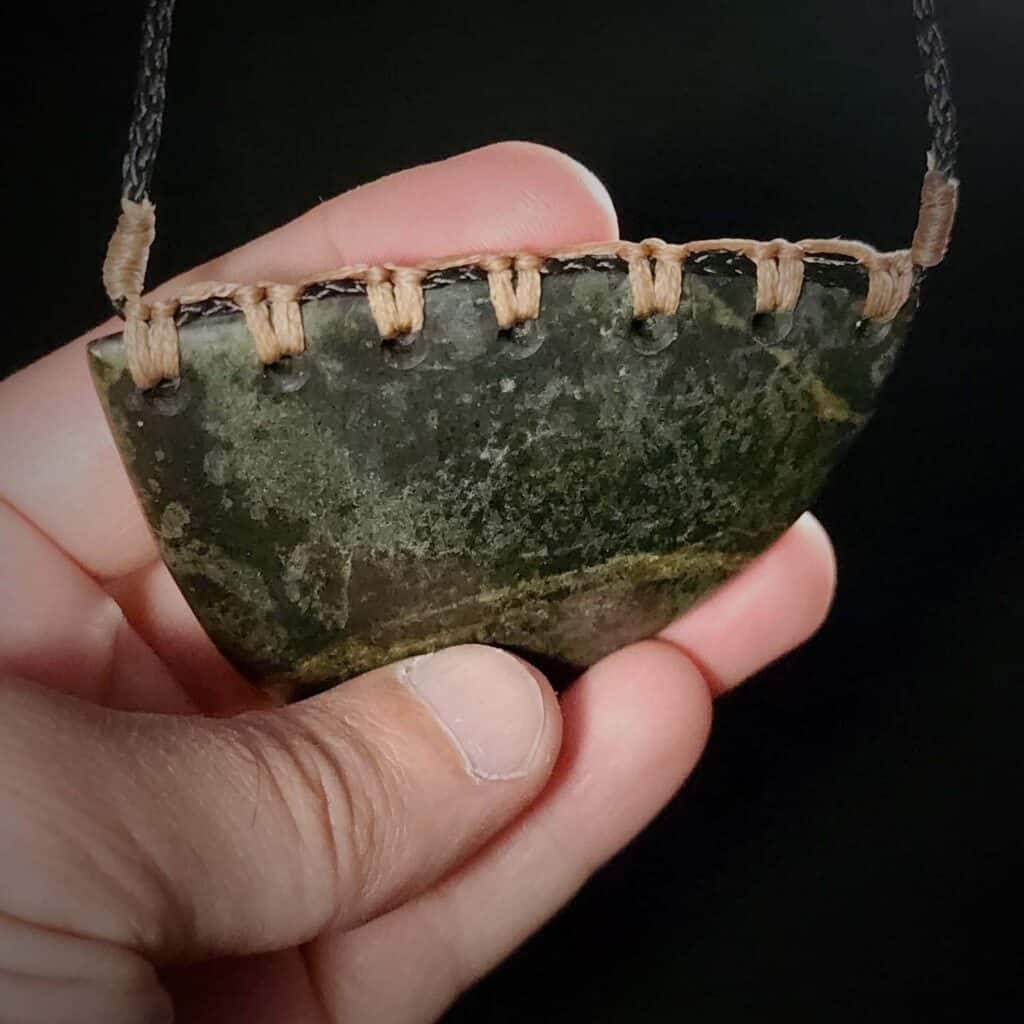
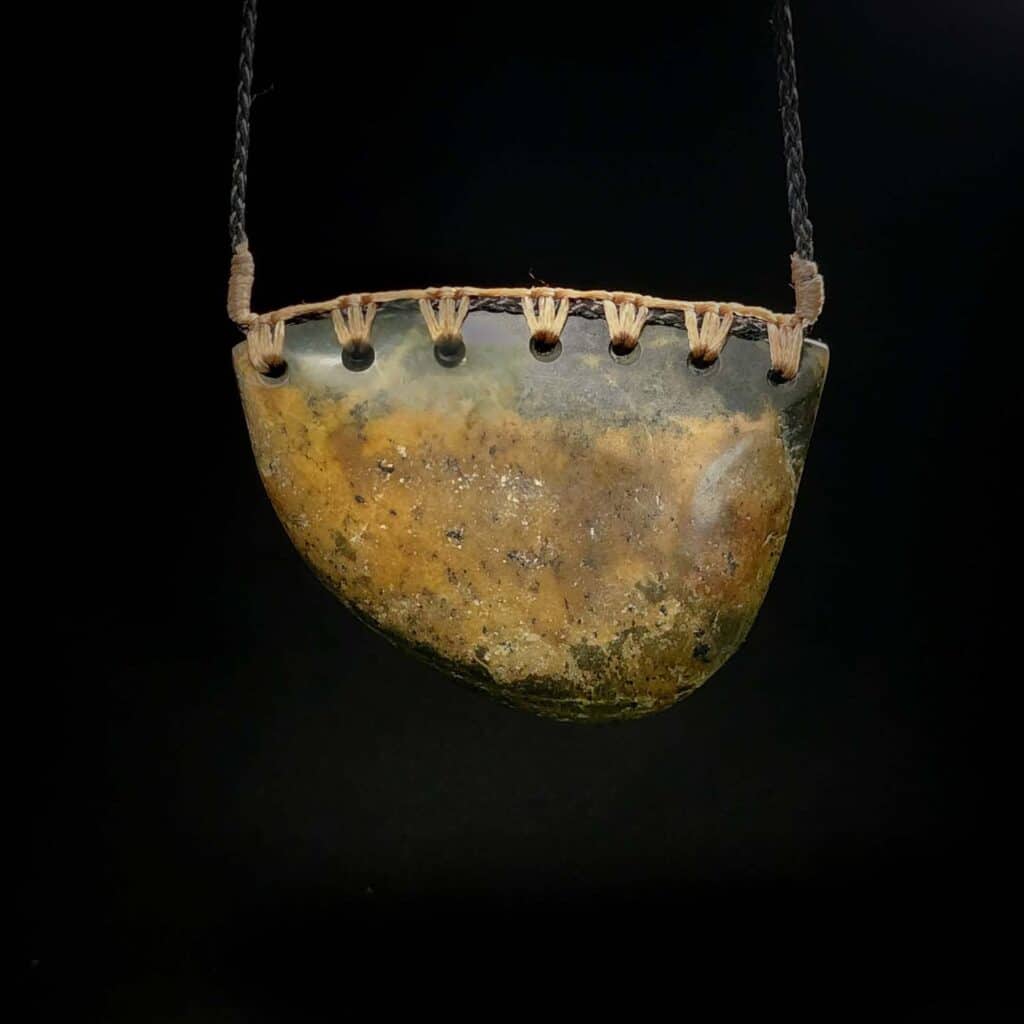
This taonga started as a simple beach stone, but through careful work it became something with deeper meaning. Te Whakaata o te Onepū is about seeing the value in what’s easily overlooked, and about carrying strength close to the heart. For me, it shows how something found in a quiet moment can become a powerful reminder of resilience and connection.
Similar Posts

  • | | |

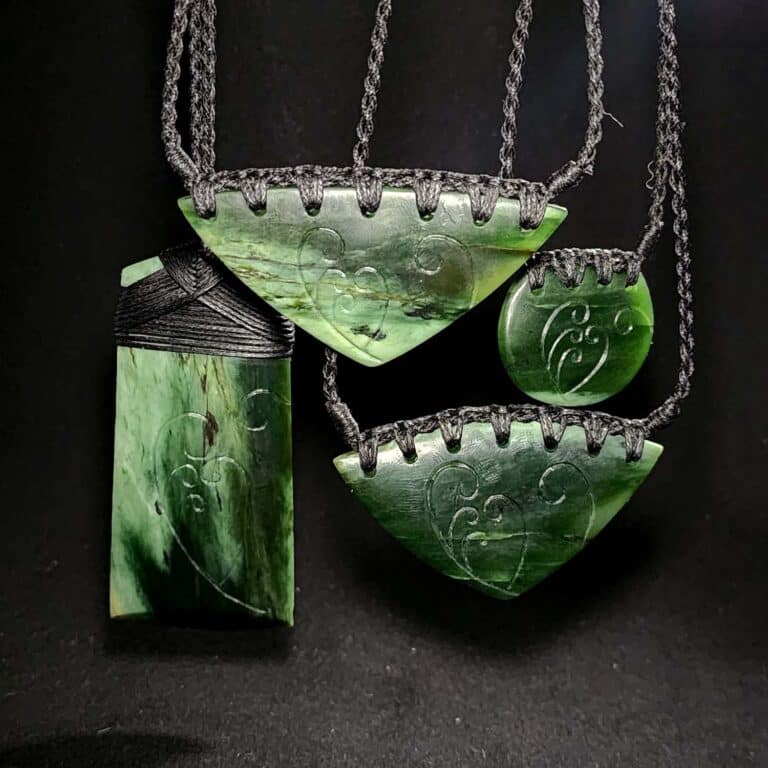
    Whānau Koru

    This set of four taonga, named Whānau Koru, was created to symbolise deep connection, whakapapa, and the strength found in whānau. Each piece carries the same etched koru design and was carved from the same piece of Pounamu to keep them physically and symbolically connected. The name Whānau Koru captures what these taonga stand for…

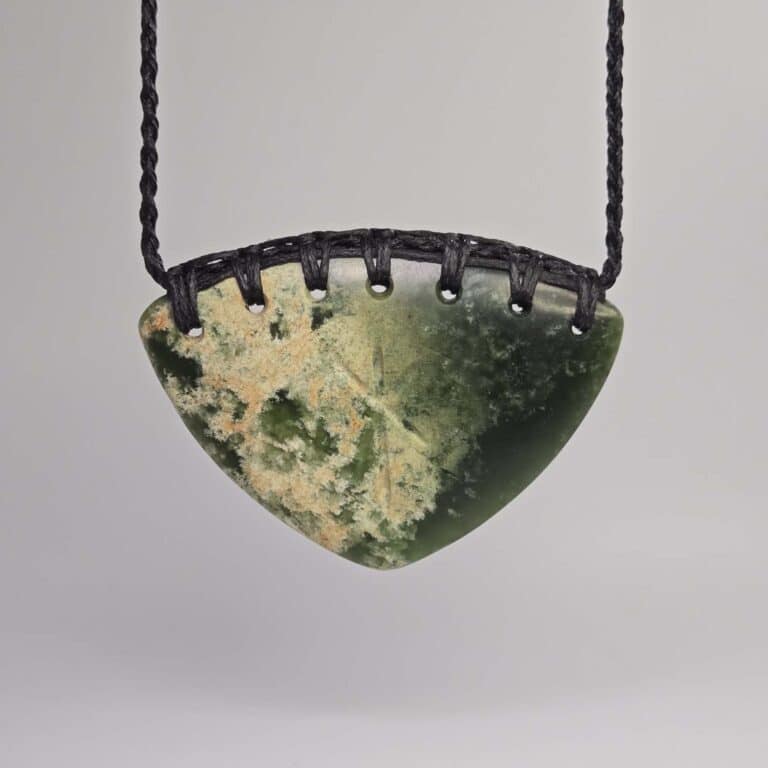
  • Kōuma Whakapiringa

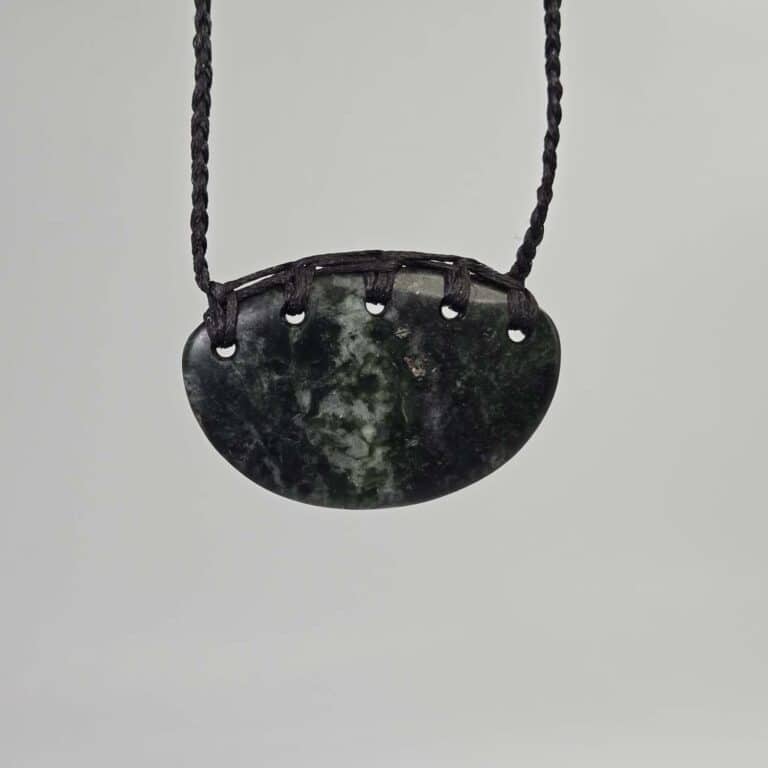
    This kōuma, a breastplate carved from stunning Marsden Flower Jade, holds both beauty and deep personal significance. Measuring around 70mm across, it carries the rich translucent greens that Marsden stone is famed for, and more than half the surface blooms with golden and white inclusions — a flowering that makes this stone truly unique. The…

  • Kōuma Breastplate

    This taonga is a Kōuma, a breastplate carved from Kokopu Pounamu. Measuring 6cm wide and 4cm high, it carries deep significance as a symbol of inner strength, resilience, and guardianship. Resting against the chest, the Kōuma protects the wearer, much like the sternum shields the heart. Kokopu Pounamu is named for its resemblance to the…

  • Kōuma – Aroaro

    This piece is named Aroaro, meaning presence — the essence of being seen, known, and protected. The Kōuma form, shaped like a breastplate, symbolises strength and nurturing. It rests close to the heart, representing inner resilience and the warmth of connection. Traditionally, a Kōuma offers protection and grounding, a reminder of ancestral strength and the…

  • | |

    Tūhono – Pakohe Set

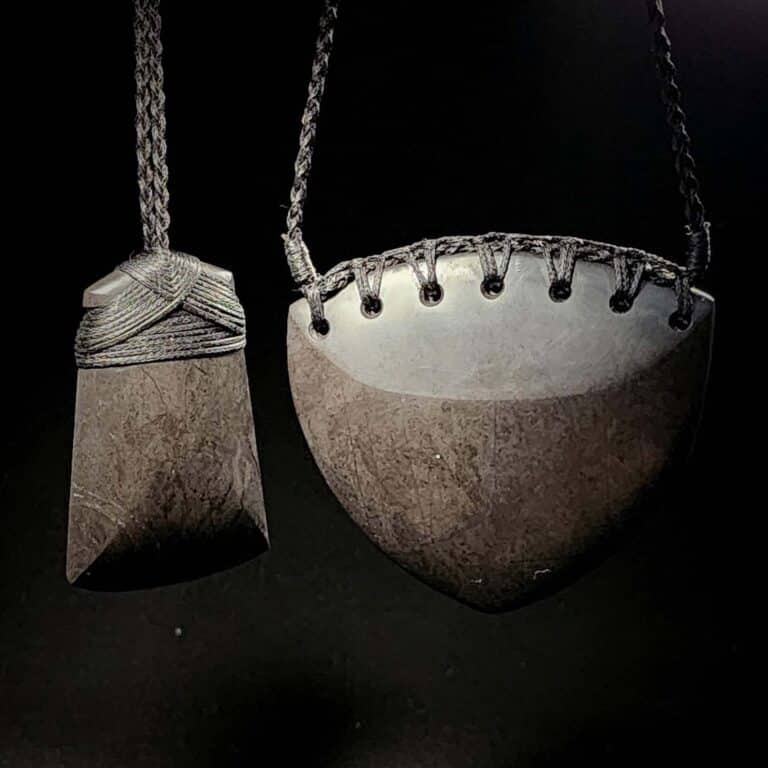
    This taonga set, named Tūhono, symbolises deep connection. The name means to join or link together, reflecting the unbreakable bond between these two pieces, carved from the same slice of dark grey Uri Uri Pakohe. By sharing the same origins, these taonga will always be connected, whether worn by two people or held as a…

  • Te Mauri Onamata

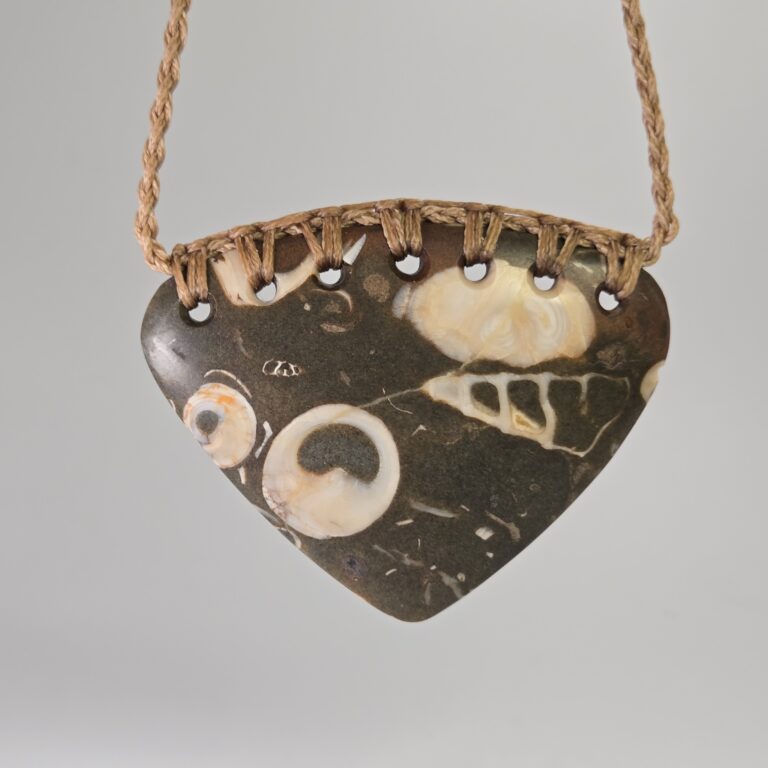
    Some stones carry the presence of deep time within them. I named this taonga Te Mauri Onamata, meaning the life force of ancient times. The fossil shells preserved in the stone are the remains of living creatures from long before people walked this land. Because of that, the piece speaks about continuity, endurance, and our…