Te Whai o Rakahuri
This taonga is a 65mm whai (stingray) carved from stone gathered from the Rakahuri (Ashley River) in North Canterbury. It carries a strong sense of place, shaped not just by the stone itself, but by the connection the recipient has to that river, to Maukatere, and to the wider Hurunui landscape.
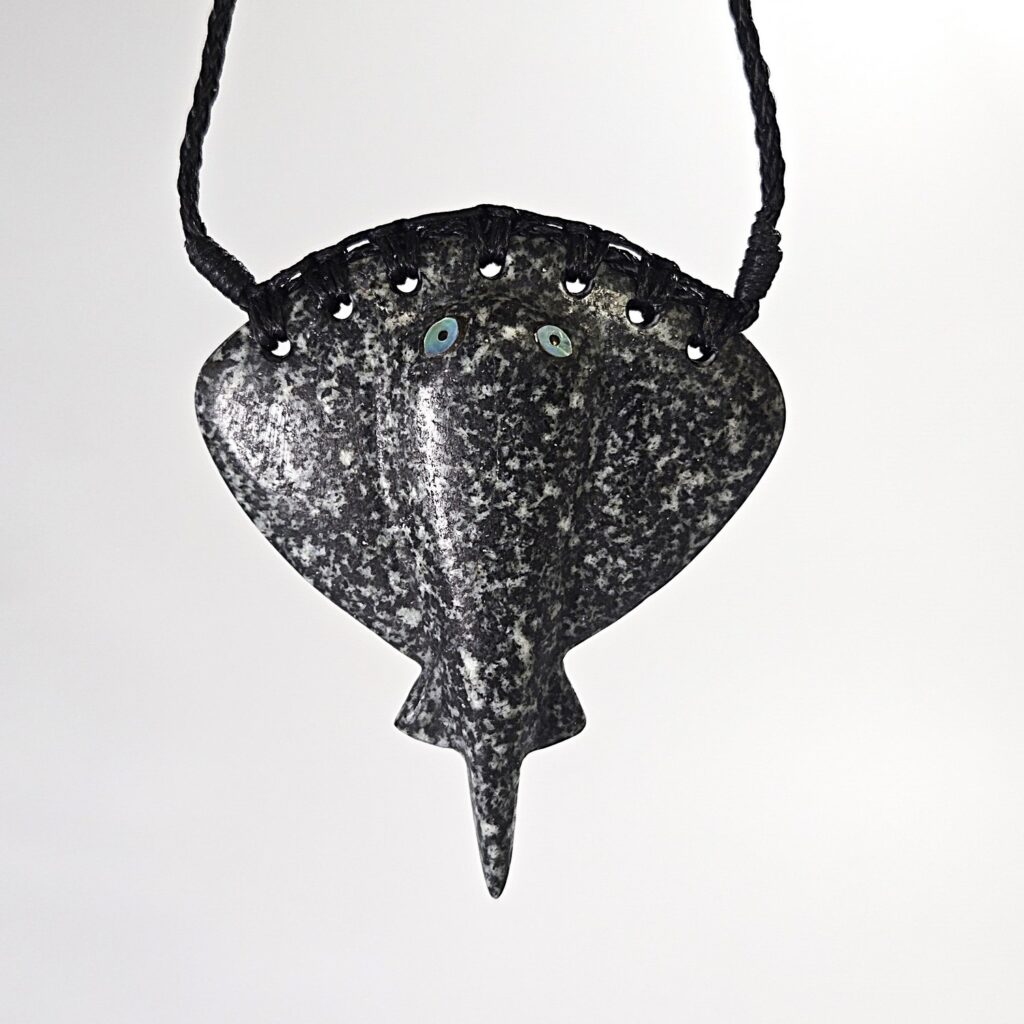
The stone is a dark grey syenite, a coarse-grained igneous rock formed deep within the earth as molten material slowly cooled. Over time it has been weathered and carried down through the river system, eventually resting in the Rakahuri. Its natural patterning, a deep grey base scattered with lighter mineral speckles, gives the surface a textured, almost shifting appearance. That movement in the stone suited the whai form well, echoing the way a stingray moves through water.
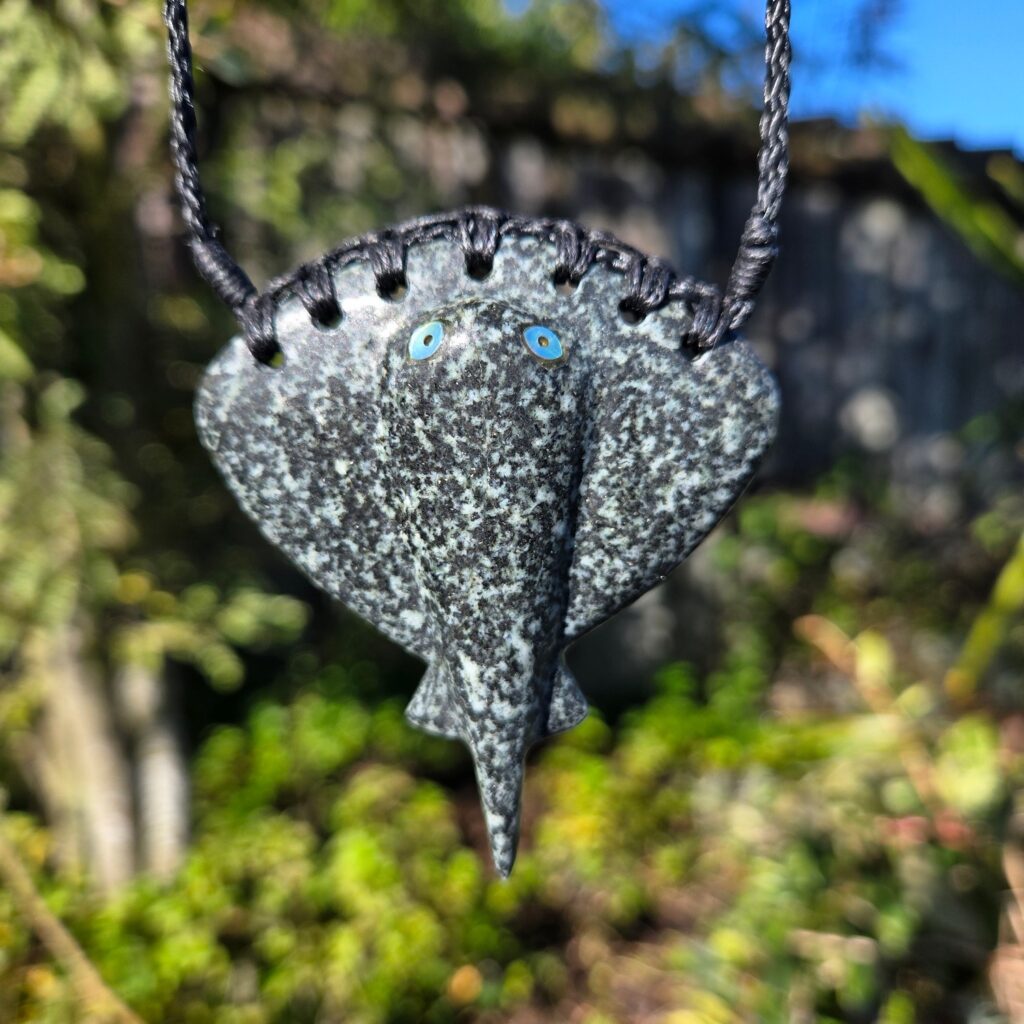
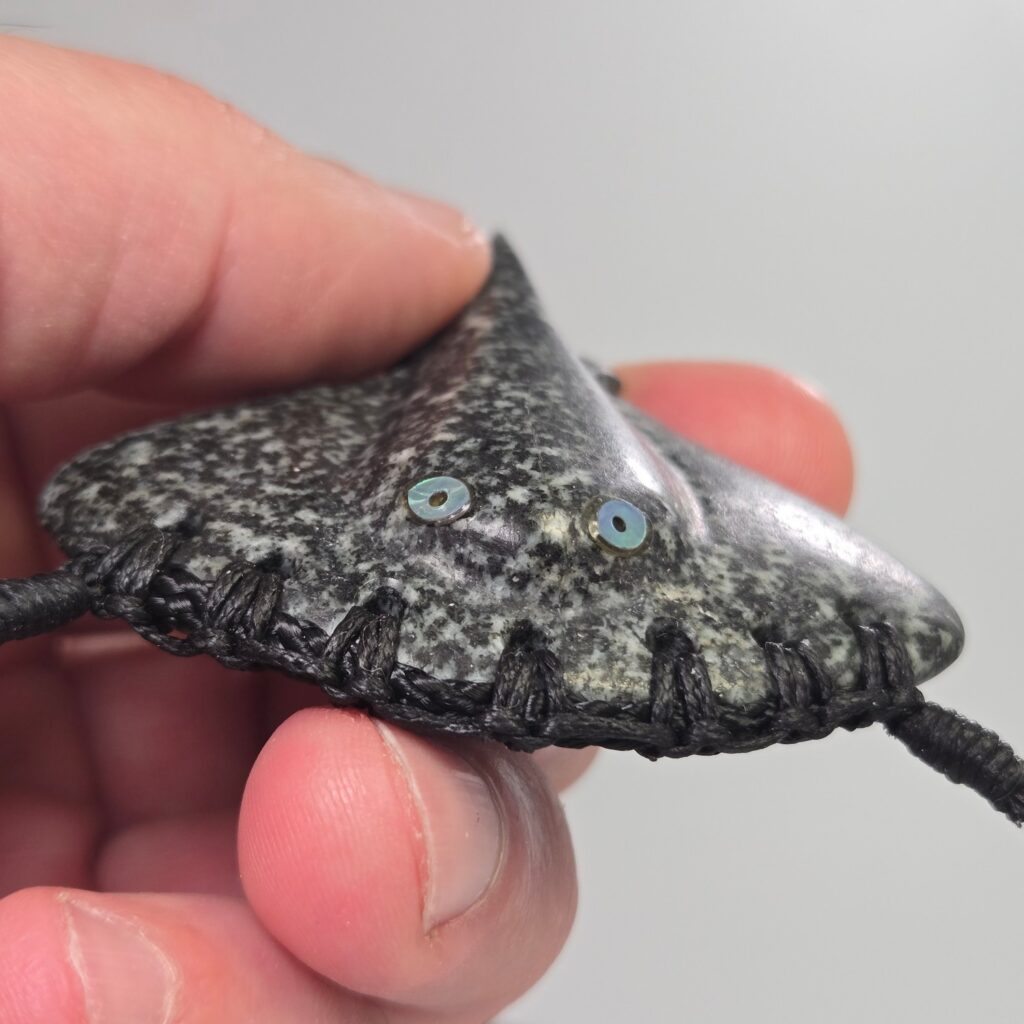
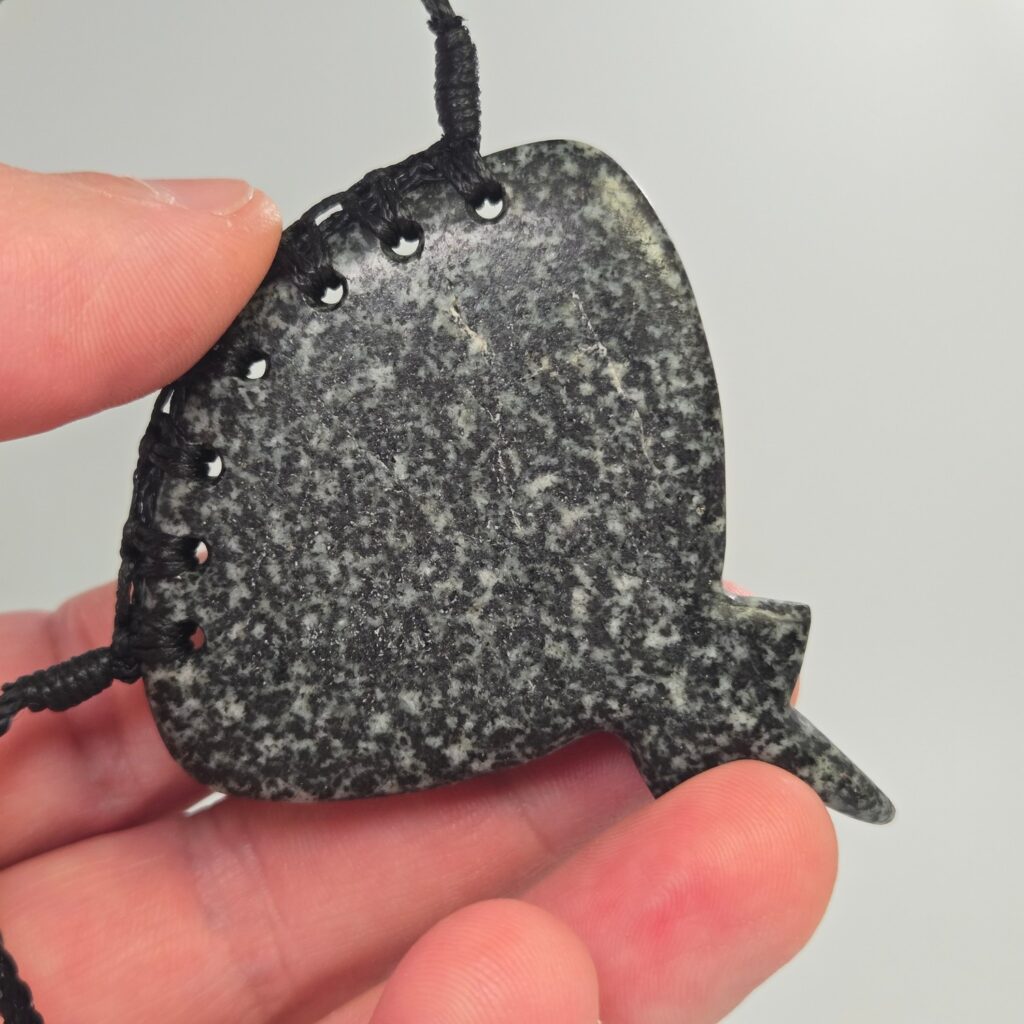
The shape is a whai, carved swimming upward rather than hanging downward. This changes the feel of the piece. Instead of resting, it is moving, rising, navigating its path. The whai is often associated with protection, awareness, and quiet strength. It moves calmly but with purpose, reading its environment and responding with precision. In this piece, that meaning sits alongside the idea of grounding in place while still moving forward in life.
The pāua shell eyes bring the piece to life. They catch the light and shift in colour, adding another layer of movement and presence. They draw attention to the head of the whai, reinforcing its sense of direction and awareness.
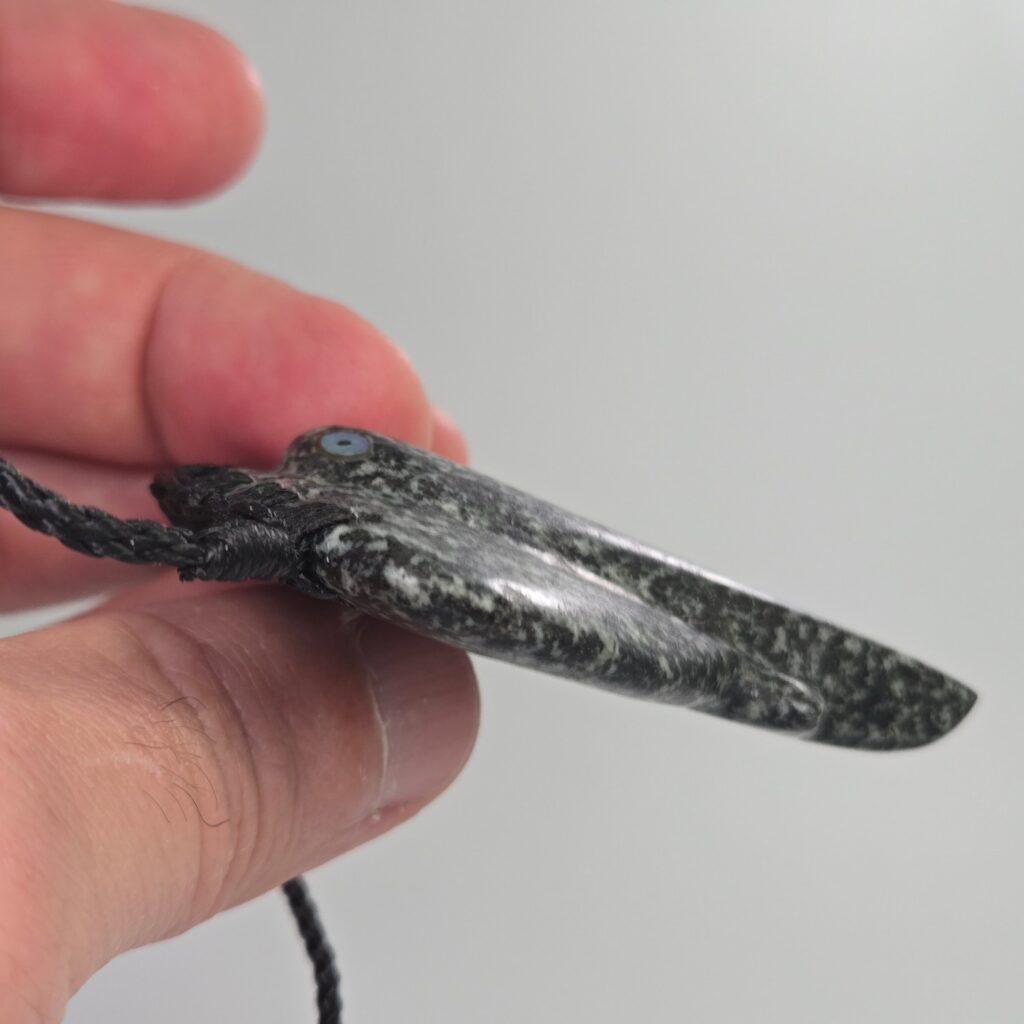
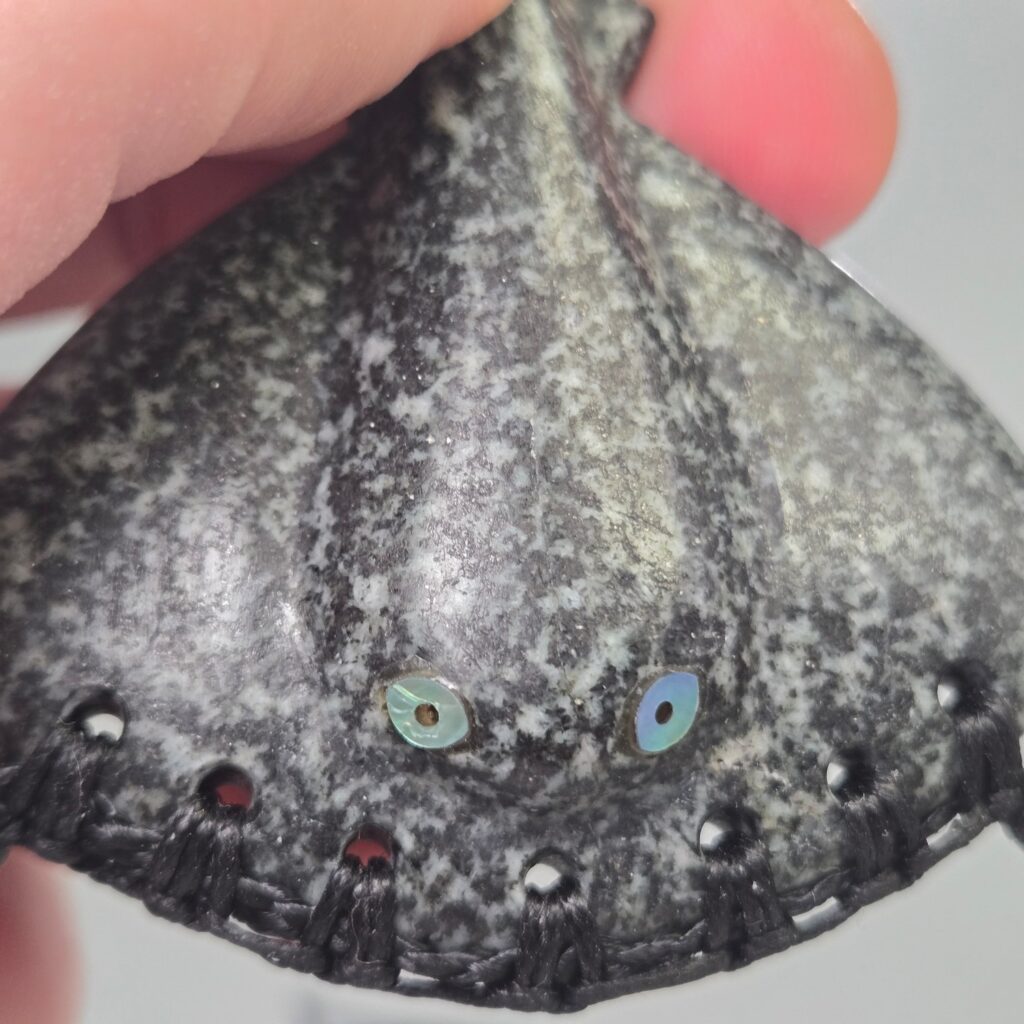
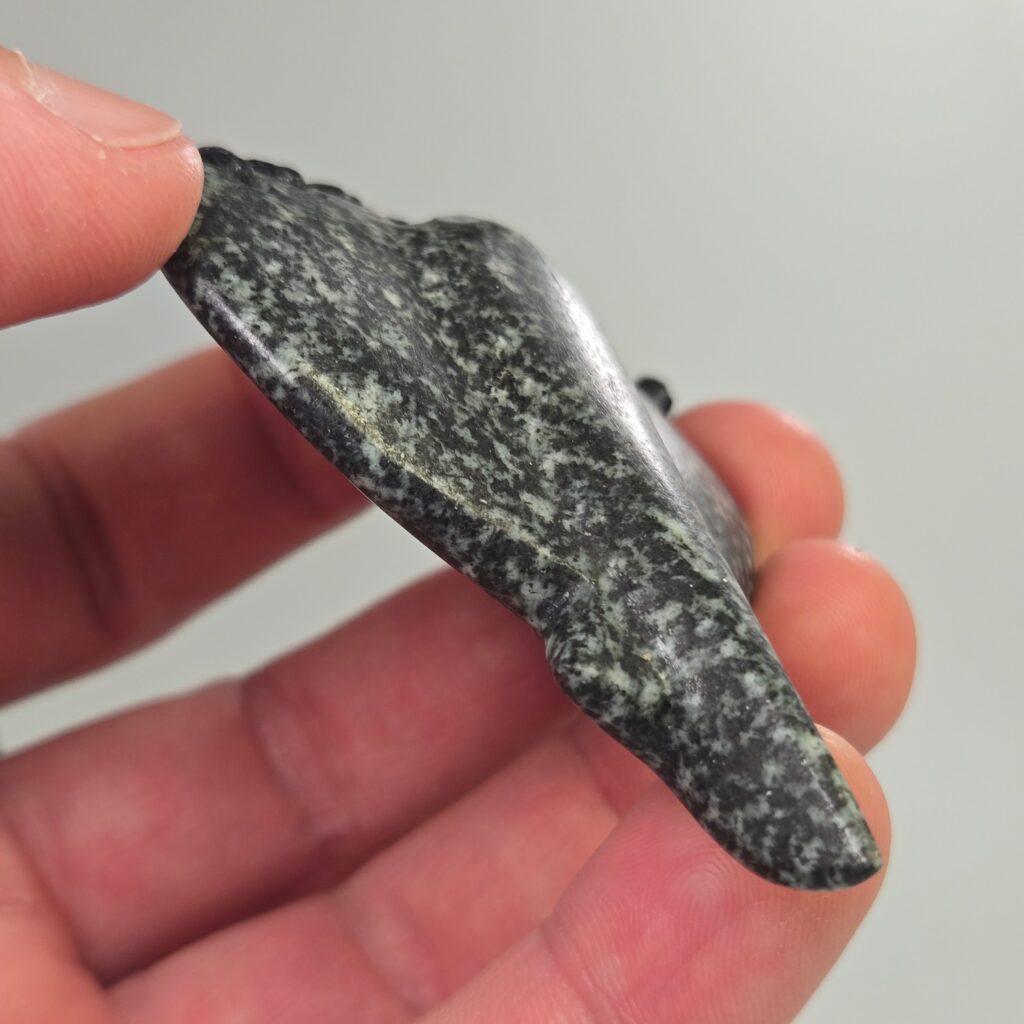
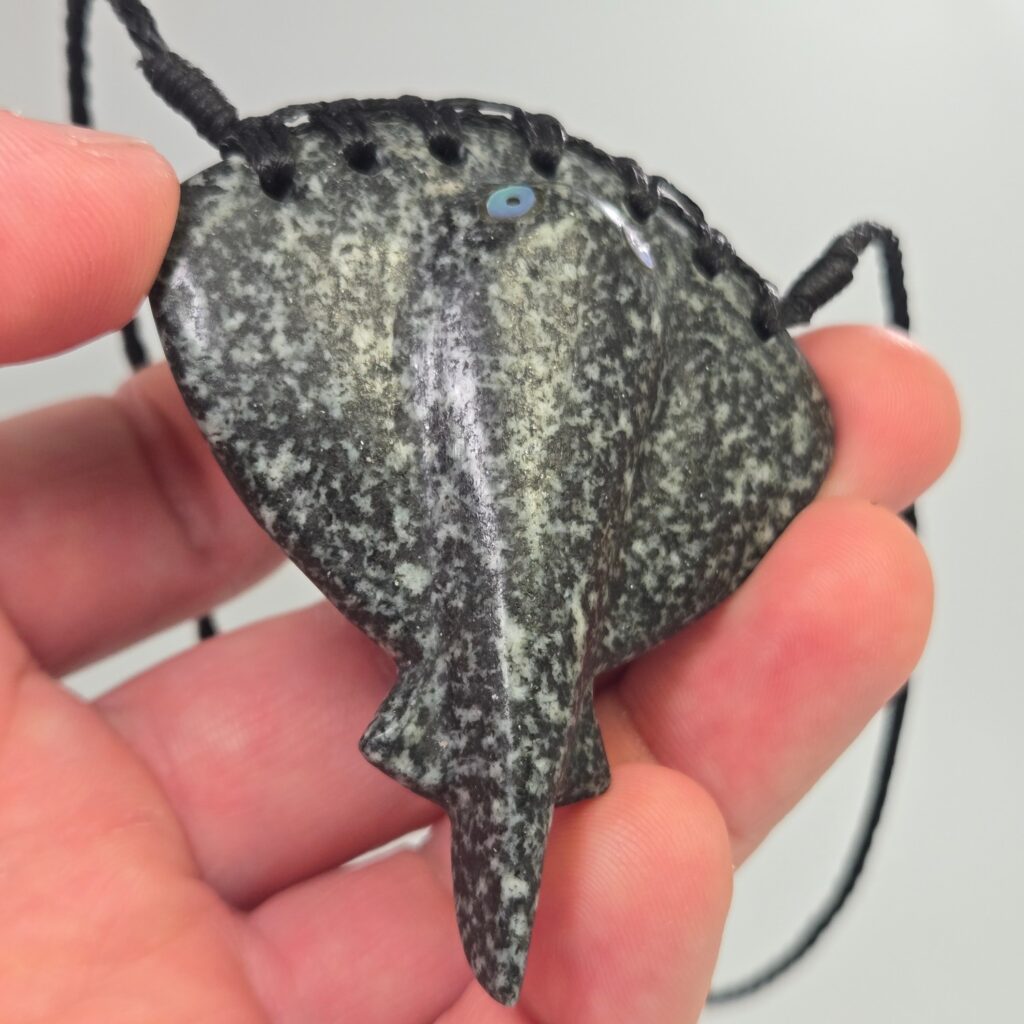
The lashing runs across the top of the wings in a black binding, holding the piece firmly while allowing the form to remain open and flowing. The placement supports the upward orientation of the taonga, letting it hang naturally in that rising position.
This piece was commissioned as a 30th birthday gift. The kaupapa behind it was clear from the start. The stone needed to come from a place that mattered, and the form needed to reflect something personal. The result is a taonga that ties the wearer back to the Rakahuri and the whenua he comes from, while also marking a point of growth and movement into the next stage of life.
Carving this piece was about working with that connection. The stone, the place, and the story all lined up, and the form of the whai allowed that to come through in a simple, grounded way.