Te Taura Whakapapa
Te Taura Whakapapa means the binding line of genealogy. I chose this name because this set was carved from a single family-held piece of Kawakawa Pounamu that had already travelled through generations. The stone itself carried whakapapa before I ever touched it. By shaping it into taonga for different members of the whānau, the line continues — visible, wearable, and grounded in something enduring. Pounamu has always been a connector. It binds people to whenua, to ancestors, and to each other.
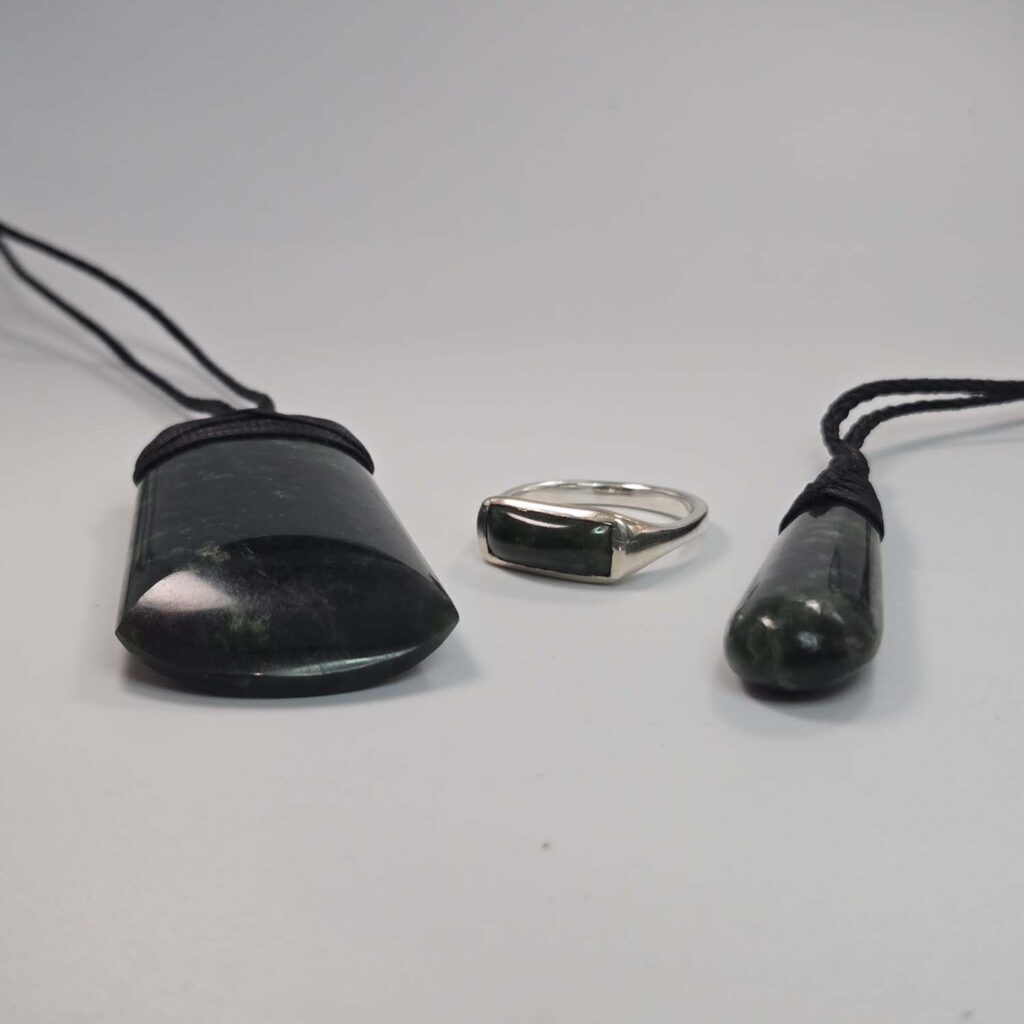
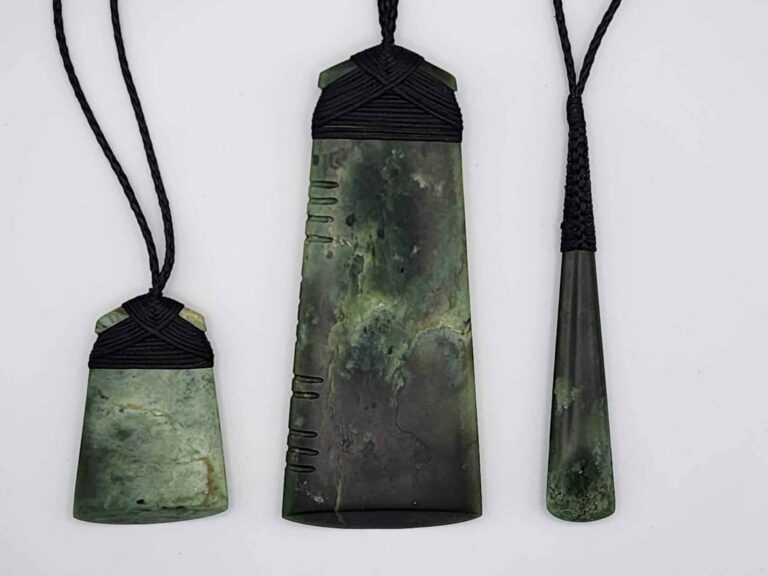
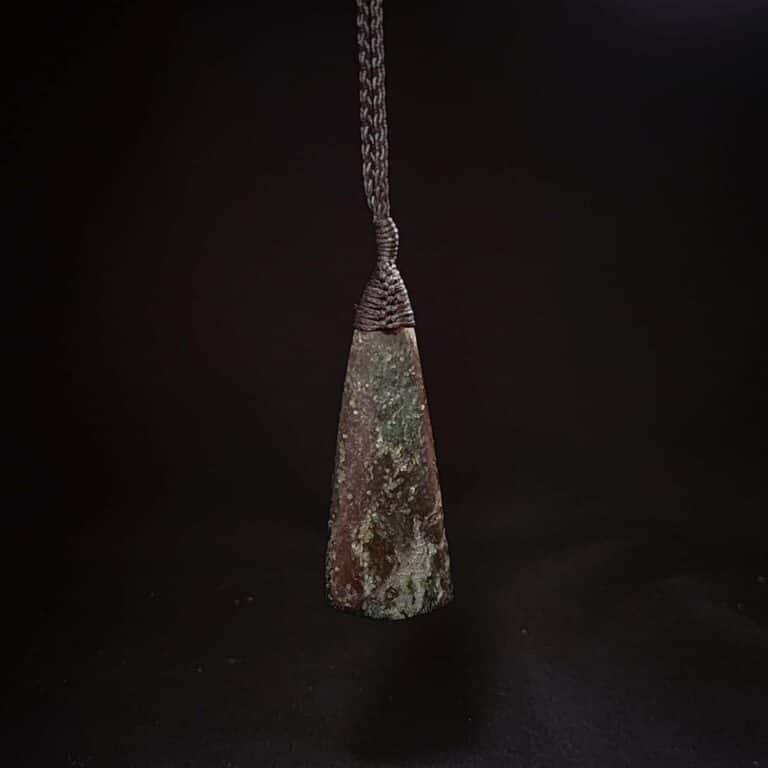
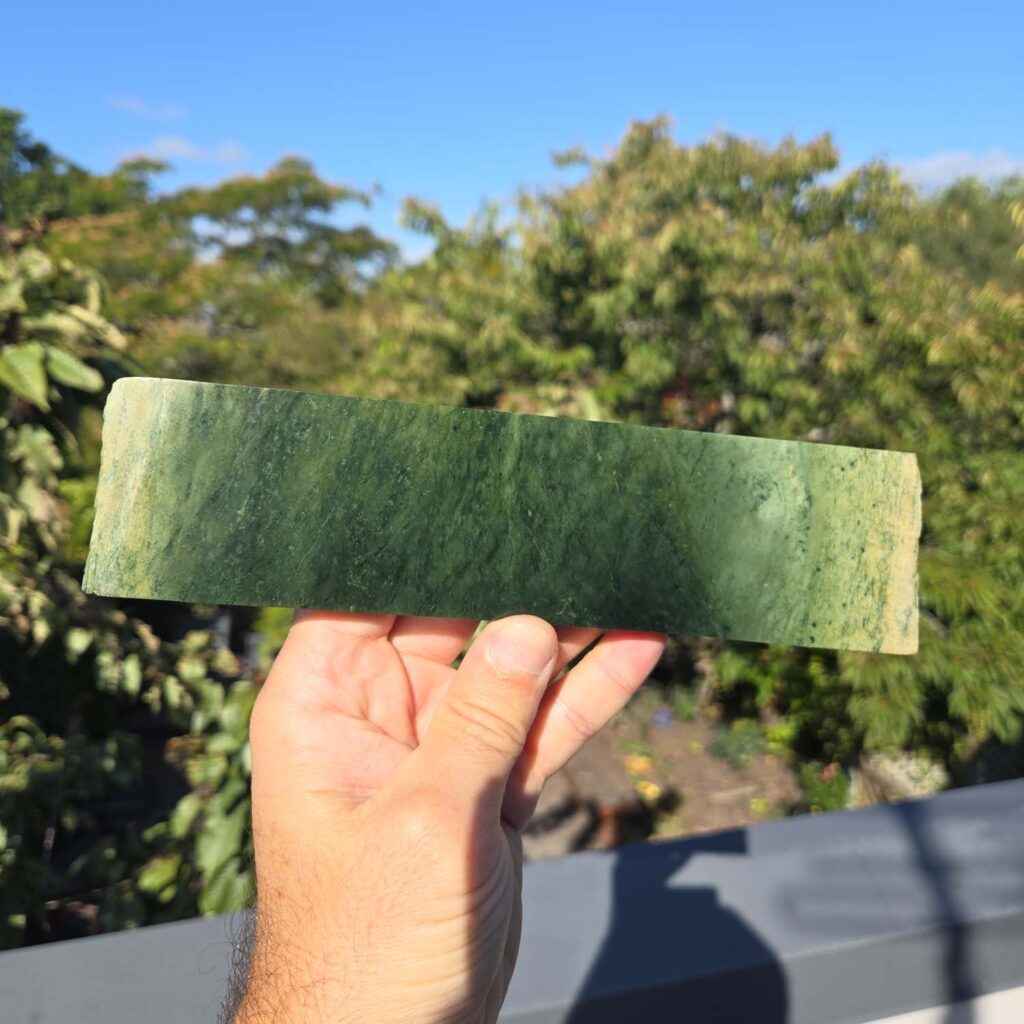
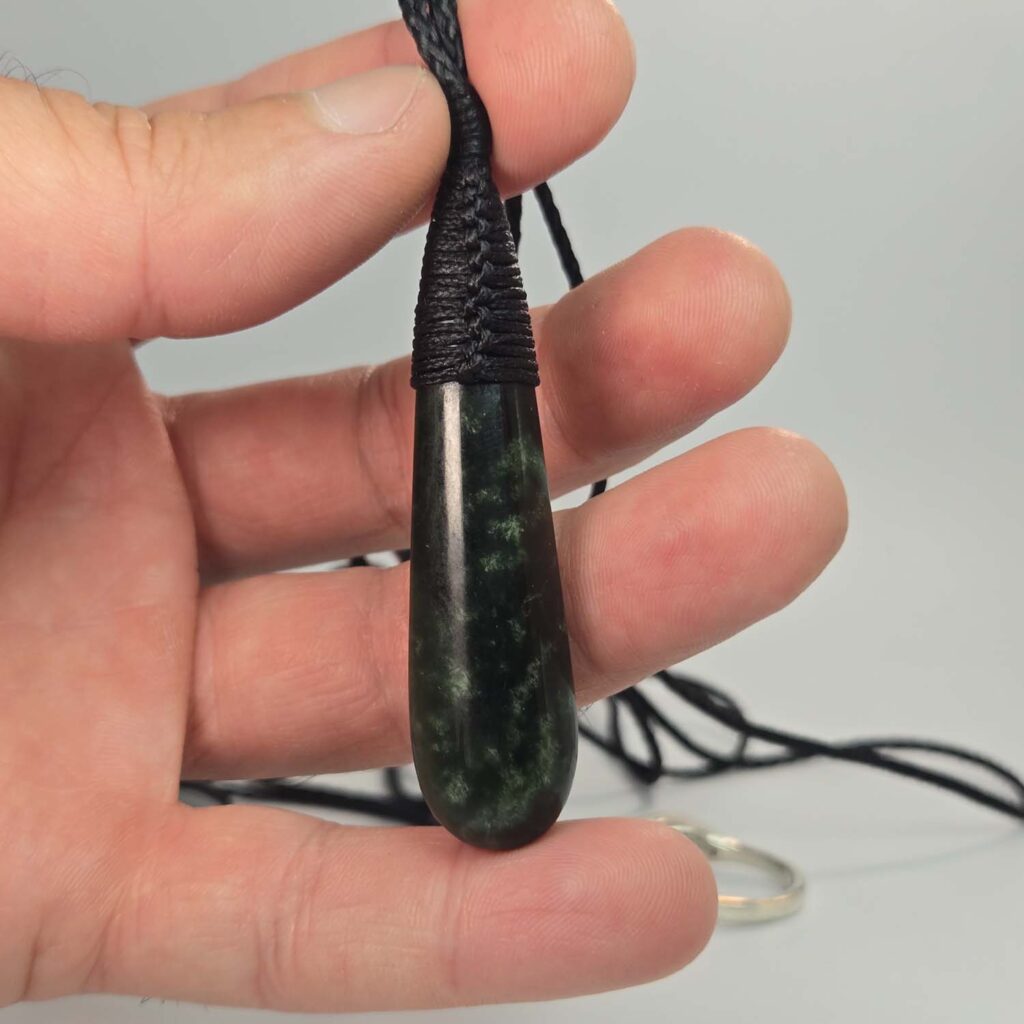
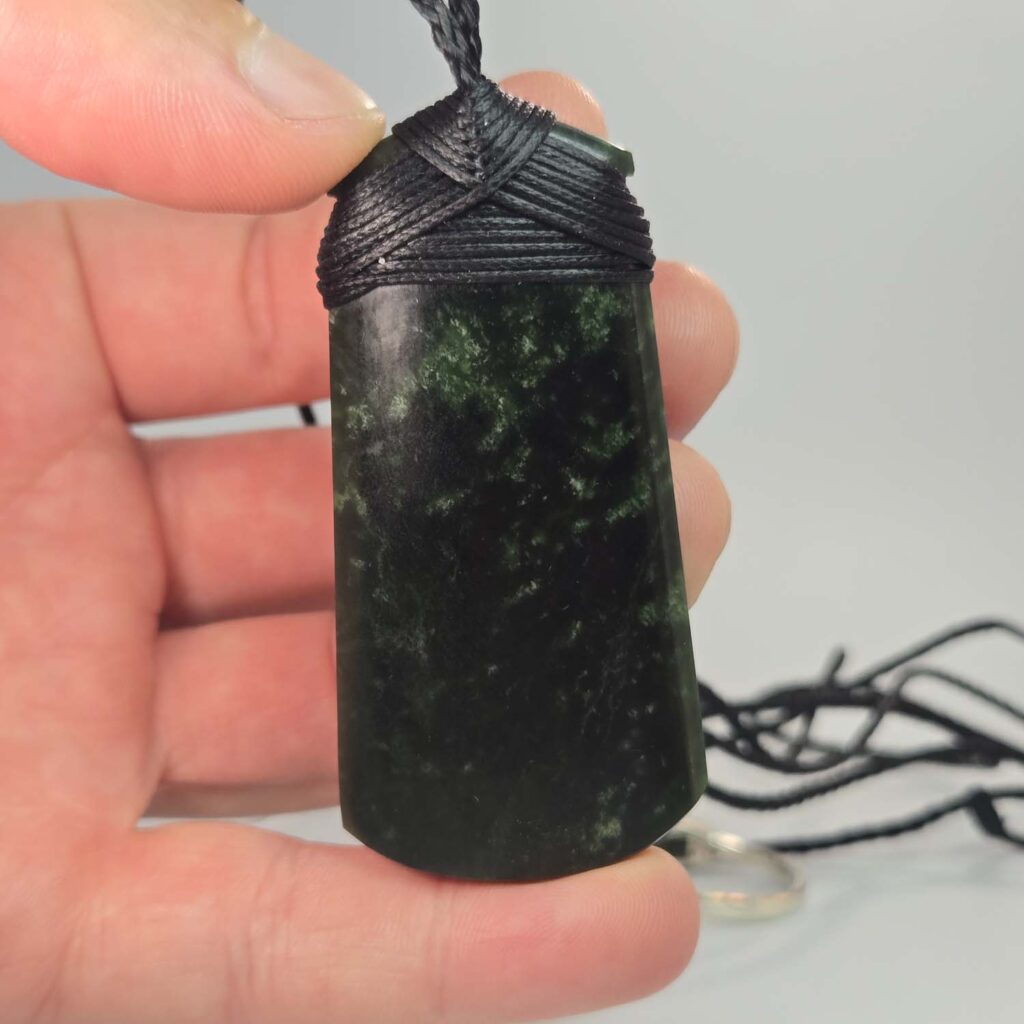
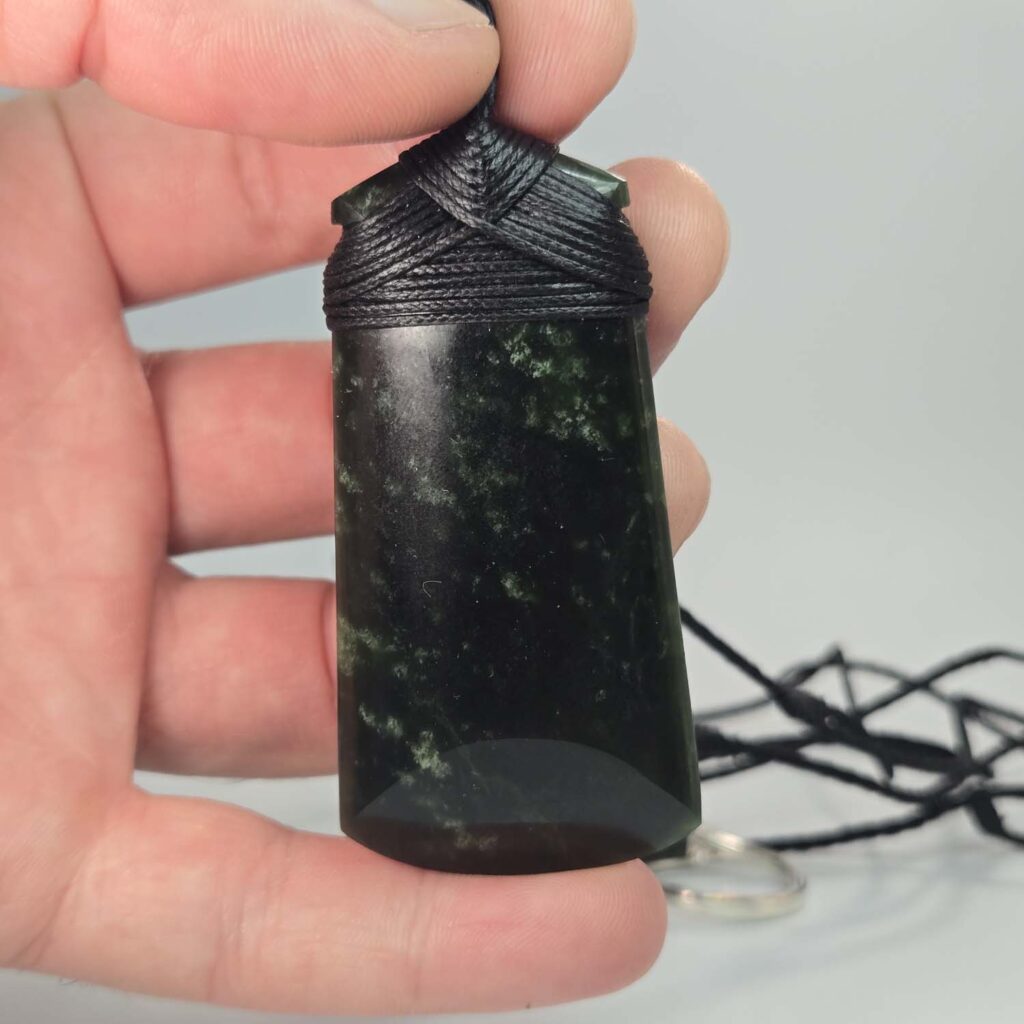
This Kawakawa Pounamu was dark, rich, and deep in tone. Several slices had been cut from a large family stone and distributed among whānau members. They brought one of those slices to me with a clear intention — to transform their inherited stone into taonga that could be worn and held close. The depth of colour in this Kawakawa gave the finished pieces a strong presence, with subtle movement under the light.
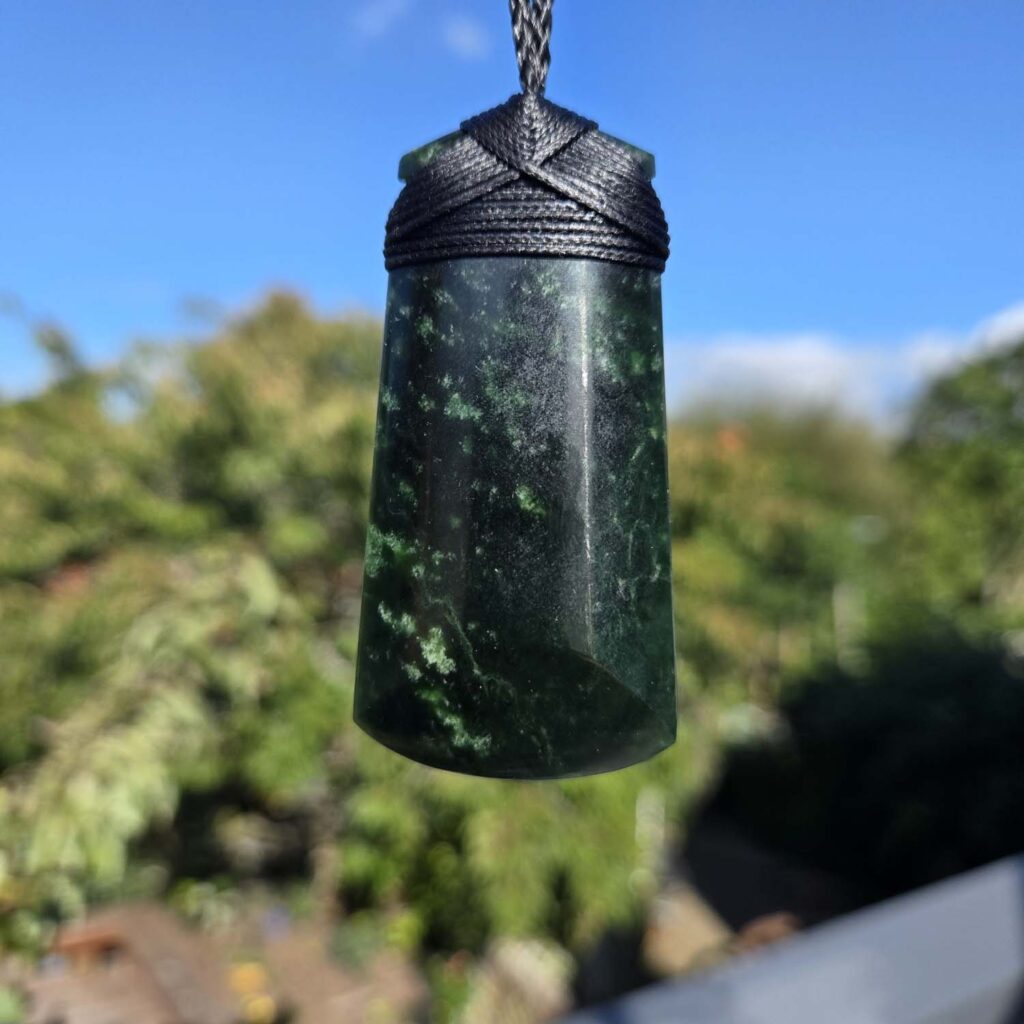
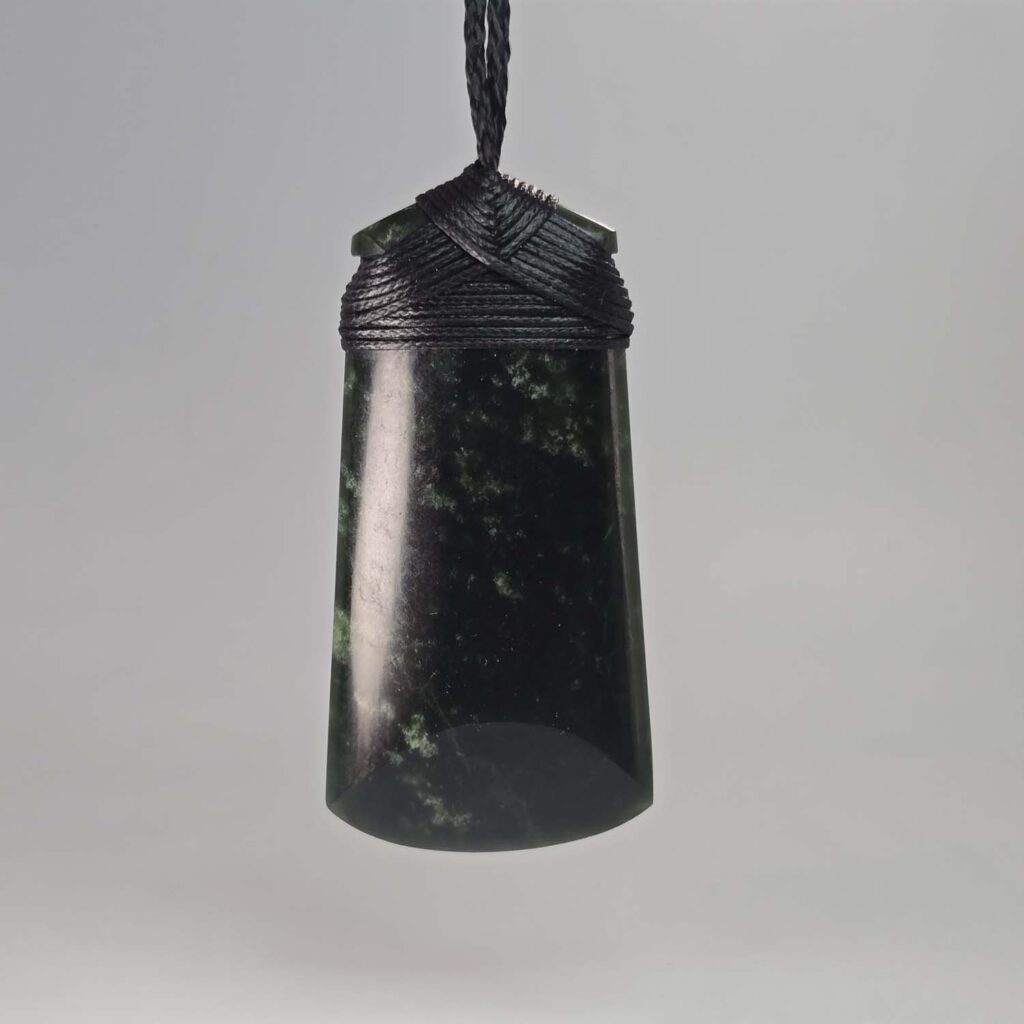
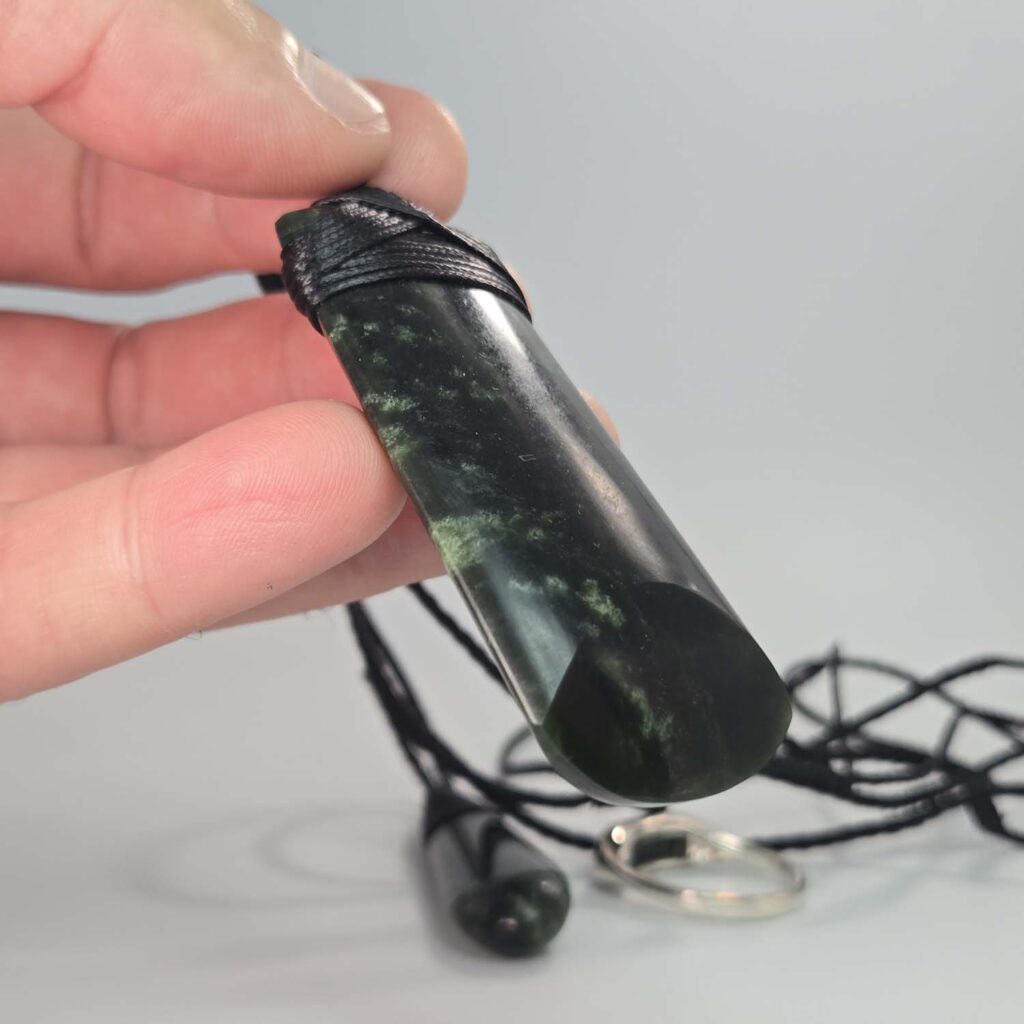
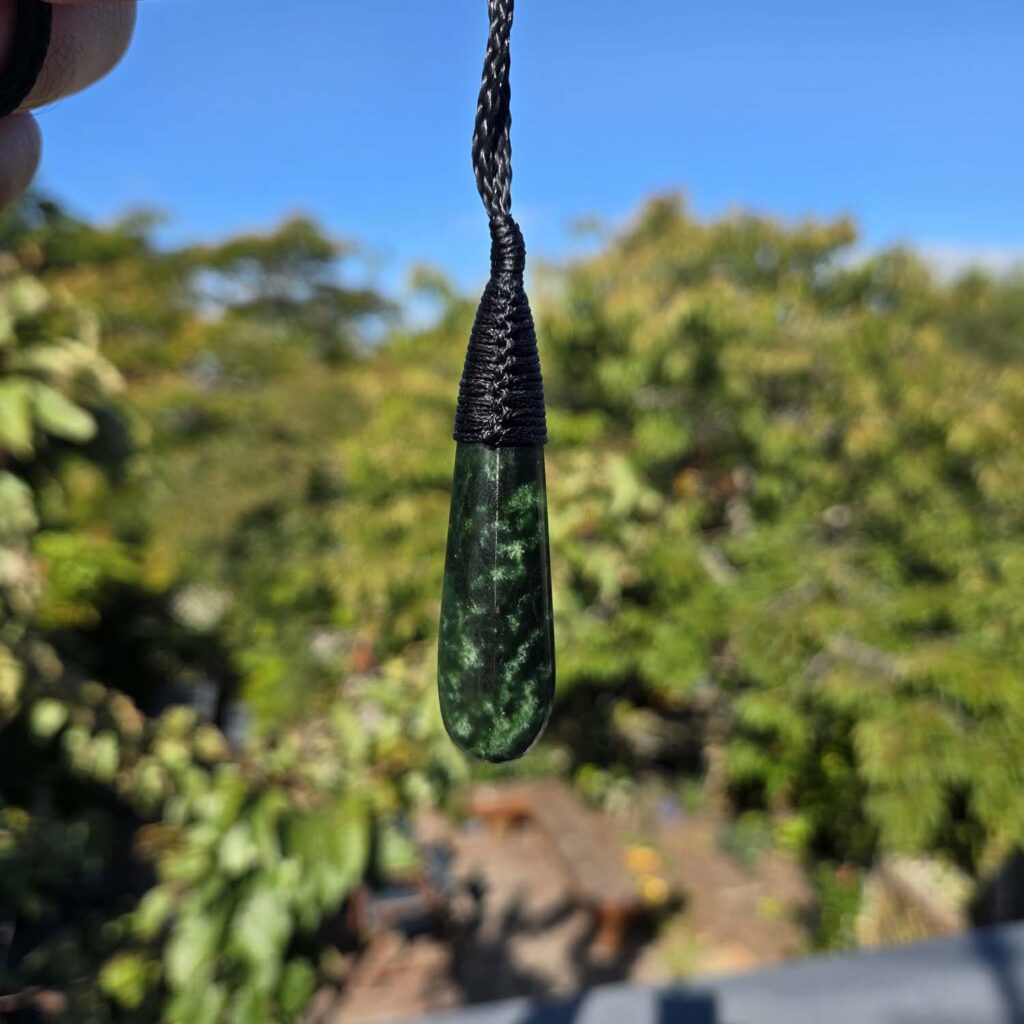
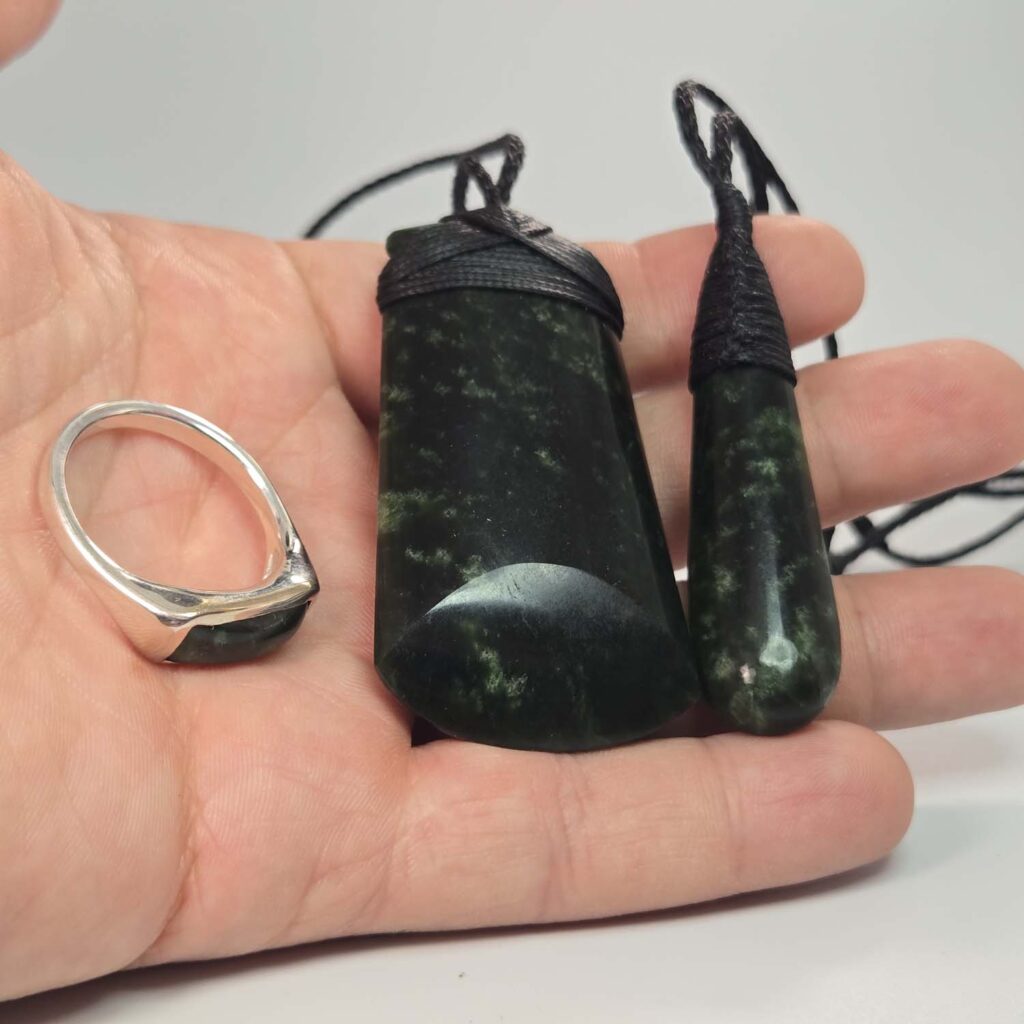
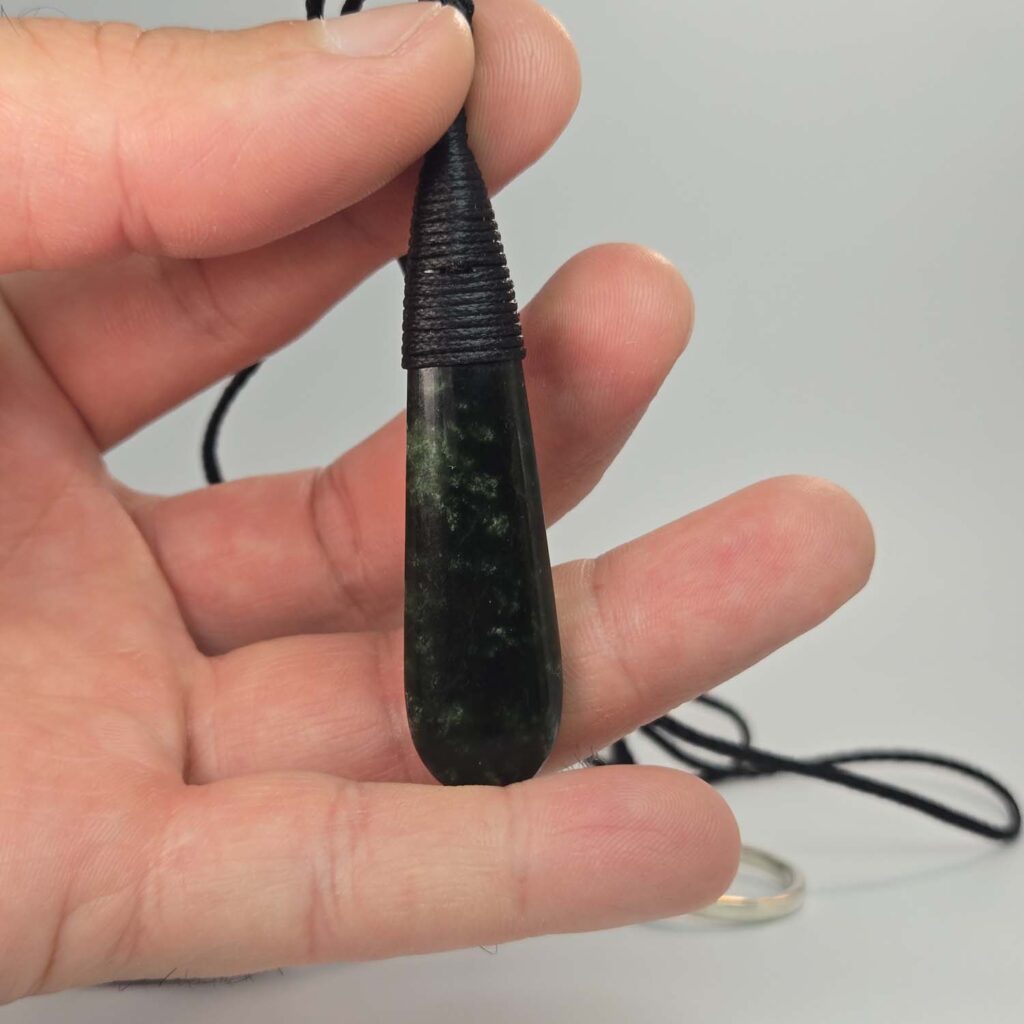
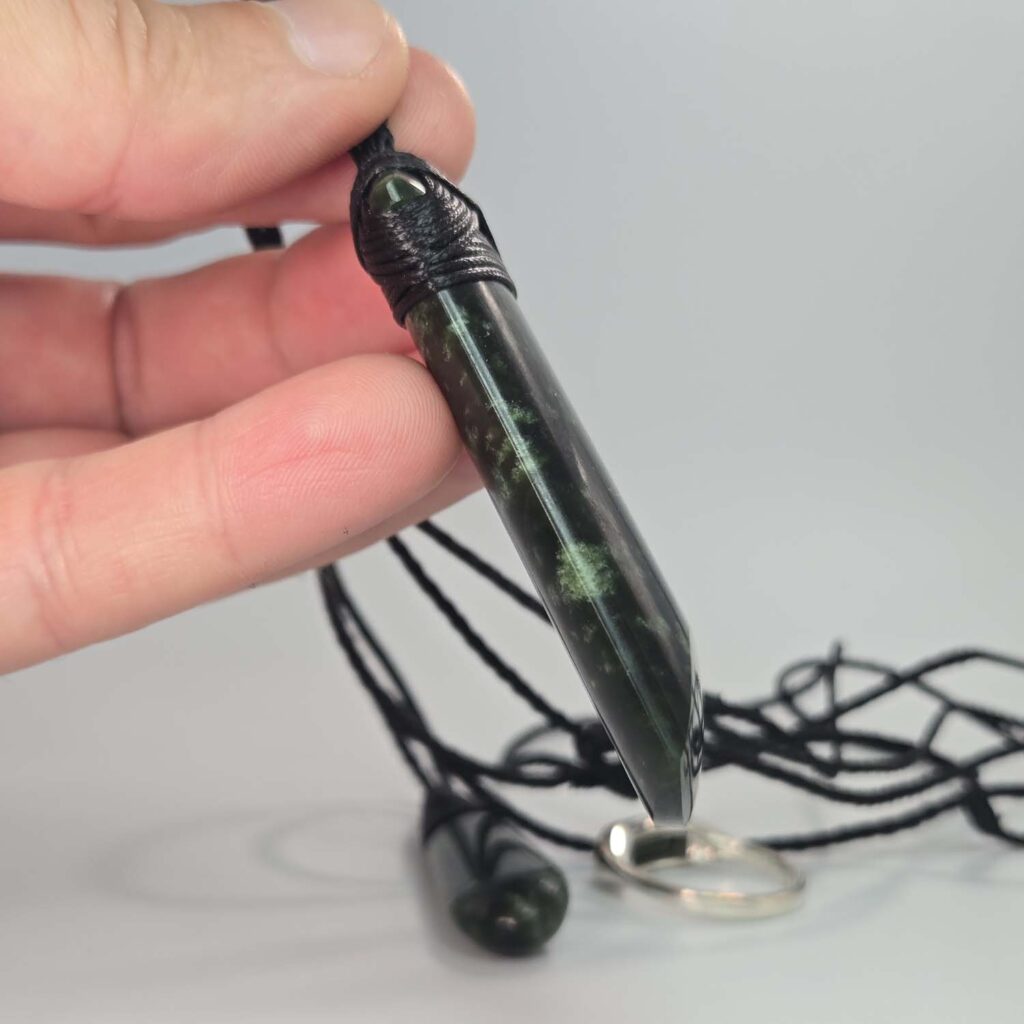
From these slices, I carved two classic forms: a Toki and a Roimata. The Toki symbolises strength, leadership, and determination. It carries the idea of forward movement and resilience — qualities that hold families together through challenge and change. The Roimata speaks of emotion, remembrance, and aroha. Its long, flowing form rests close to the heart, acknowledging both the joy and the weight that come with family history. These two shapes are simple and traditional, but their meaning runs deep.
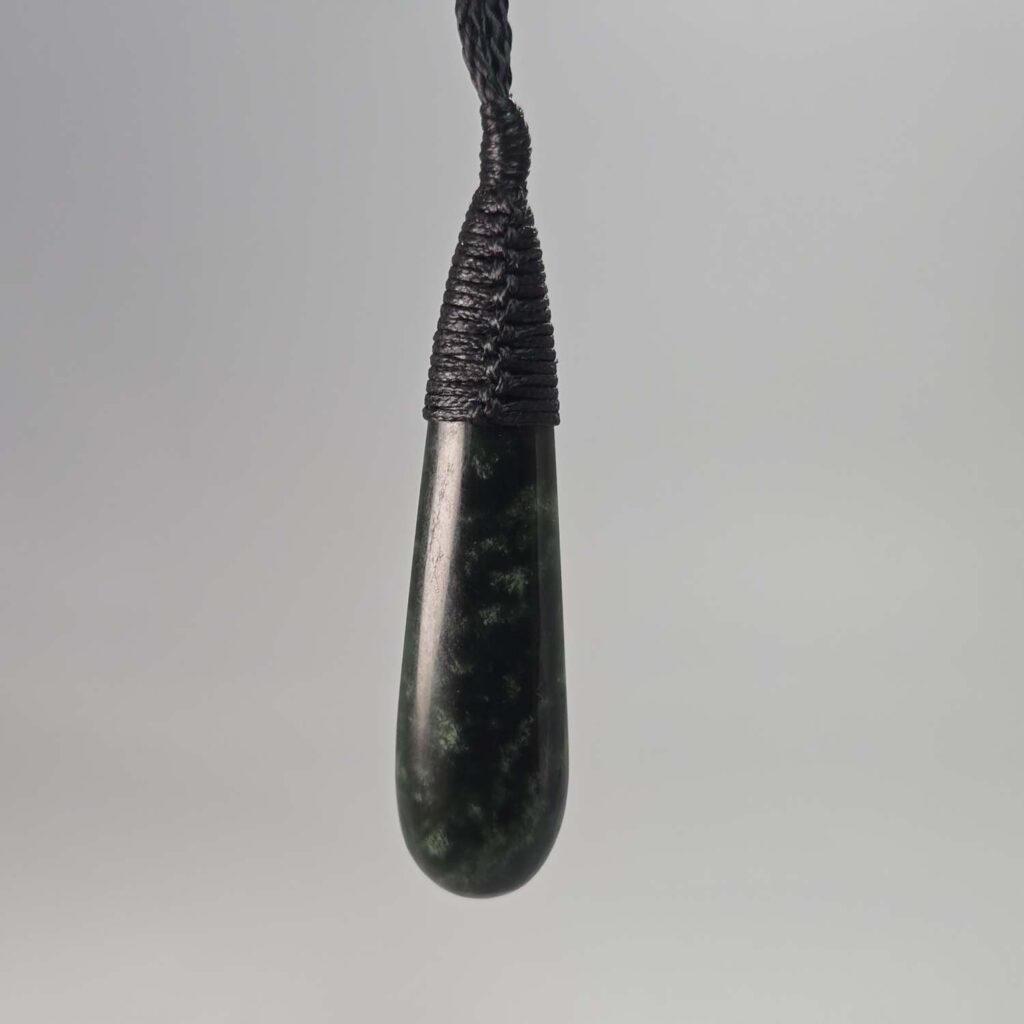
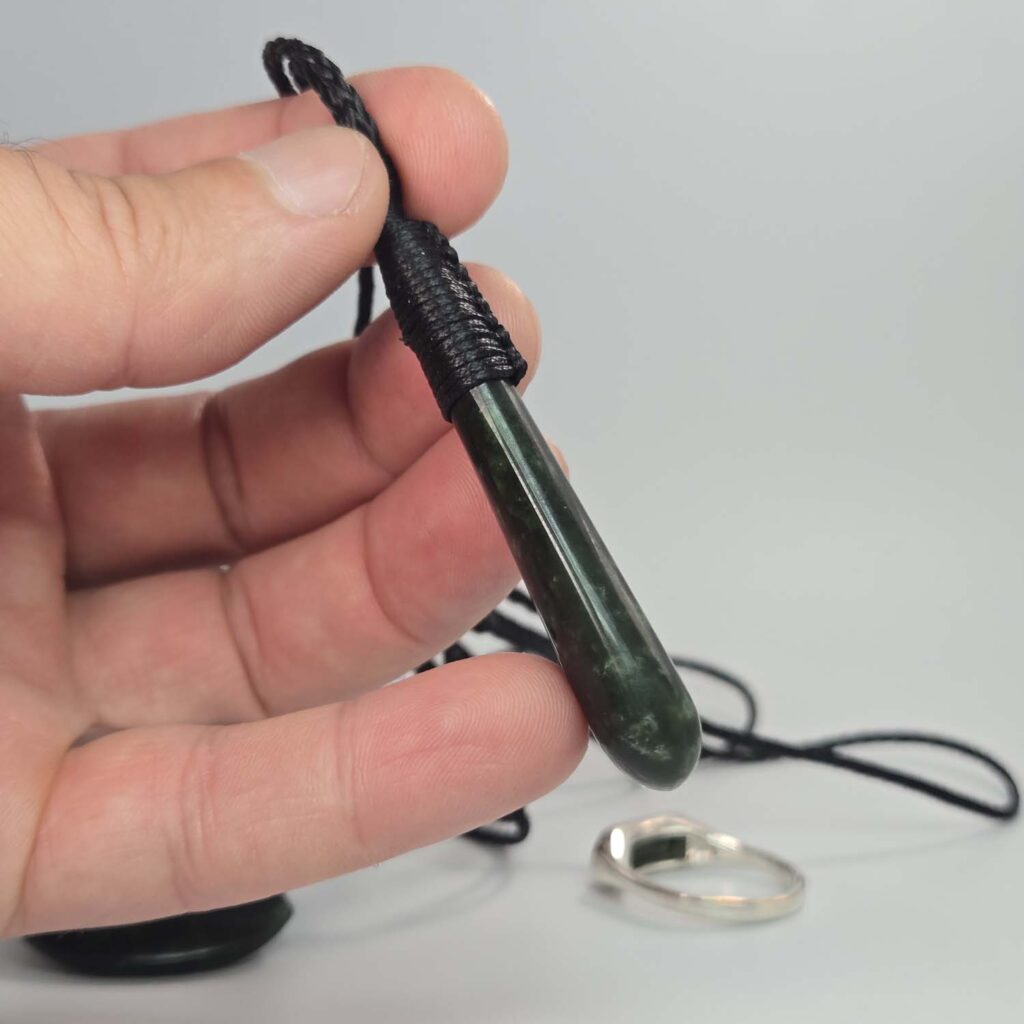
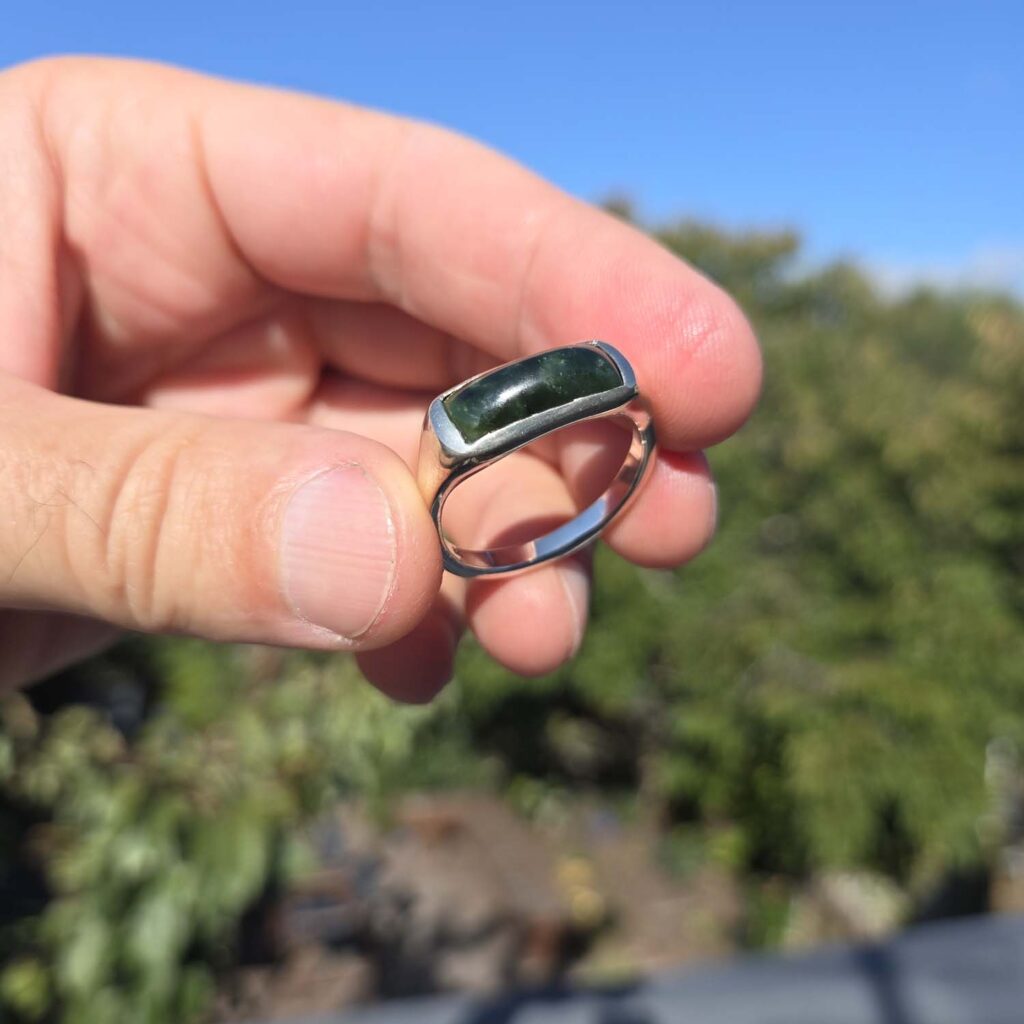
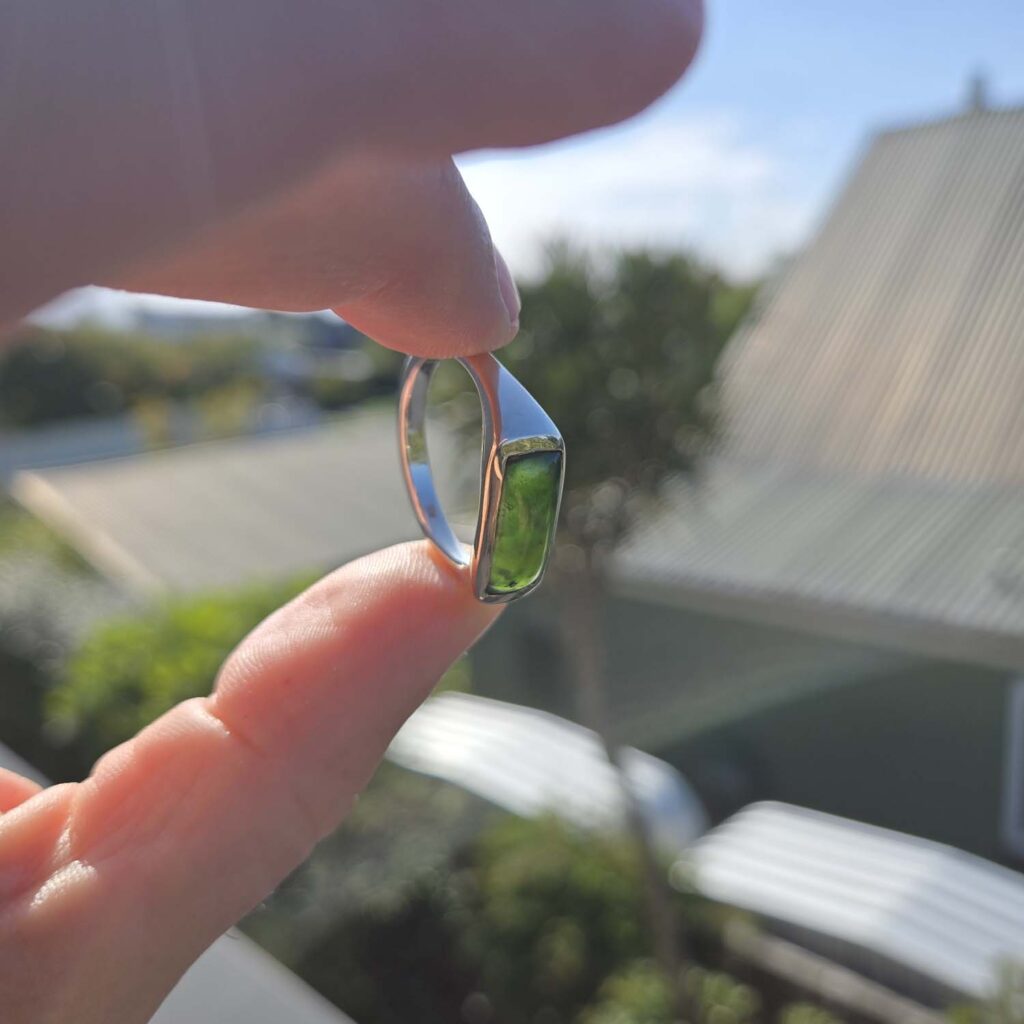
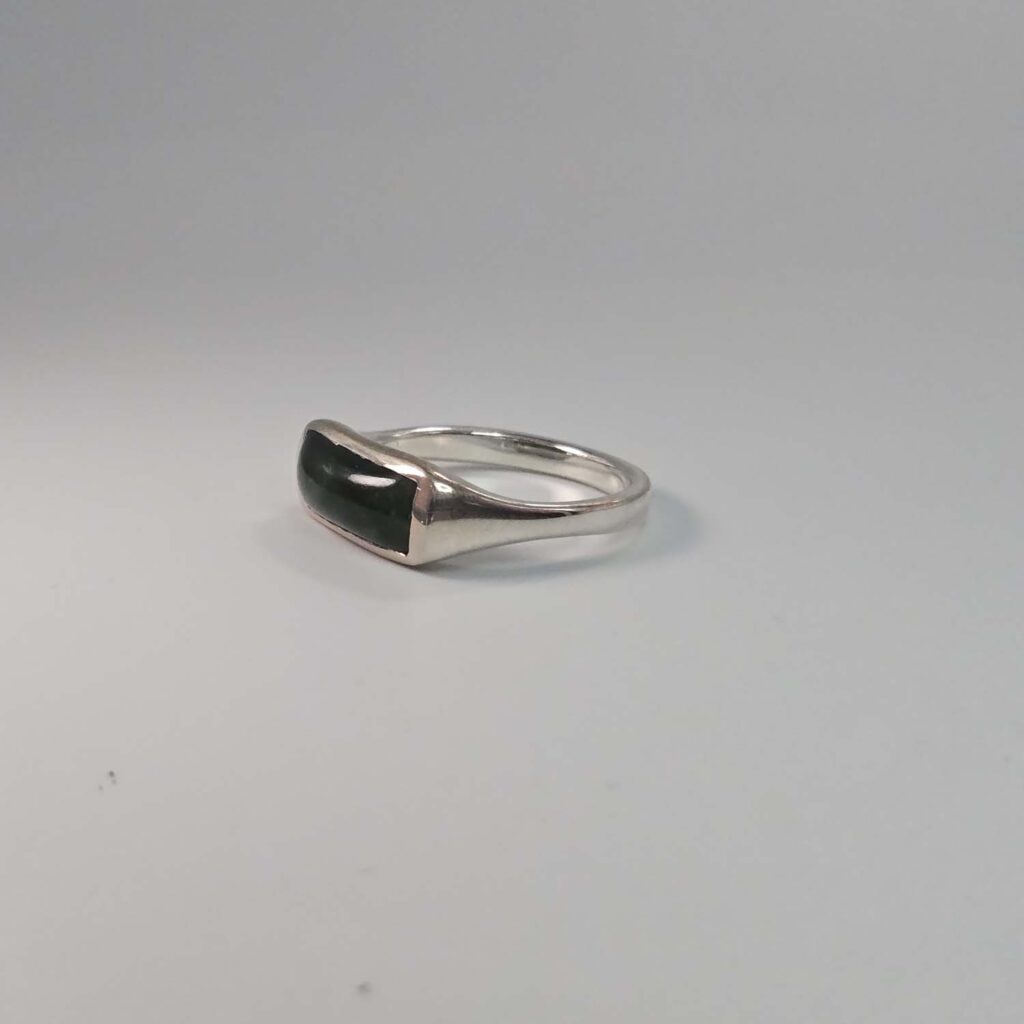
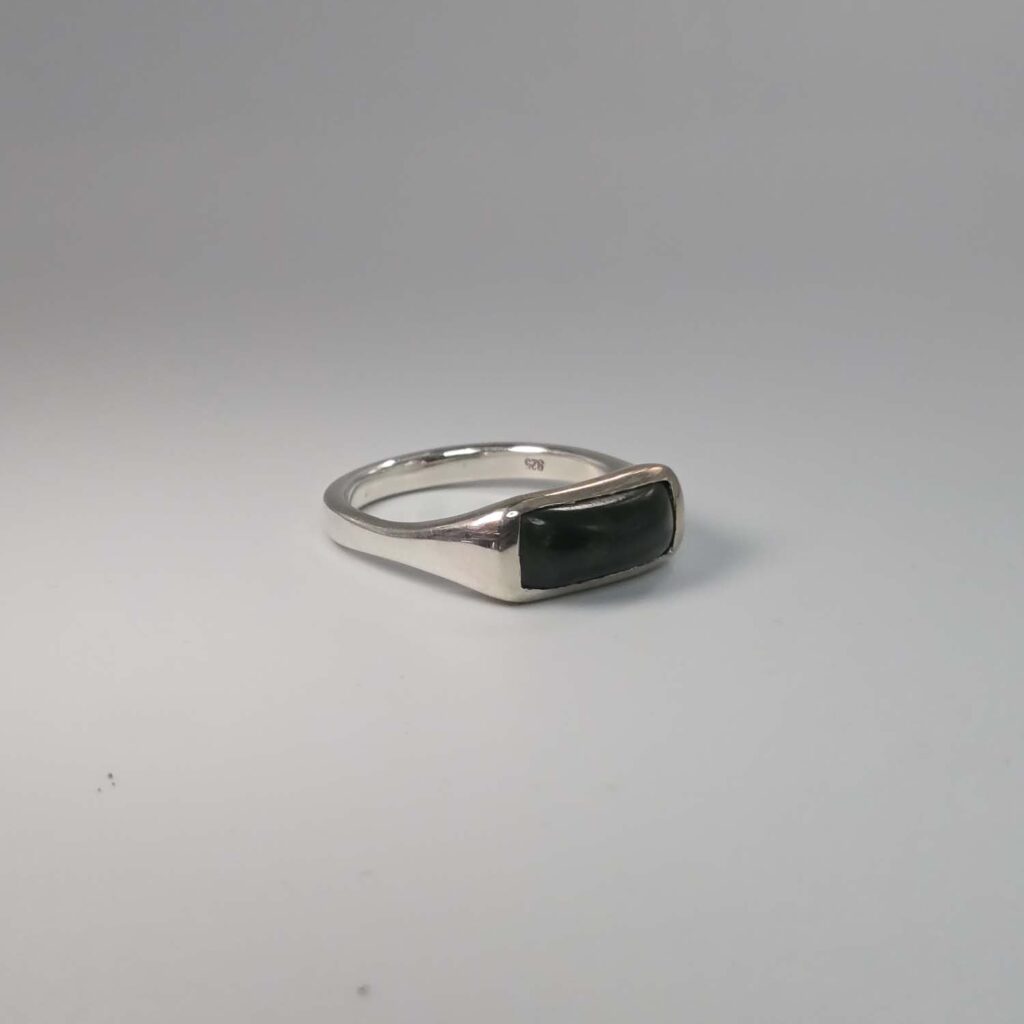
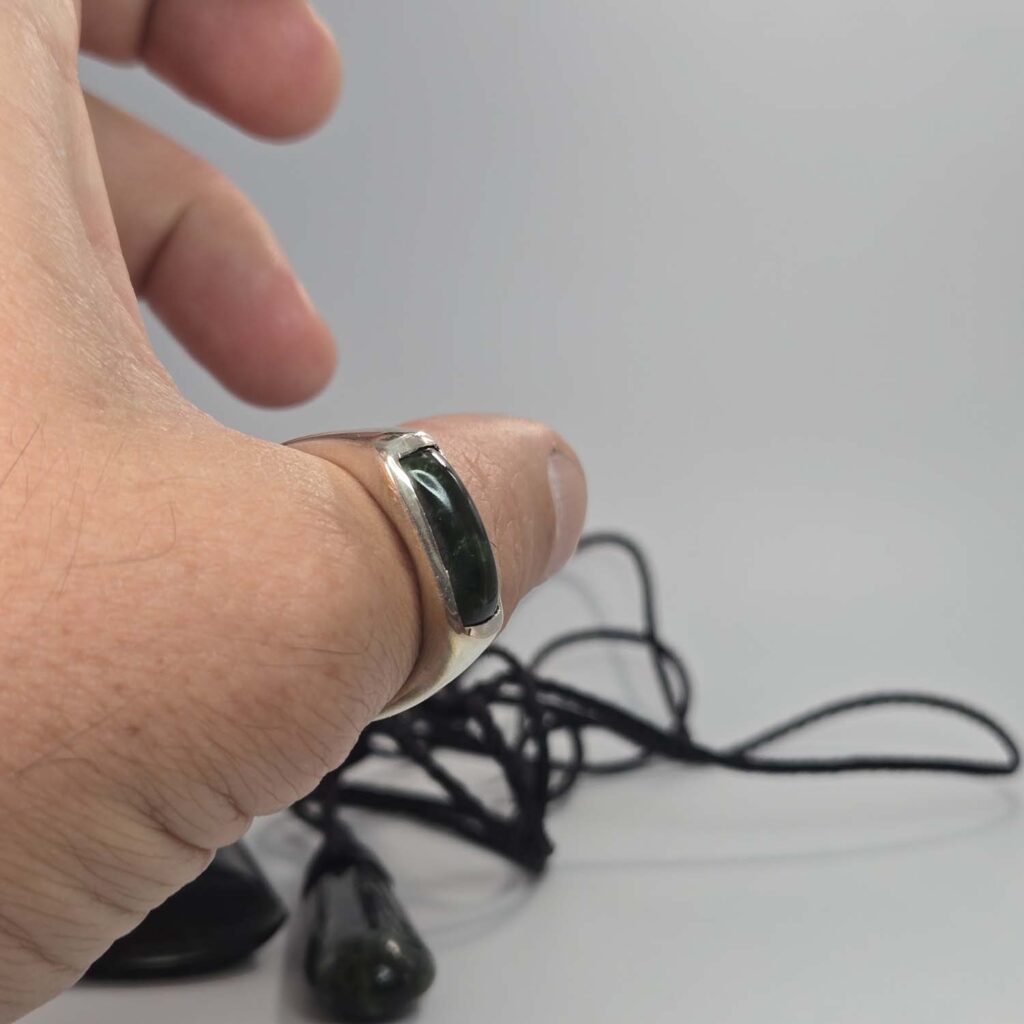
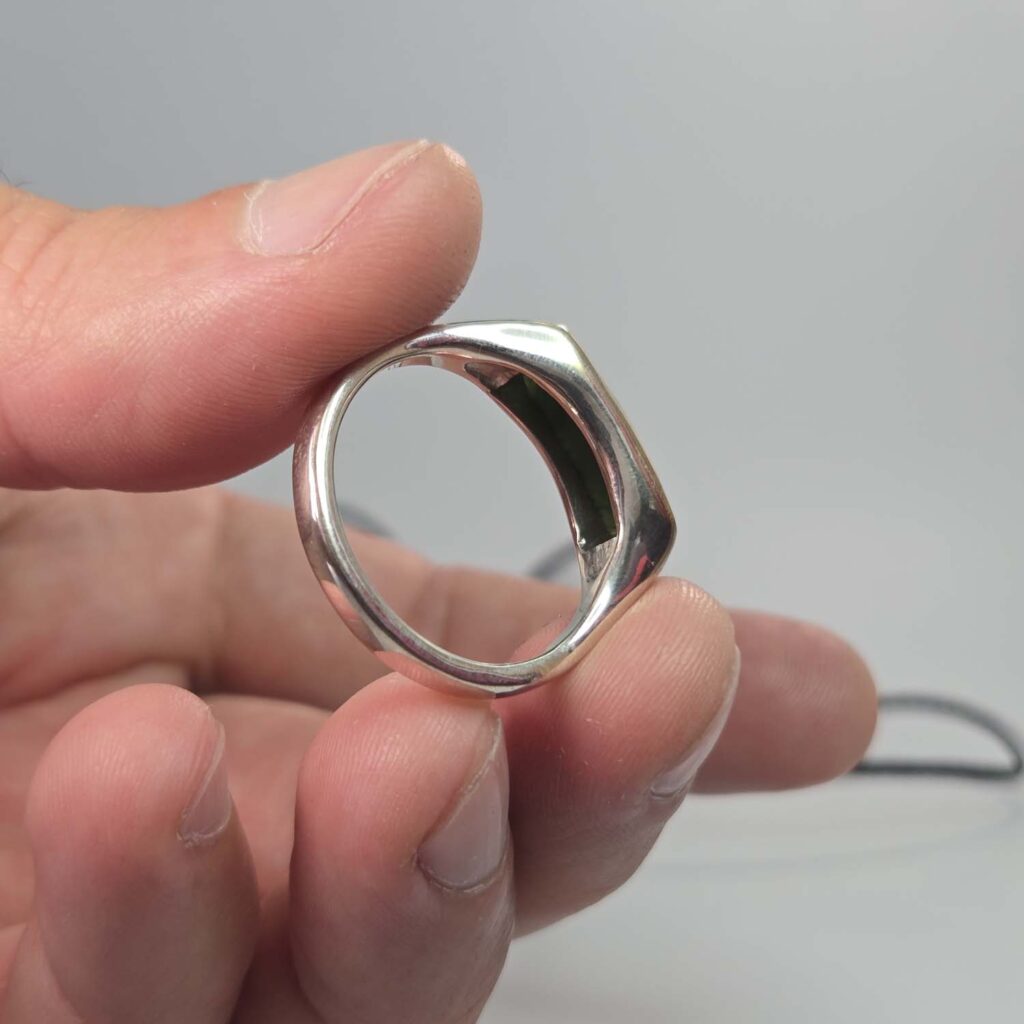
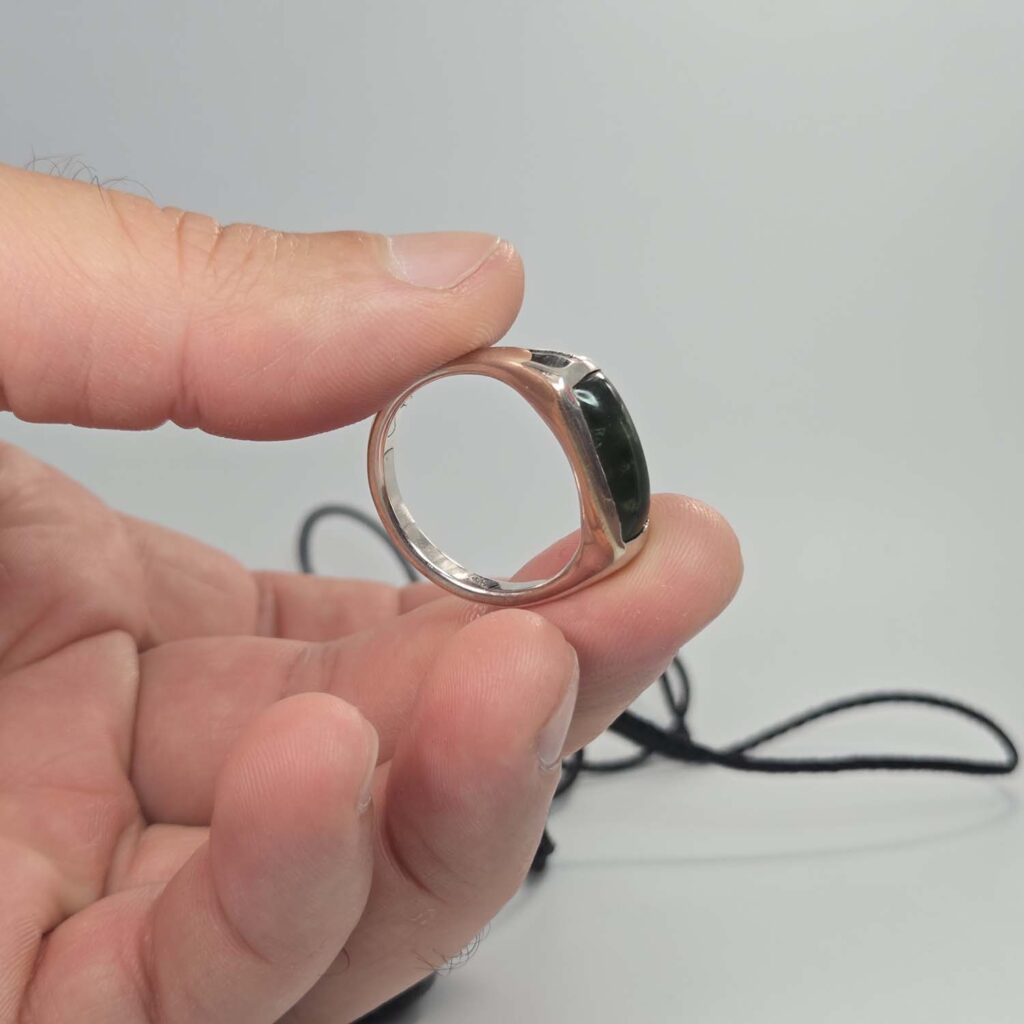
Alongside these pendants, I shaped a rectangular cabochon from the same Kawakawa Pounamu and worked with my jeweller, M.V.H, who crafted the solid sterling silver ring to house it. The form is reminiscent of a signet ring — strong, grounded, and deliberate. Wearing the stone in this way allows the whakapapa to sit visibly on the hand, present in daily life.
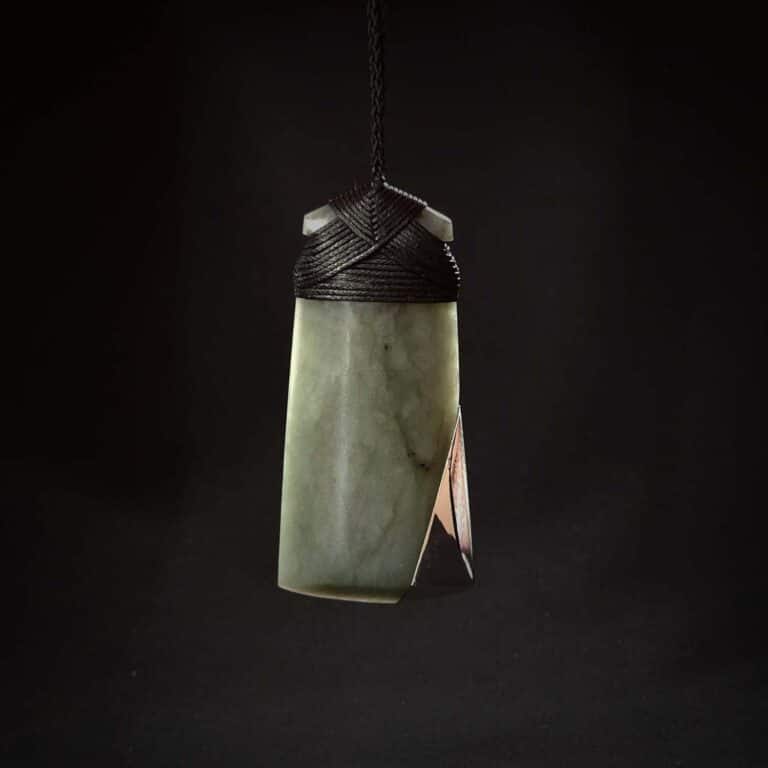
One of the larger slices was left whole, with one side carefully polished and the other retaining its natural form. For now, it serves as a display piece — a reminder of what remains and what is possible. In time, it may become more taonga. That is one of the quiet strengths of Pounamu: it can wait. It can be carried forward and reshaped as each generation decides.
Carving a family stone is always a responsibility. This was not just material — it was memory, inheritance, and intention. It is an honour to help shape that into forms that will continue to bring this whānau together.