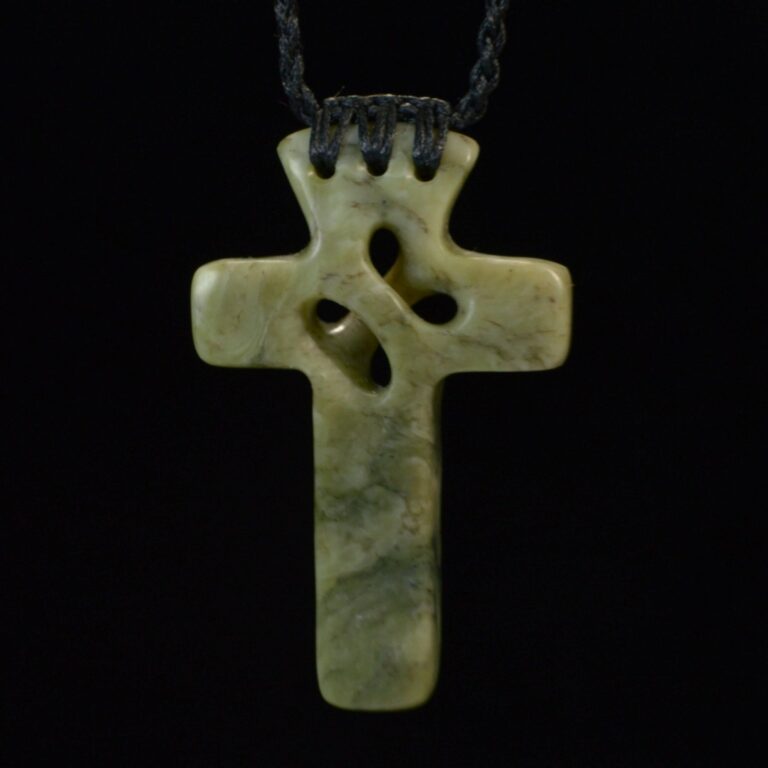
Carving Pounamu, Jade, Greenstone from New Zealand
This is the piece that I decided to start with. It is a piece of Flower Jade from Marsden.

I have made 3 pieces from this so far and am still…
working on one more. The first piece was a bit of a trial just to see what shaping the stone would be like.
I called this piece Tuatahi (First) and for me is was all about learning. It is a small toki, which represents industry and strength.


I used 1mm waxed polyester cord for the necklace plait. I learned how to do the basic whipping to secure the pendant in place.
The second and third pieces I made are intended as a set. They are the same shape and very similiar in colouring but still subtly different.
I call these two Te Wai (the water). The shape evokes a path of least resistance like water.


I really like the fact that these two pieces come from the same stone that was formed in the same way at the same time deep in the earth, this gives the wearers a very strong connection with each other.
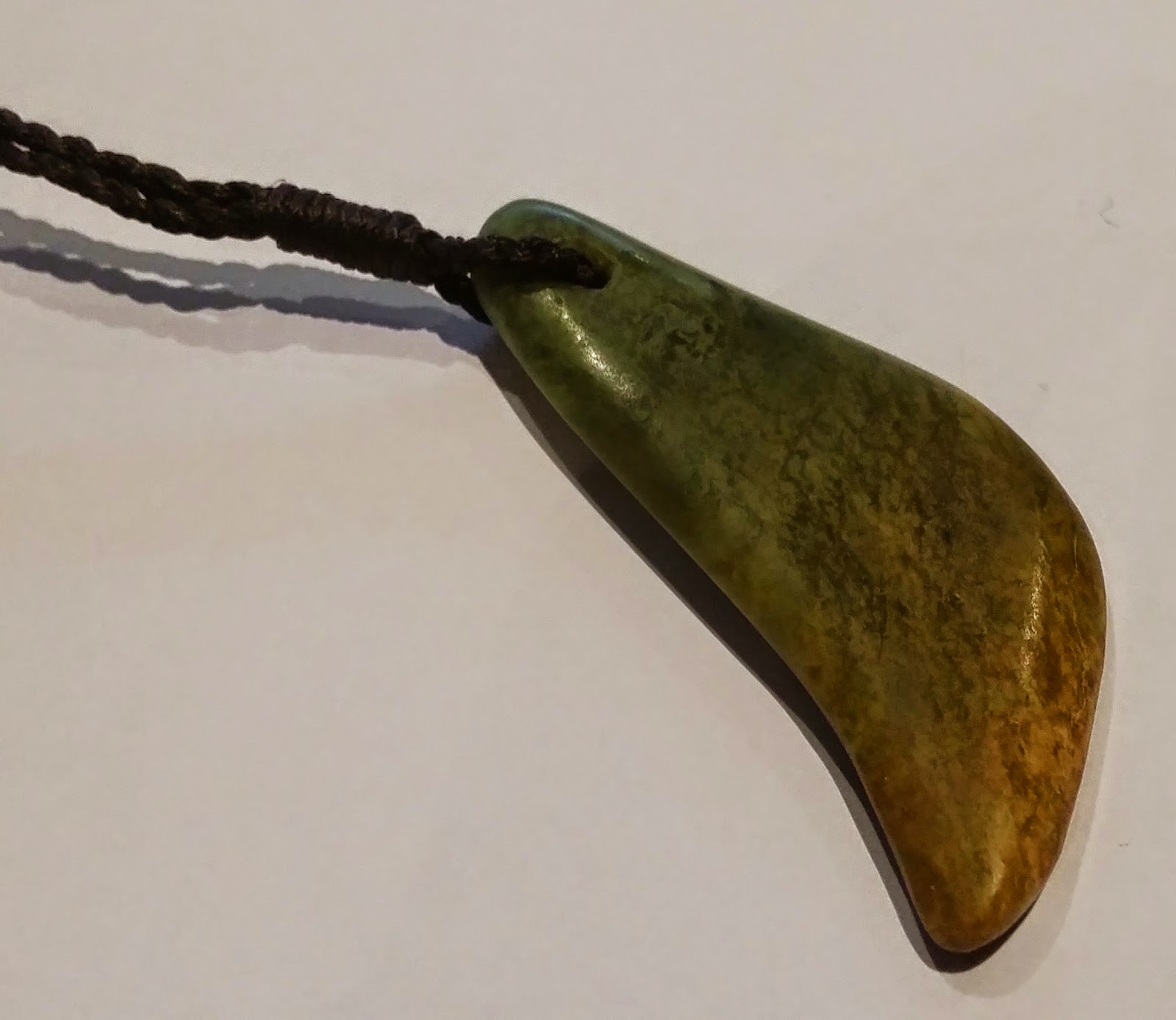

I used wet and dry sandpaper for the polishing of these pieces. The diamond burrs I used were at 300grit and I sanded them up to 1200grit with sandpaper. It gives a smooth matt polish look that shows of the grain of the stone.


The Final Piece
Toki

I really like the colour morphing in this piece. It is taken from the middle of the original slab.

Toki were originally a practical tool employed in axes, chisels and weaponry. They were also used in toki poutangata, a purely ceremonial taonga (treasures) wielded by the leader in the tribe with the most importance. The new age understanding of the design is that it represents strength and courage. This is because it had to be strong so as not to break when being used as a tool, and because only strong important individuals wielded the toki poutangata in traditional Maori society.


For more of my work see the Best of the Year Post featuring some of my best pendants.