Te Ruru
Te Ruru translates simply to “The Owl,” carrying the calm presence, watchfulness, and protection of the ruru, the native owl of Aotearoa. It is a name that reflects both guidance and kaitiaki, and it connects directly to the role the ruru holds for his whānau. Choosing this name brings the focus to the guardian who watches over them.
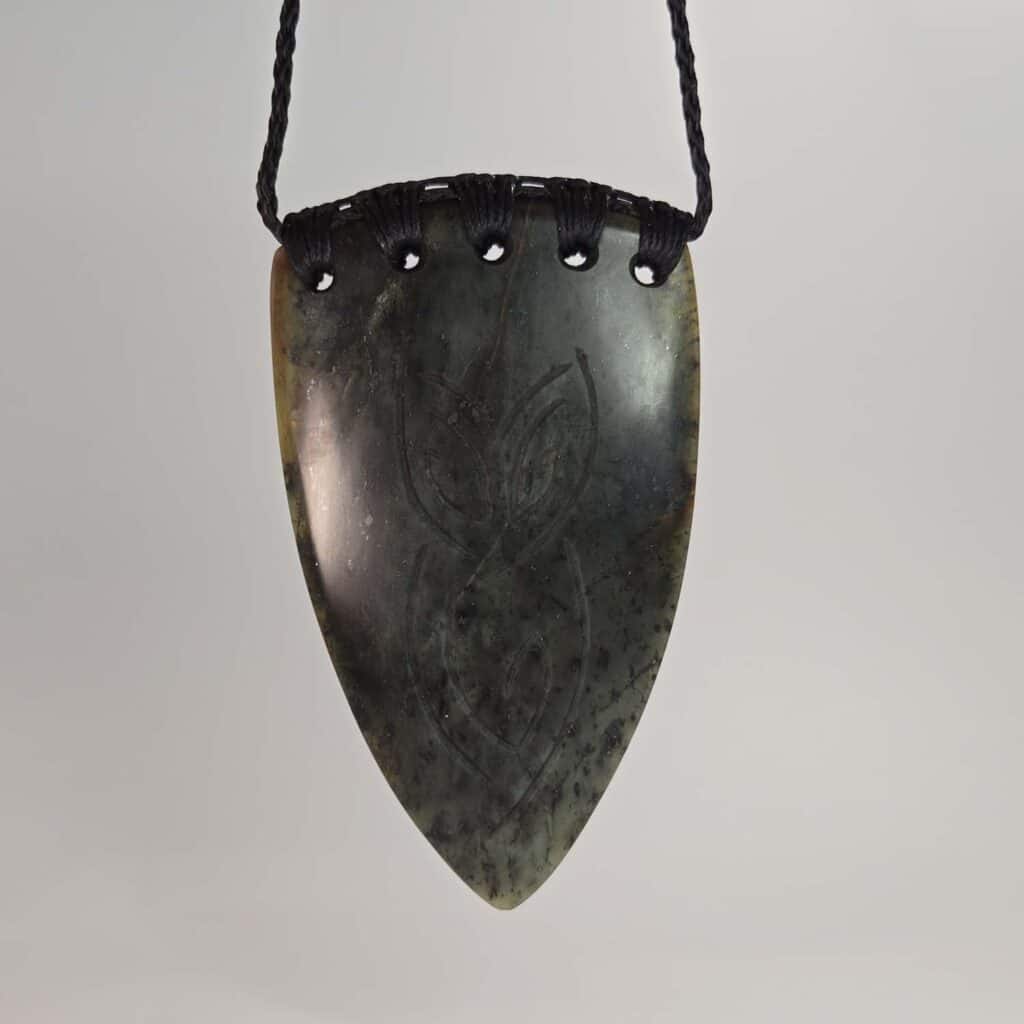
This taonga was commissioned by a wāhine for her tāne. She is a friend of mine, and we have studied te reo Māori together over the last year. Because of that shared journey, it meant a lot to sit with her in my workshop and help her find the right piece. Being able to add something meaningful to her path, and to carve something for someone important to her, made this piece special.
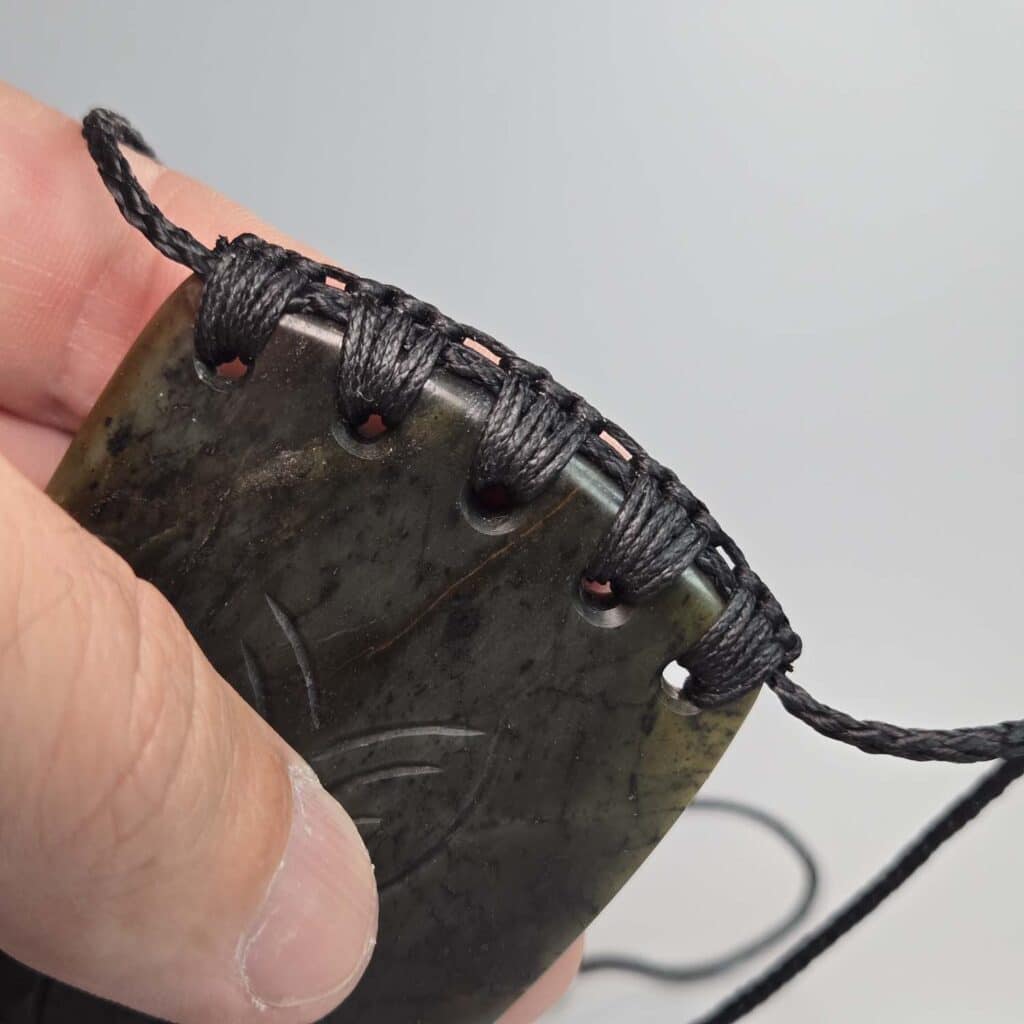
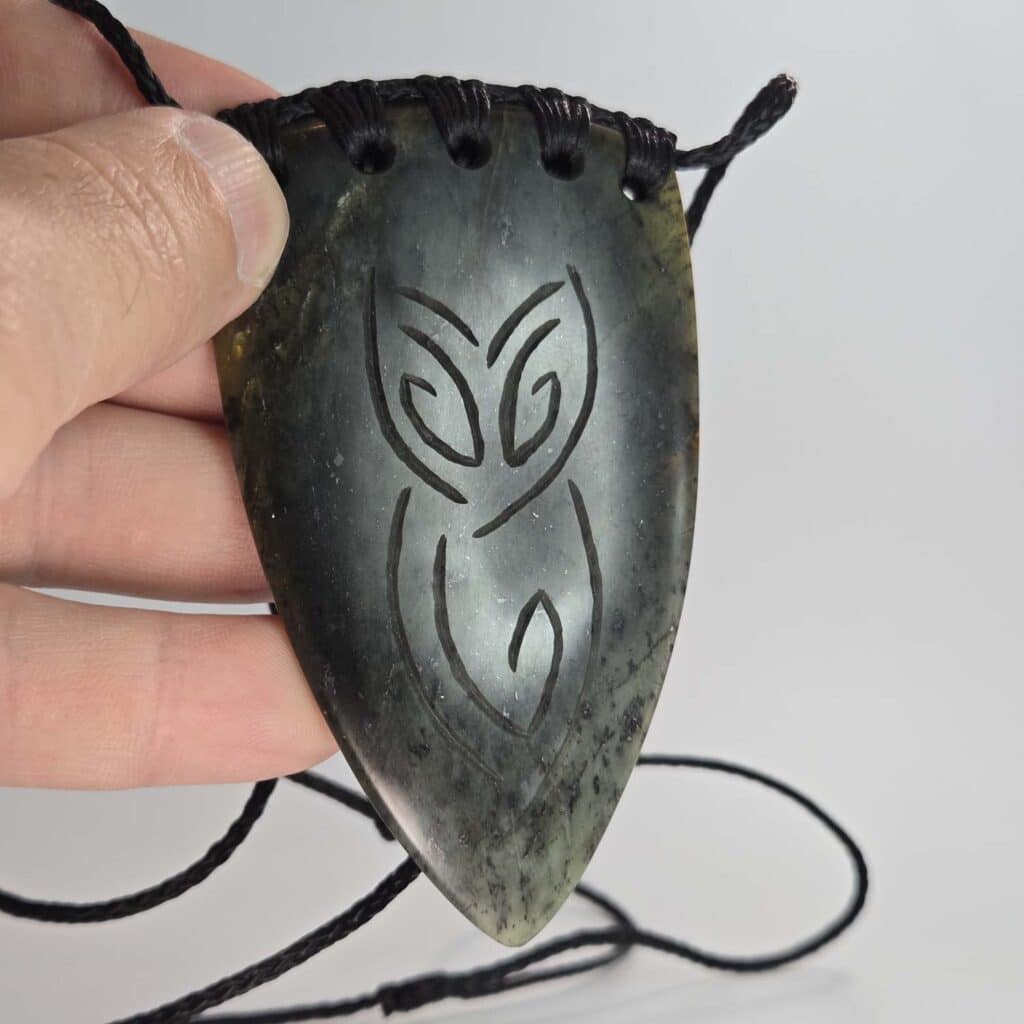
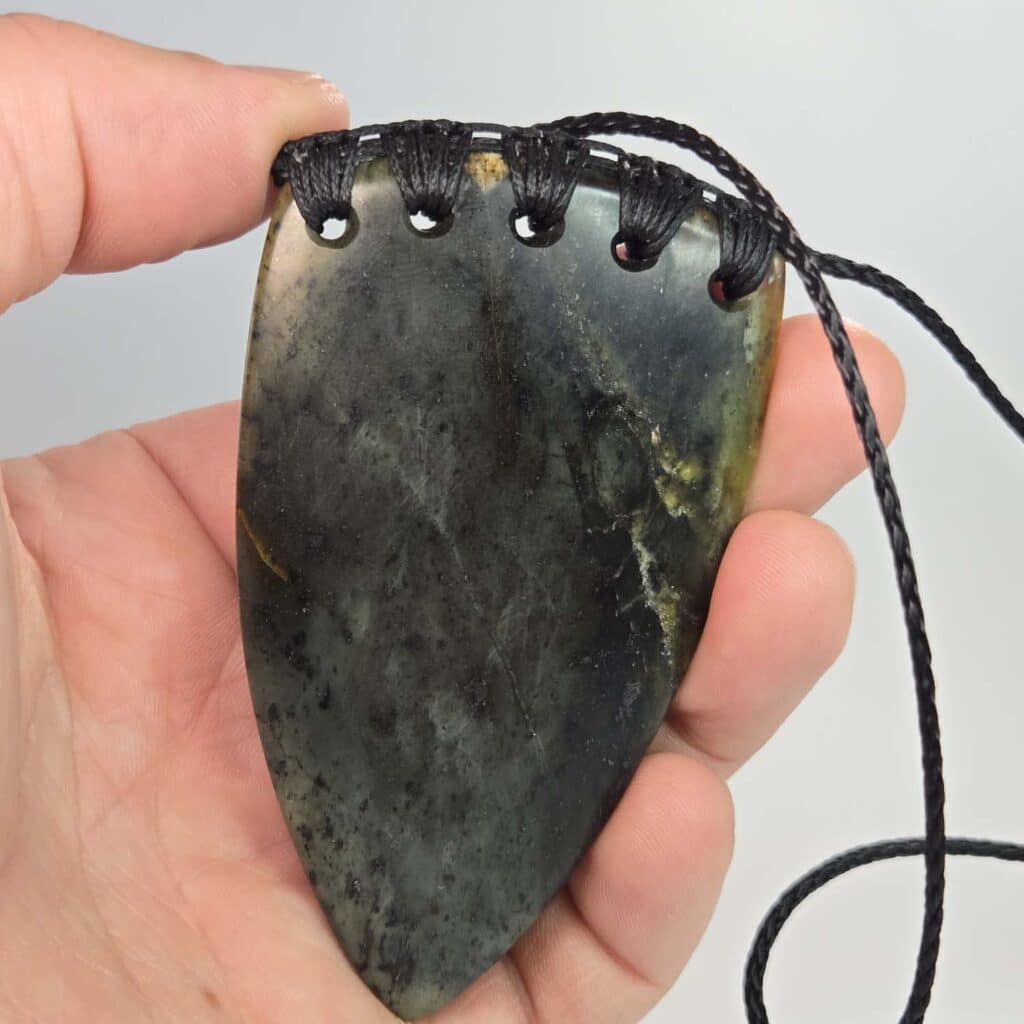
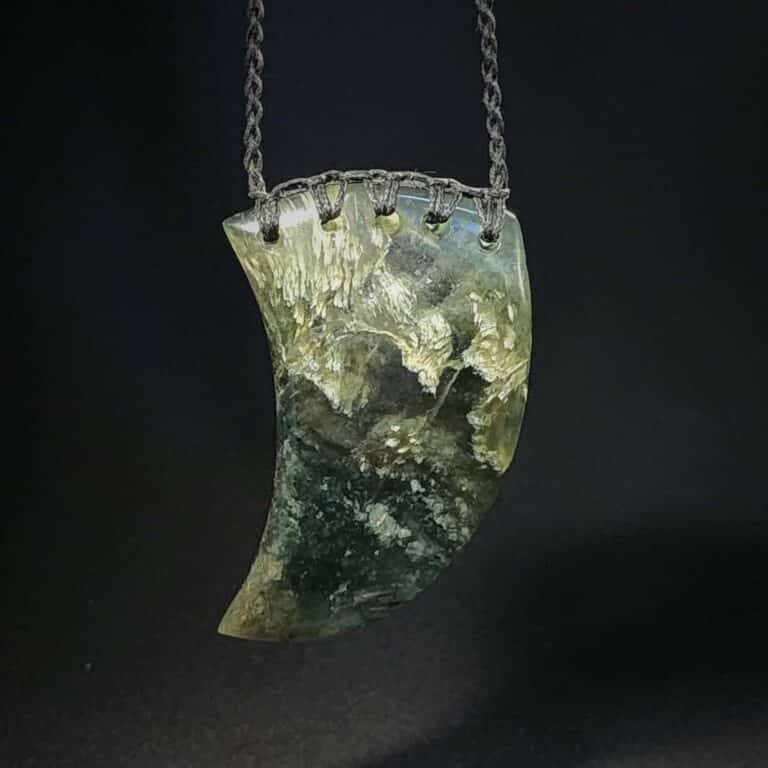
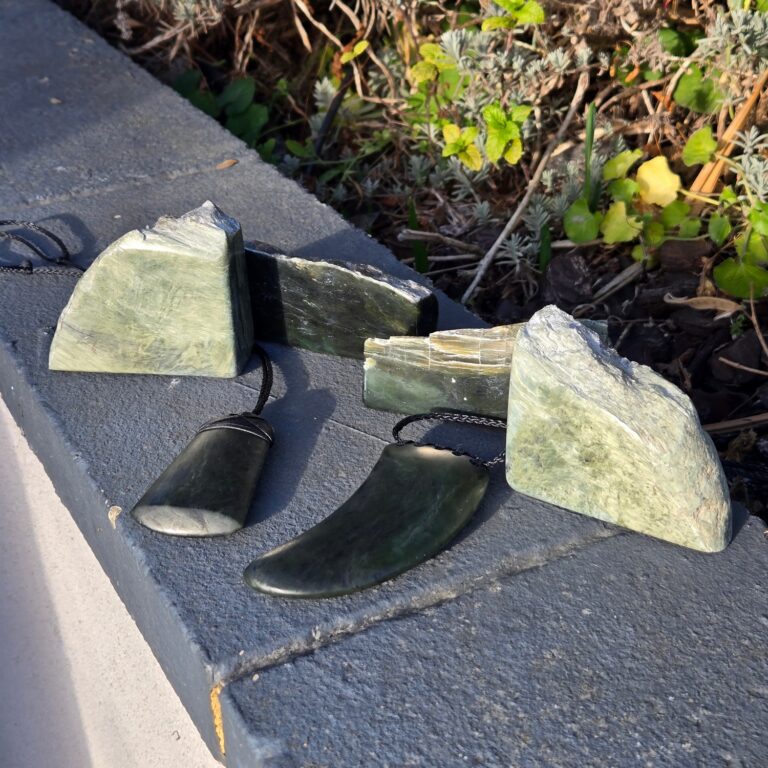
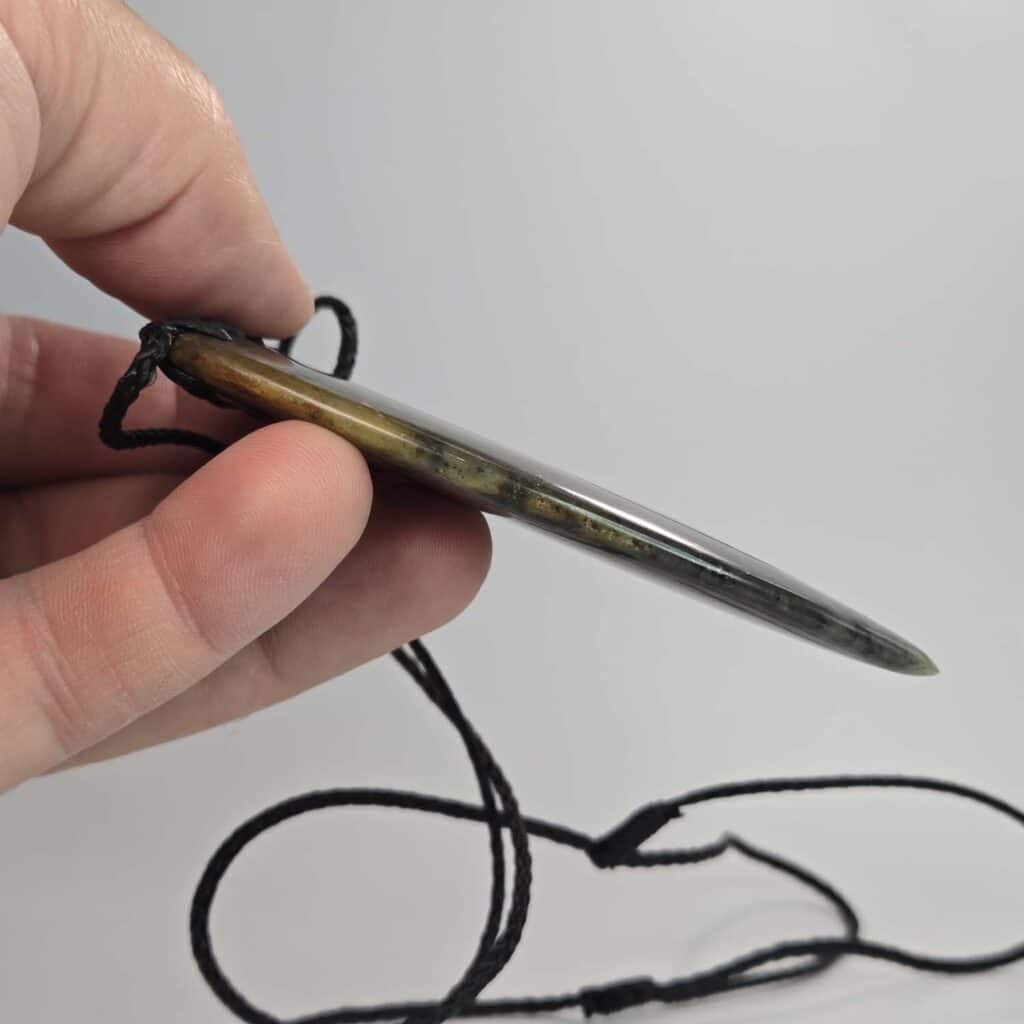
She chose a piece of serpentine pounamu that I found on the beach near Hokitika. The stone has rich colours running through it—gorgeous orangey-browns shifting into pale greens with a touch of blue when held up to the light. Parts of it are dark, but when you lift it to the light it shows a soft translucency that brings the stone to life.
The taonga is a niho about 90mm long. The niho form symbolises strength, guidance, and the presence of tūpuna. Each side curves gently inward toward the central point at the base, giving the piece a natural flow and a sense of movement while still holding to the traditional shape.
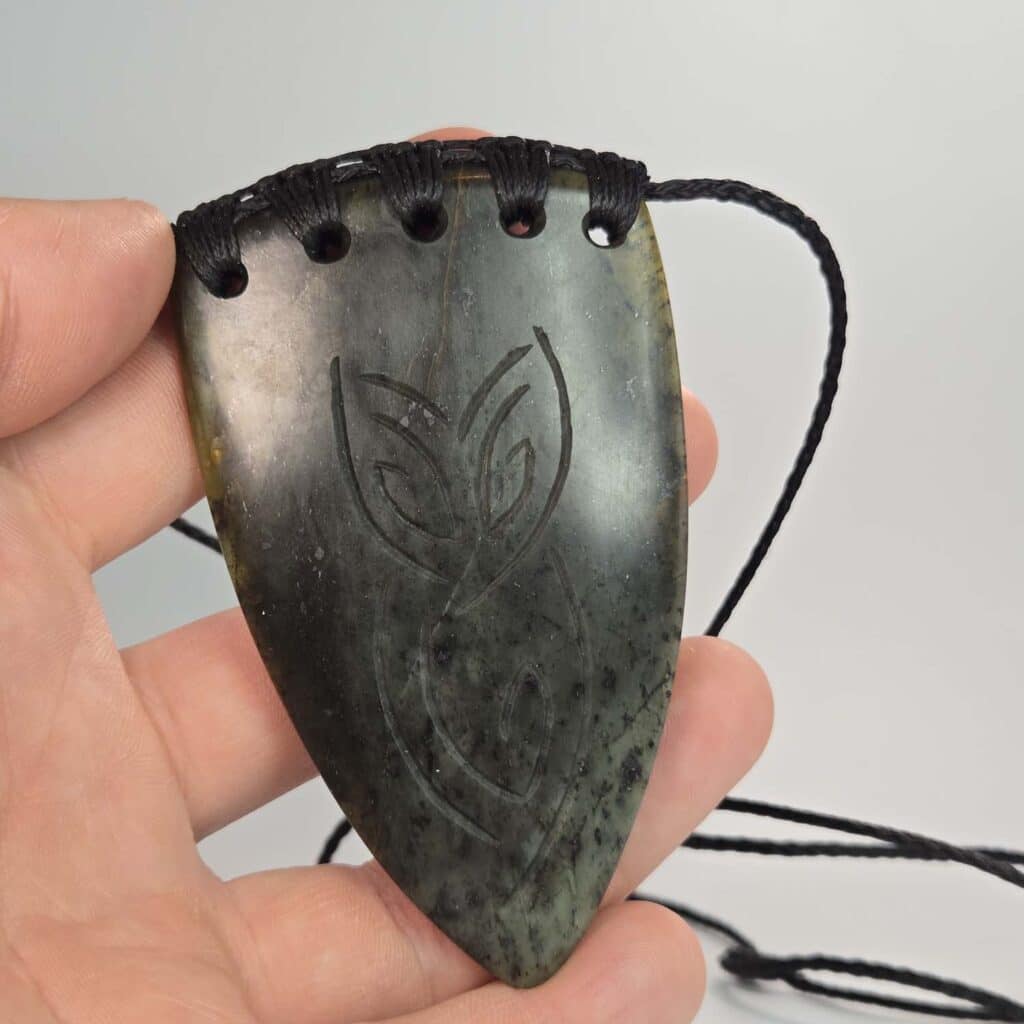
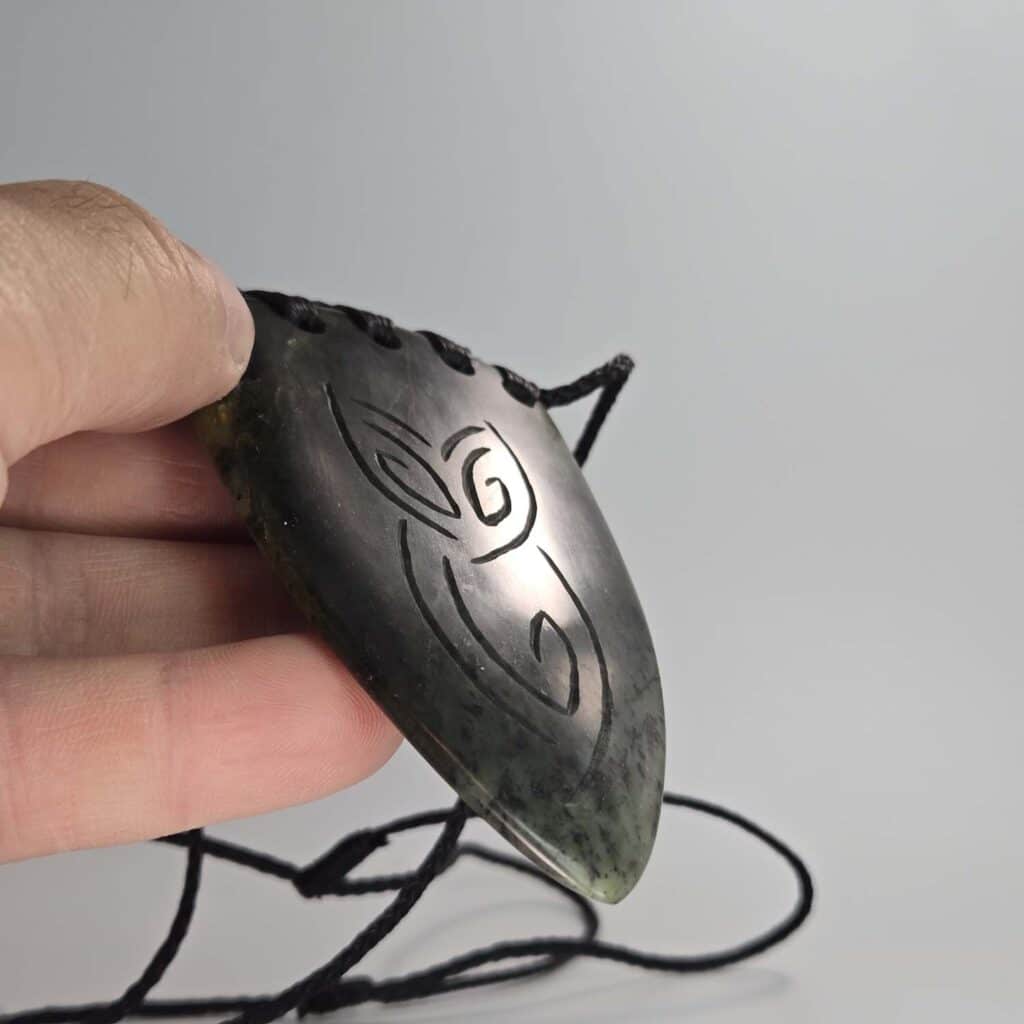
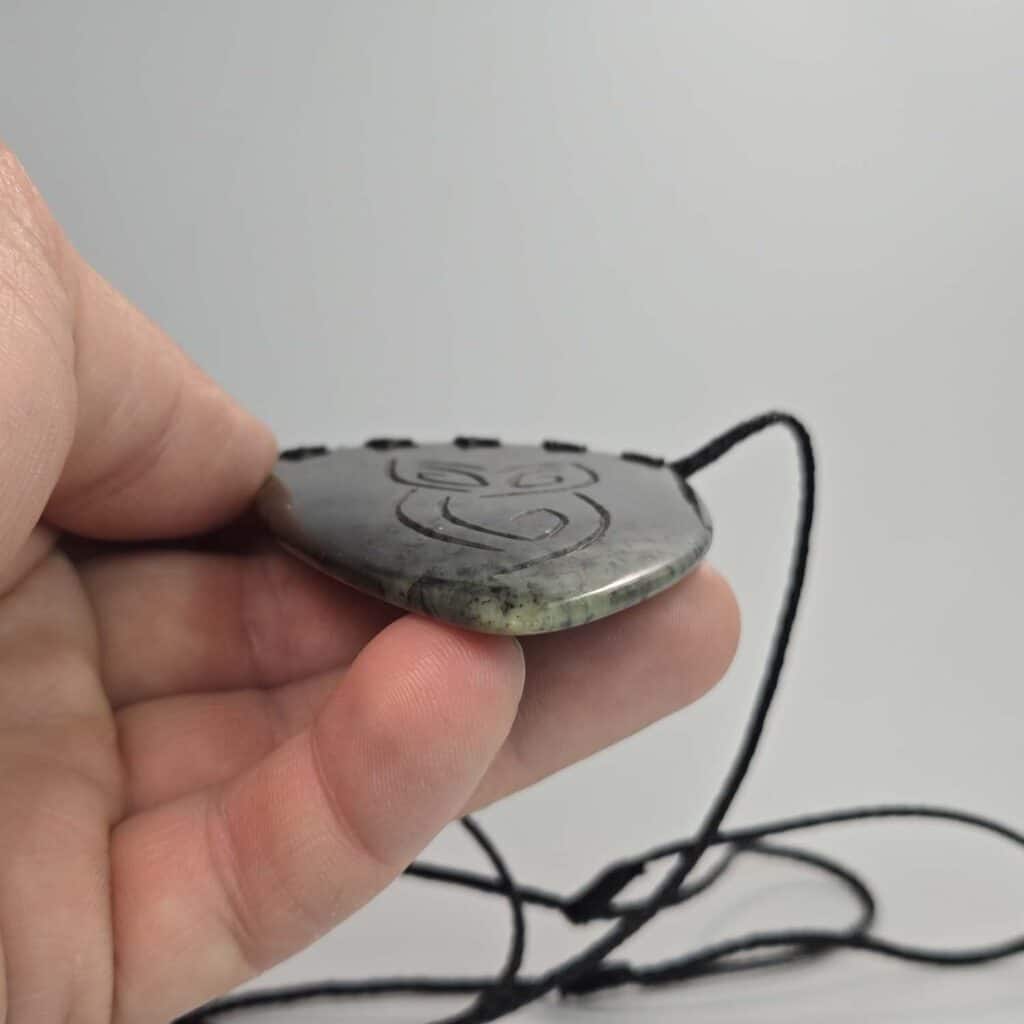
One of the most important elements of this taonga is the etched ruru design on one side. The linework forms the outline of the owl, acknowledging their whānau kaitiaki. Including the ruru brings his whakapapa into the piece and anchors it to the protection and guidance his whānau recognise.
The top is finished with a five-hole ringbolt lashing in black, balancing the form and adding strength to the piece.
This taonga was meaningful to carve. The connection to my friend, our shared learning in te reo Māori, and her trust in choosing this stone all added depth to the process. Te Ruru holds both personal and whānau significance, and it was a privilege to help bring it into being.