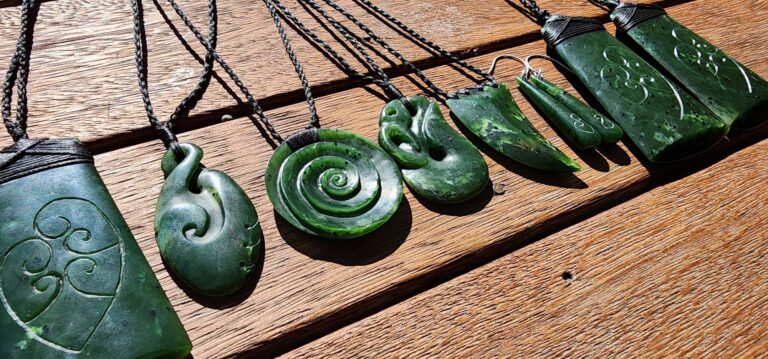
Te Rā me te Marama
The name Te Rā me te Marama means “The Sun and the Moon.” Together they represent two distinct forces that are always connected, each with its own role and purpose, yet inseparable. Combined with the symbolism of the pikorua and the manaia, this pair of taonga celebrates love, partnership, protection, and the journey of two lives becoming one.
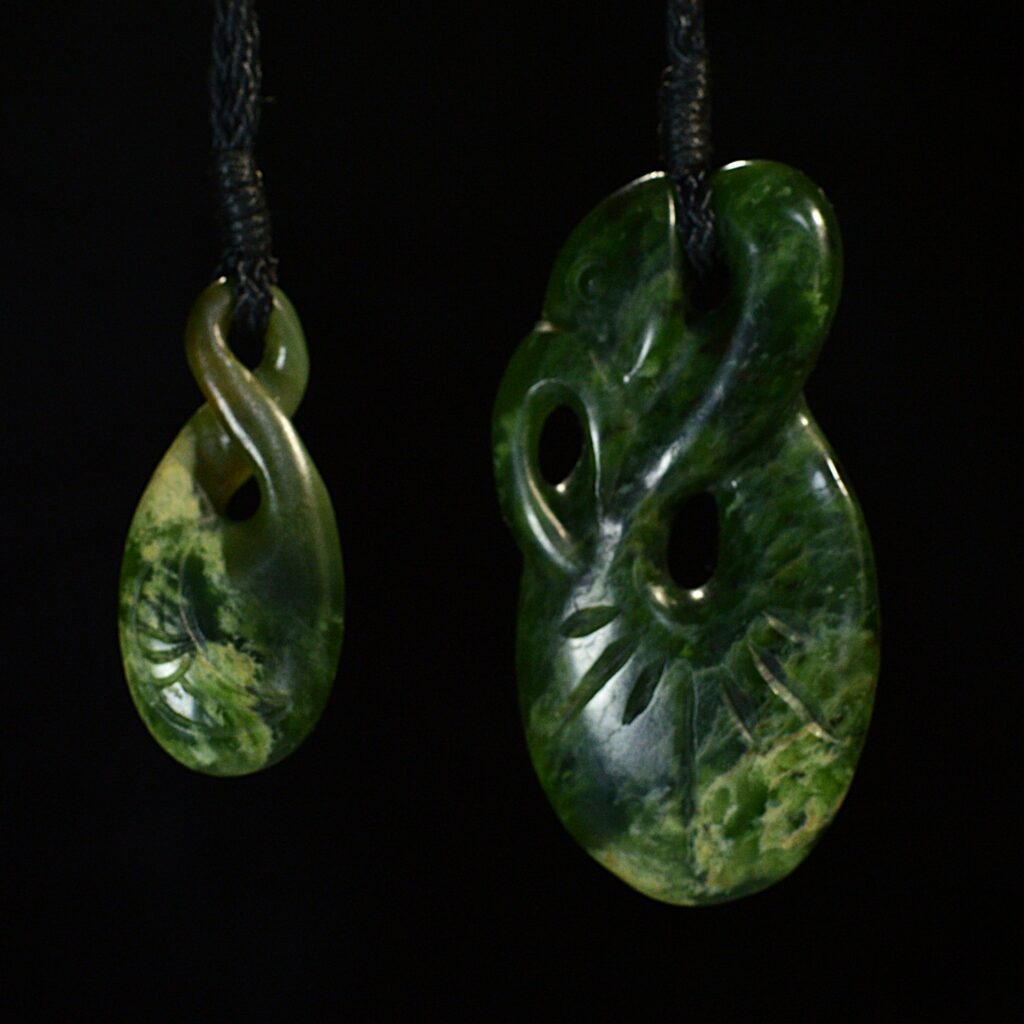
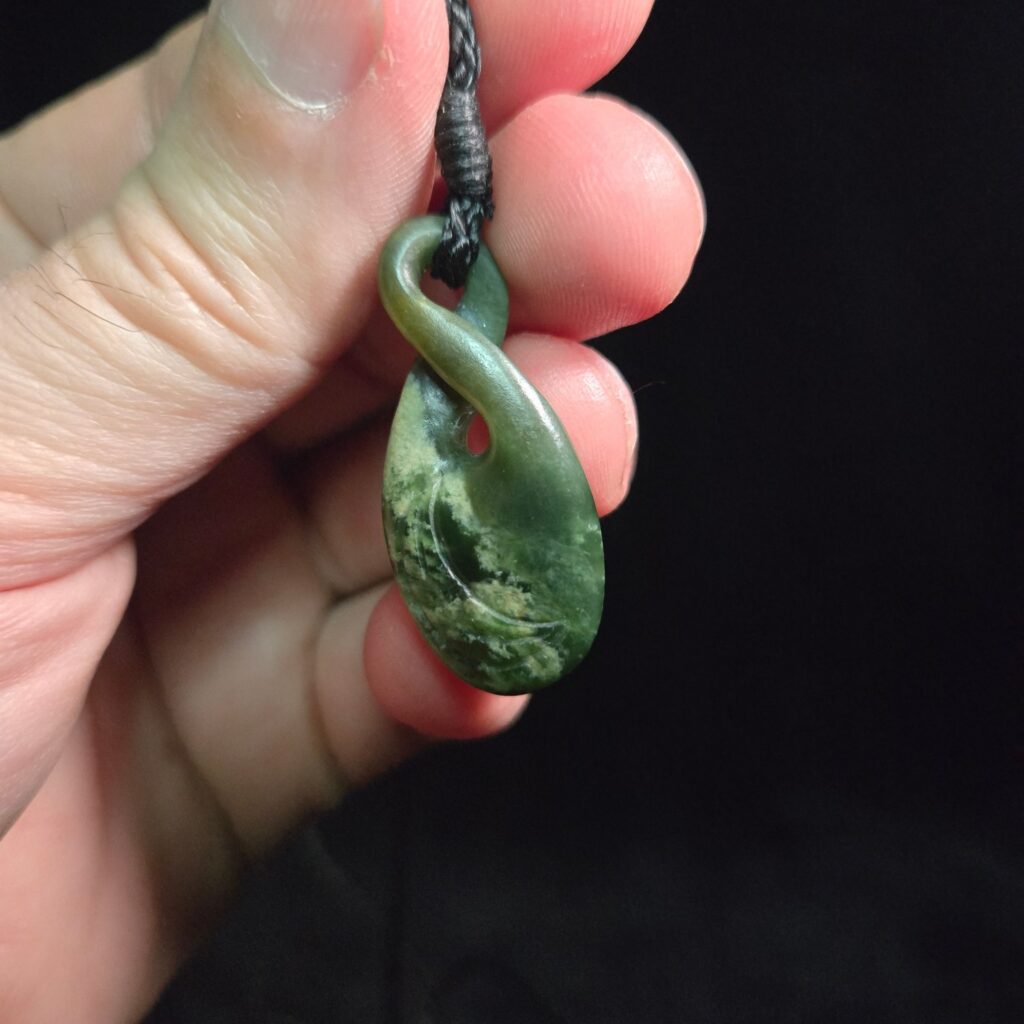
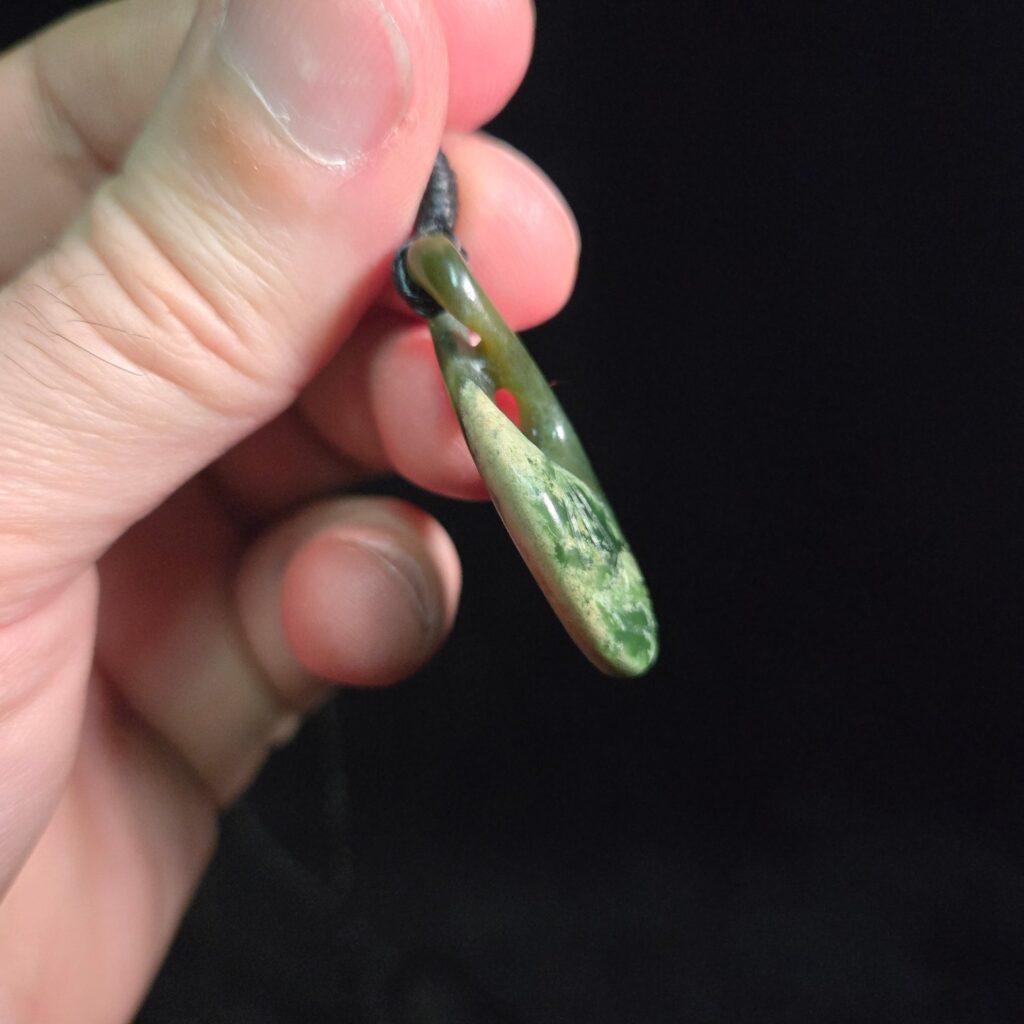
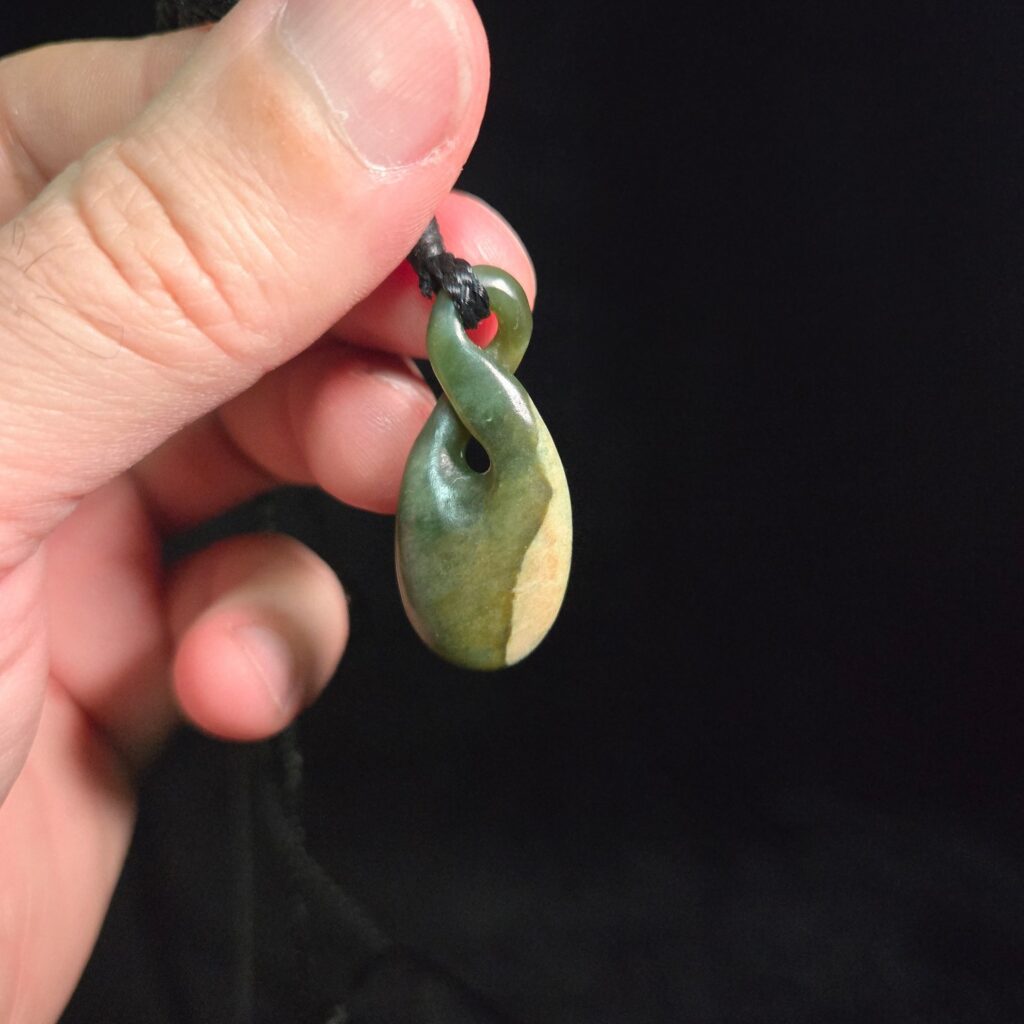
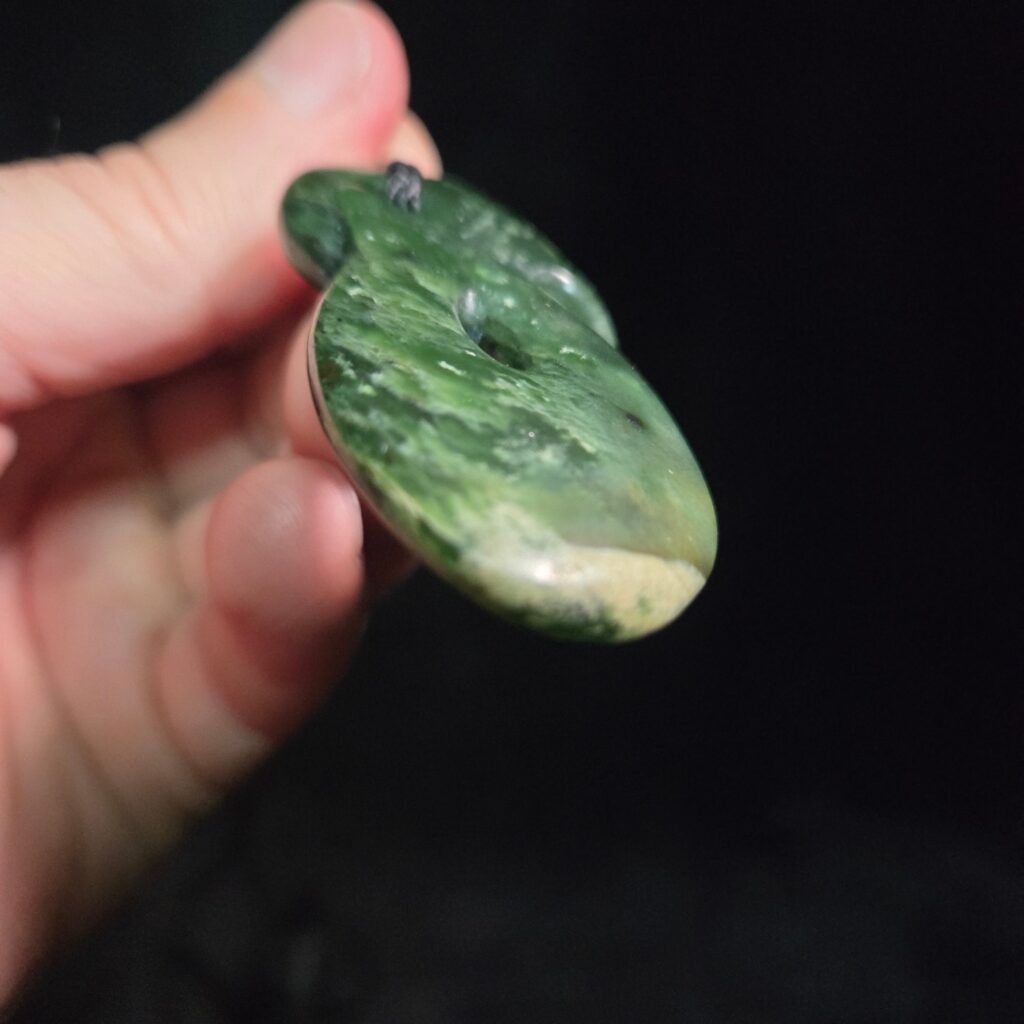
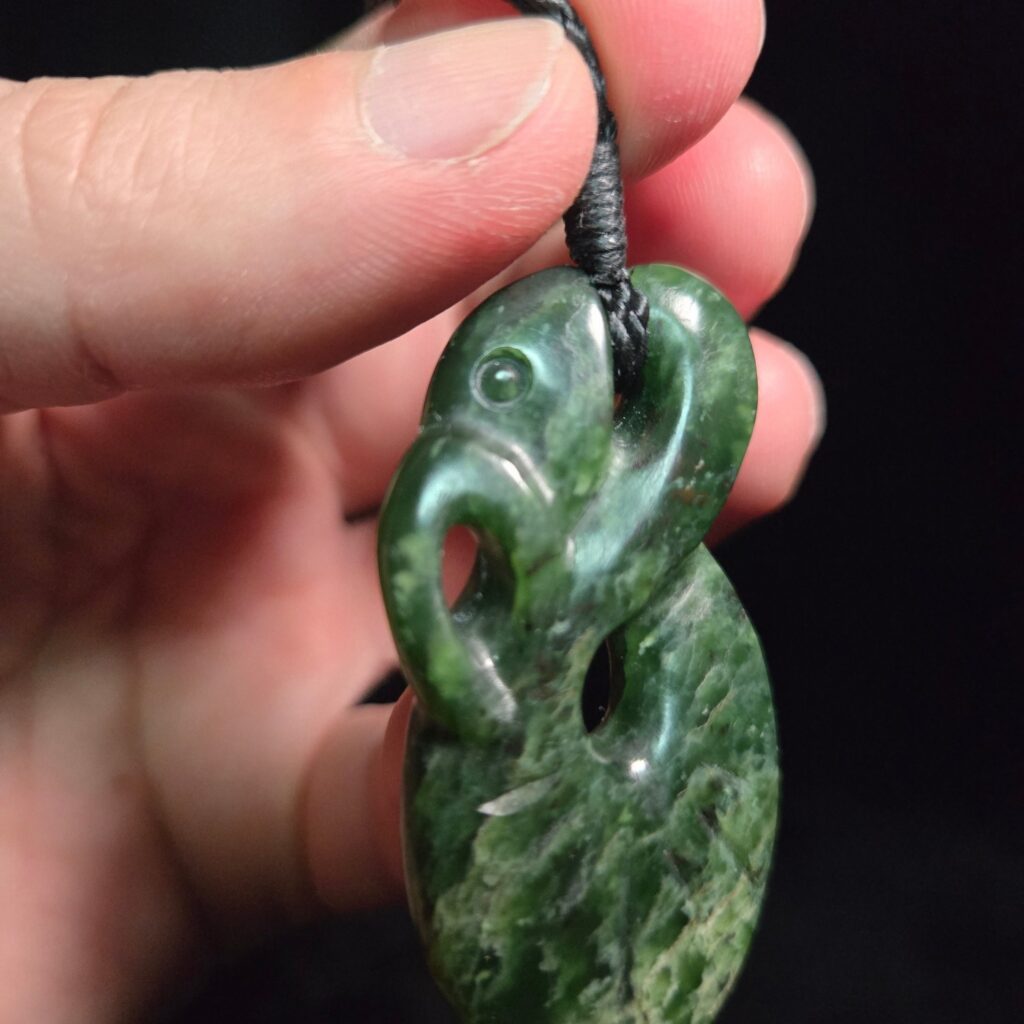
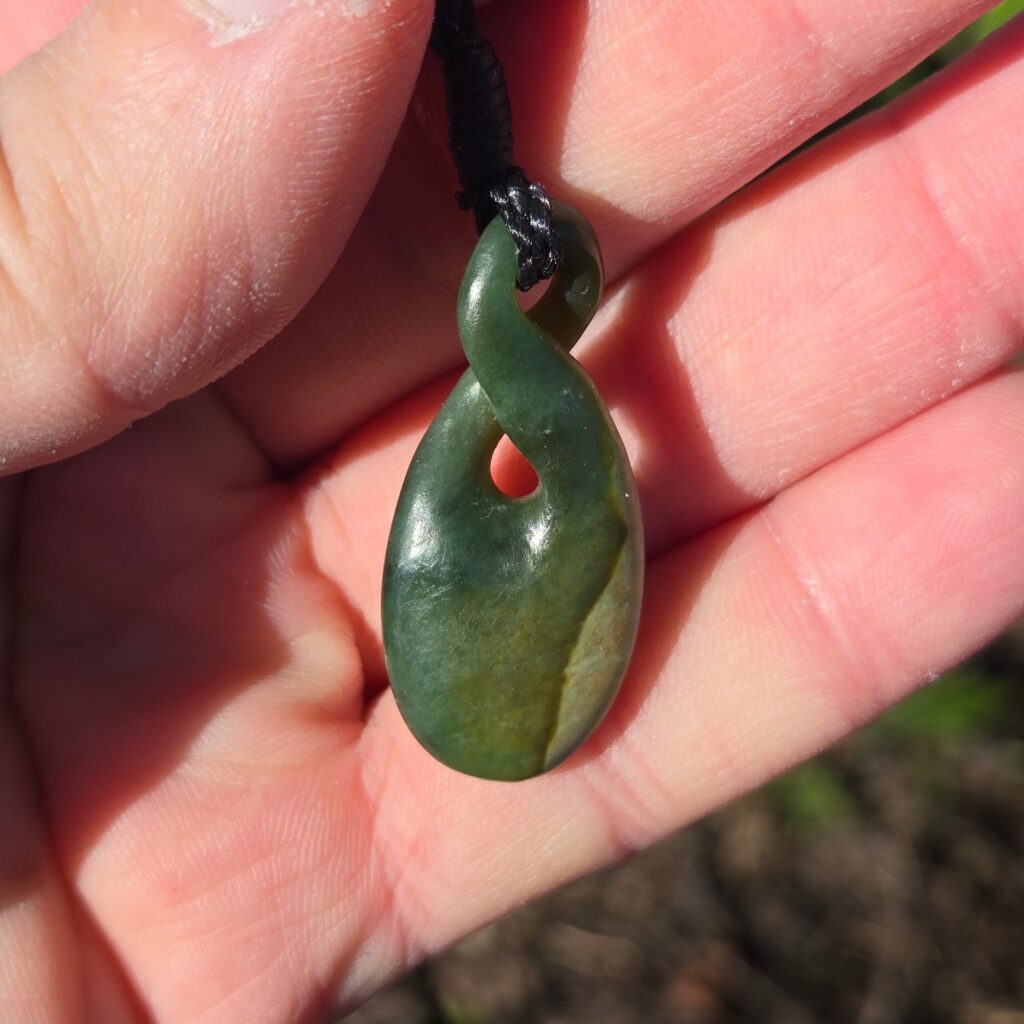
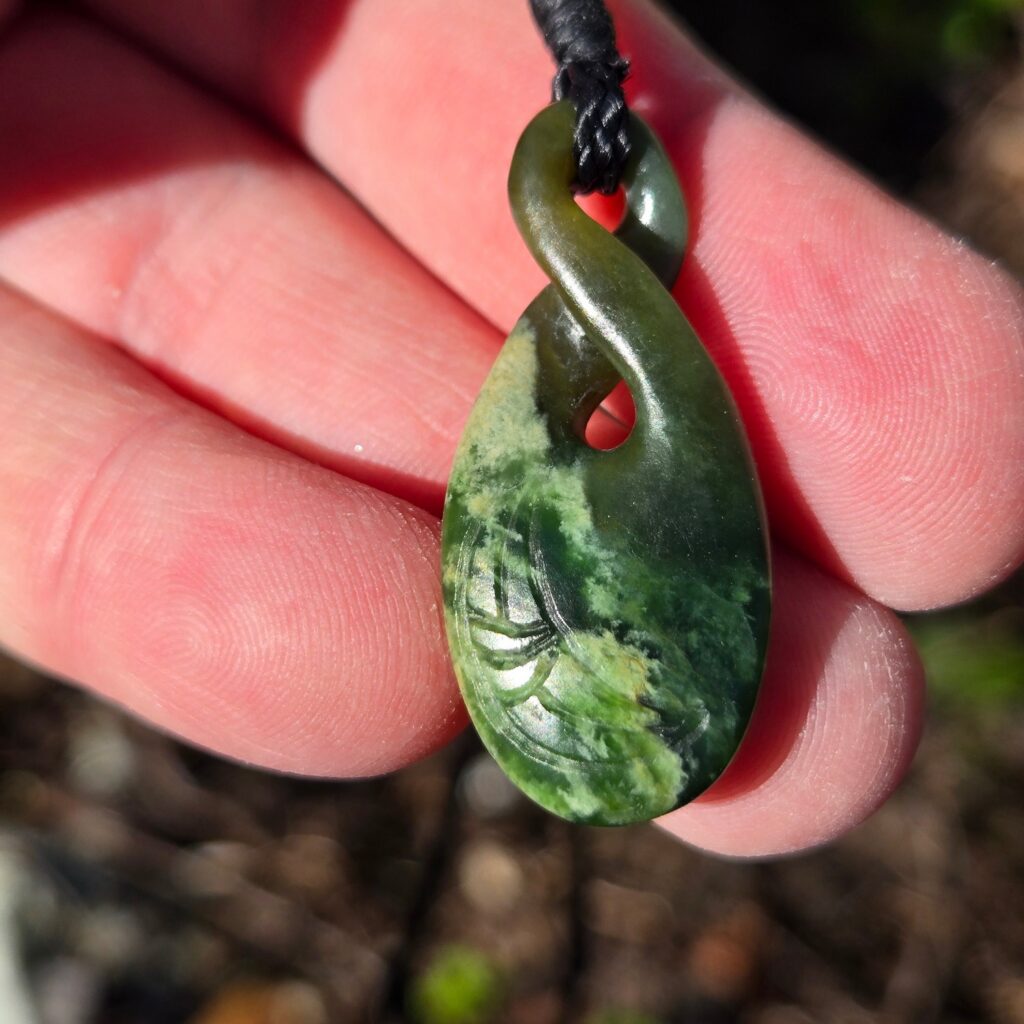
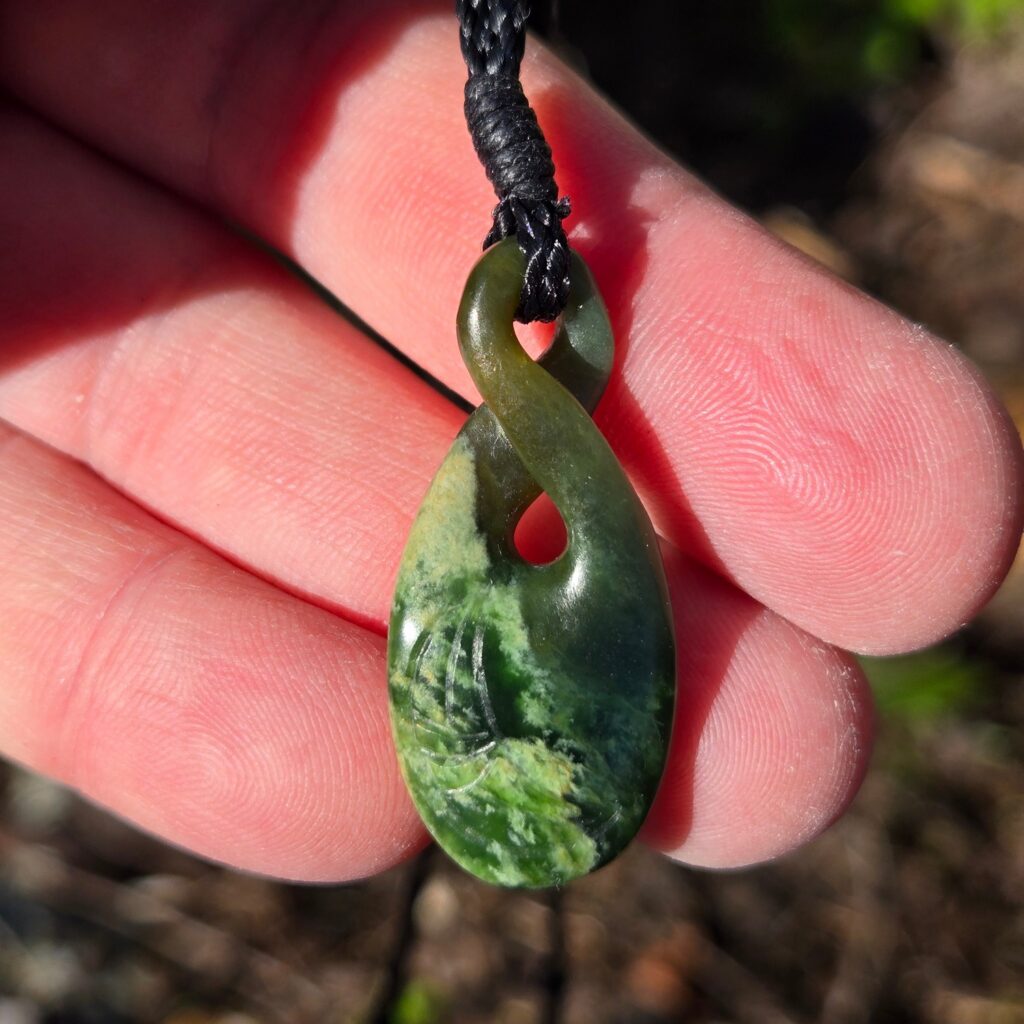
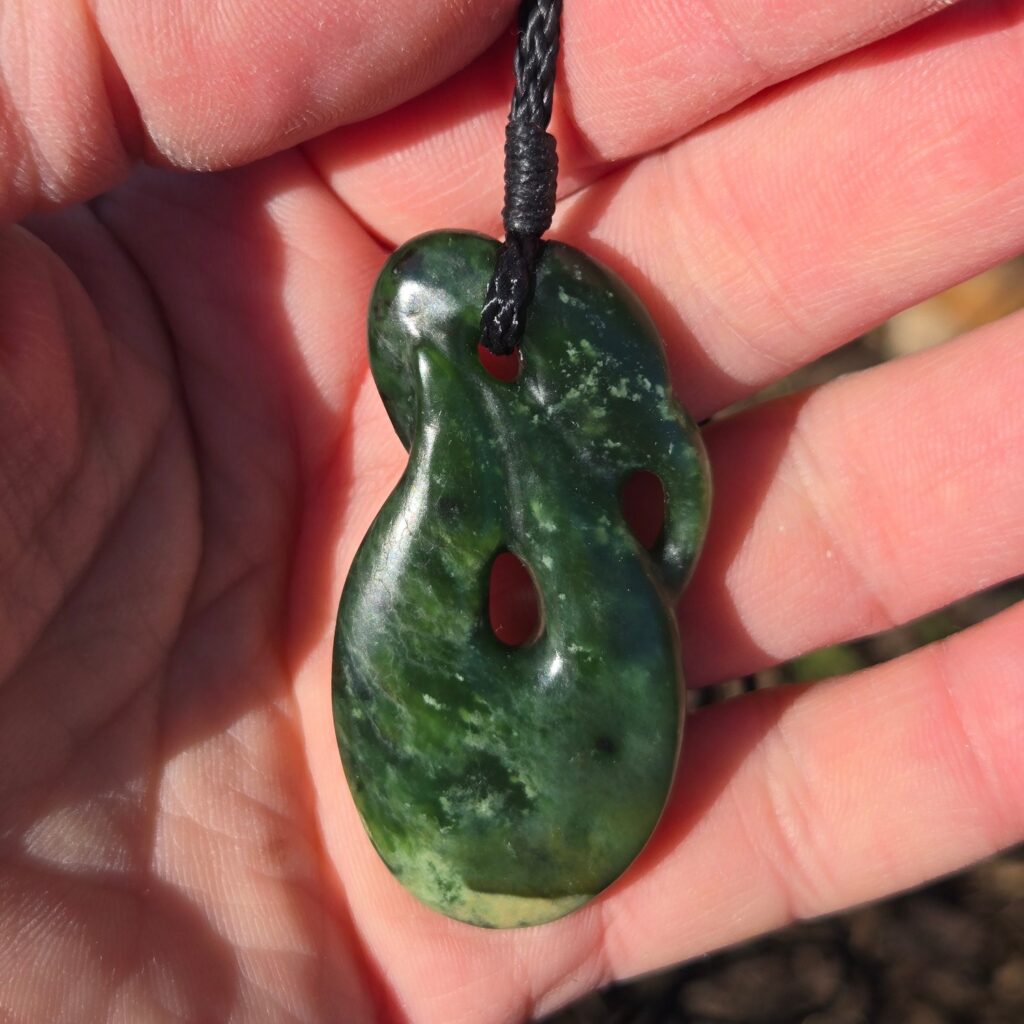
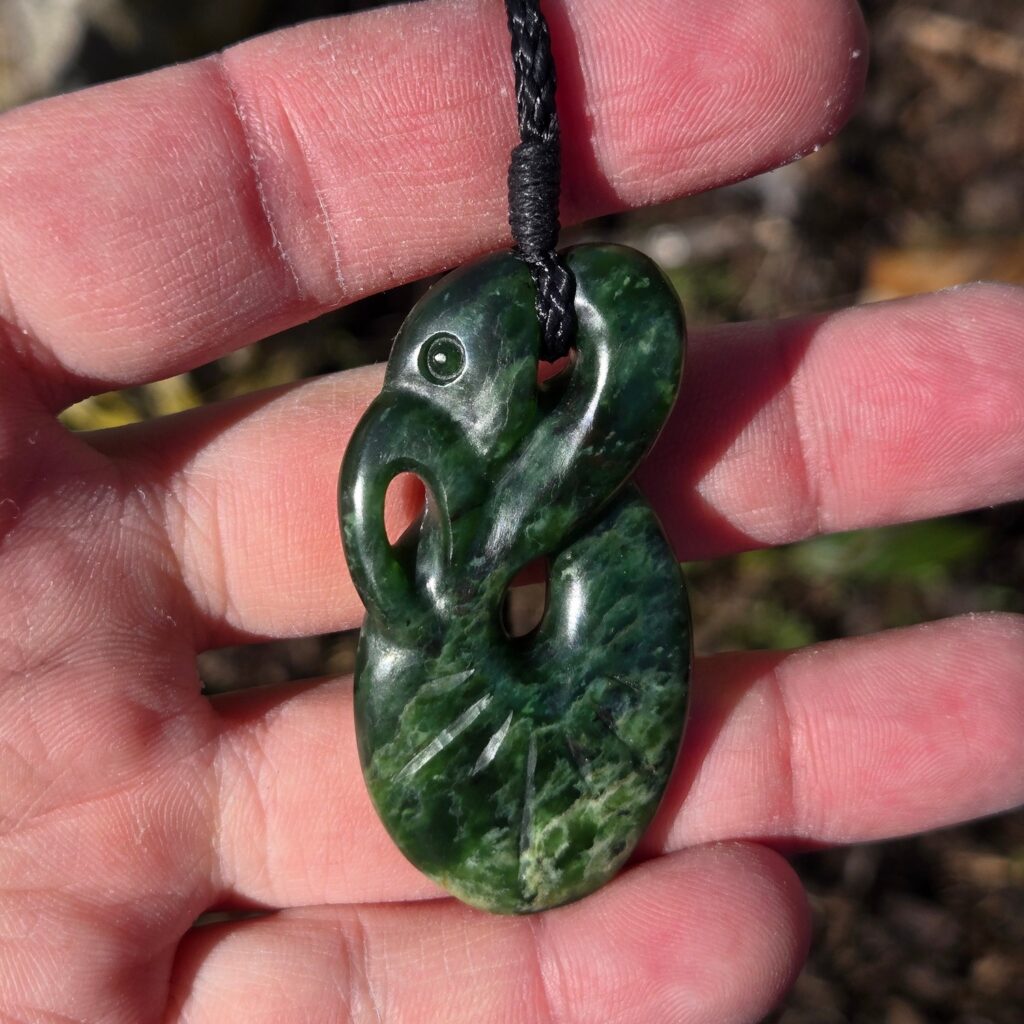
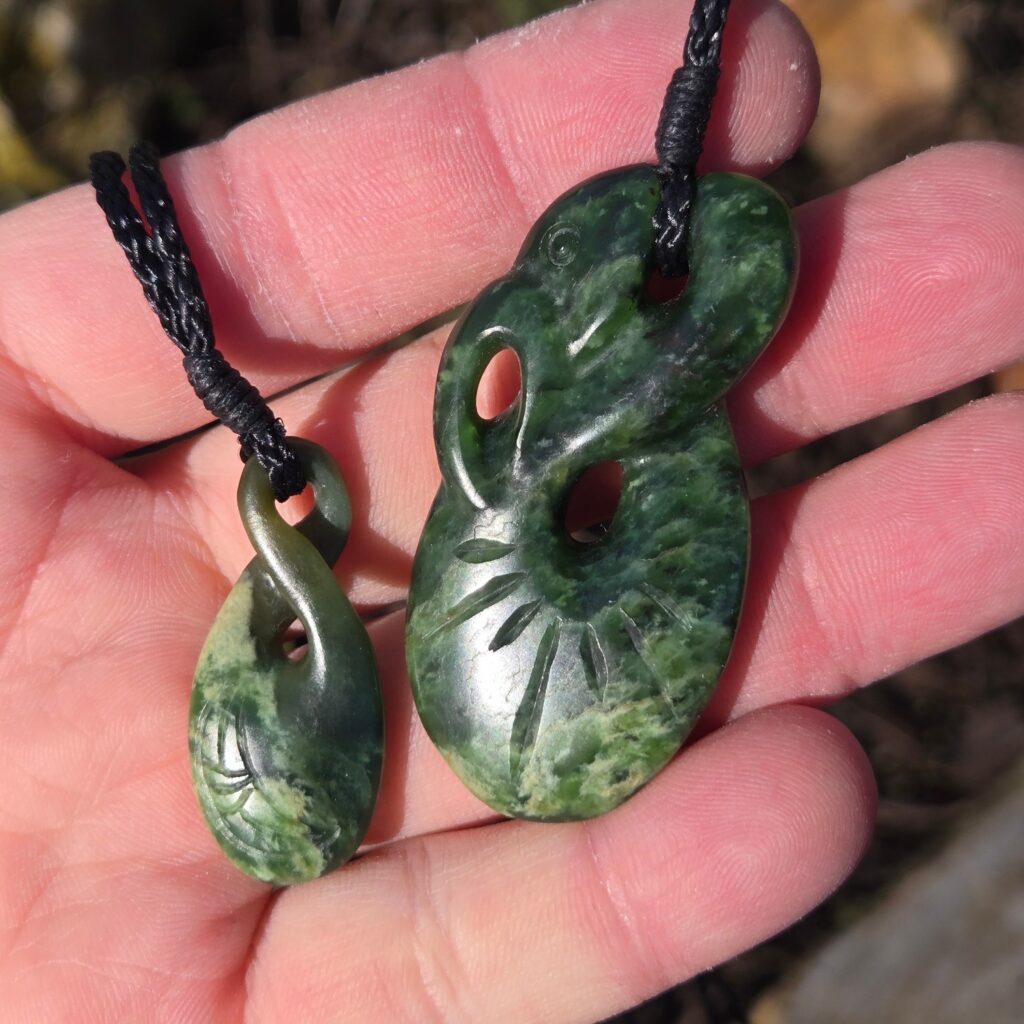
This commissioned set was carved for a couple in Italy from a single piece of flower jade Pounamu. Using one piece of stone to create both taonga gives them a permanent physical connection, each carrying part of the same Pounamu while remaining unique in its own right. The flower jade displays beautiful natural flowering patterns throughout, making each piece unmistakably part of the same whole.
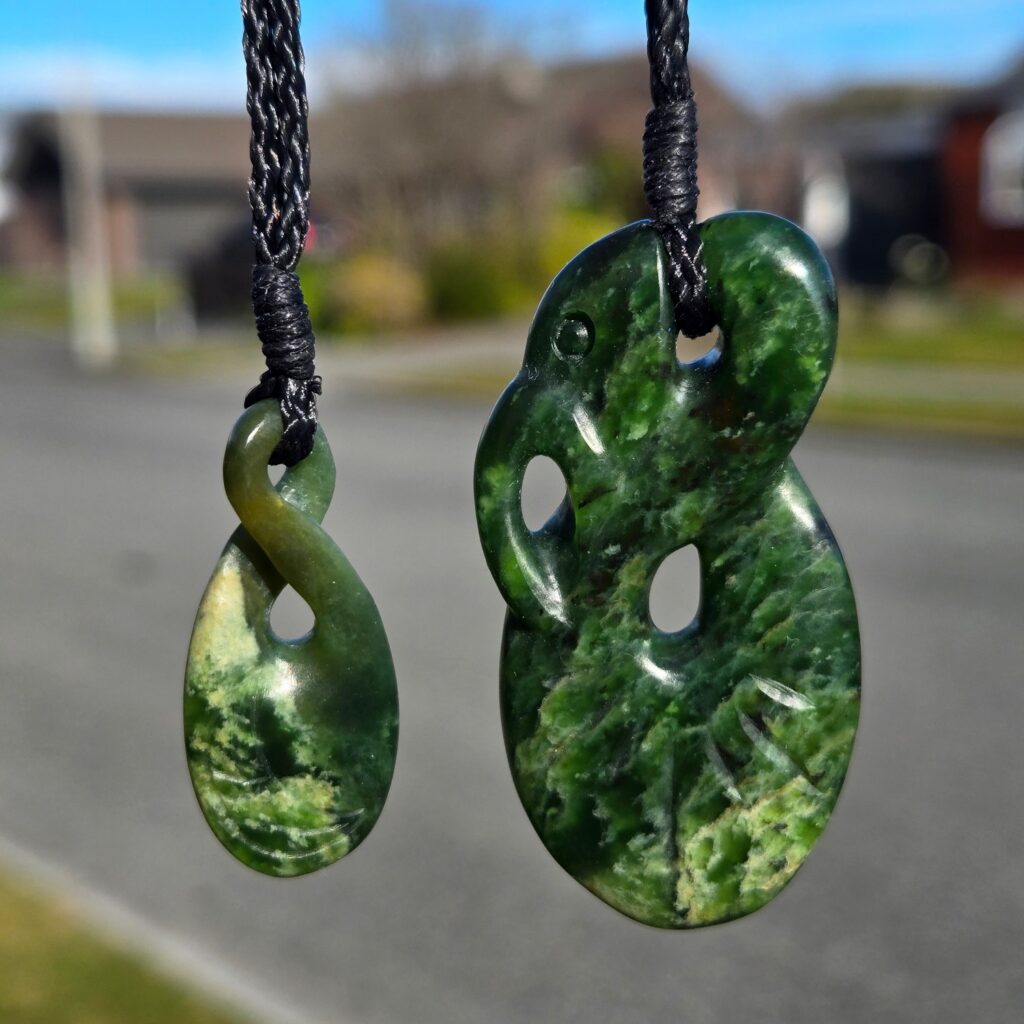
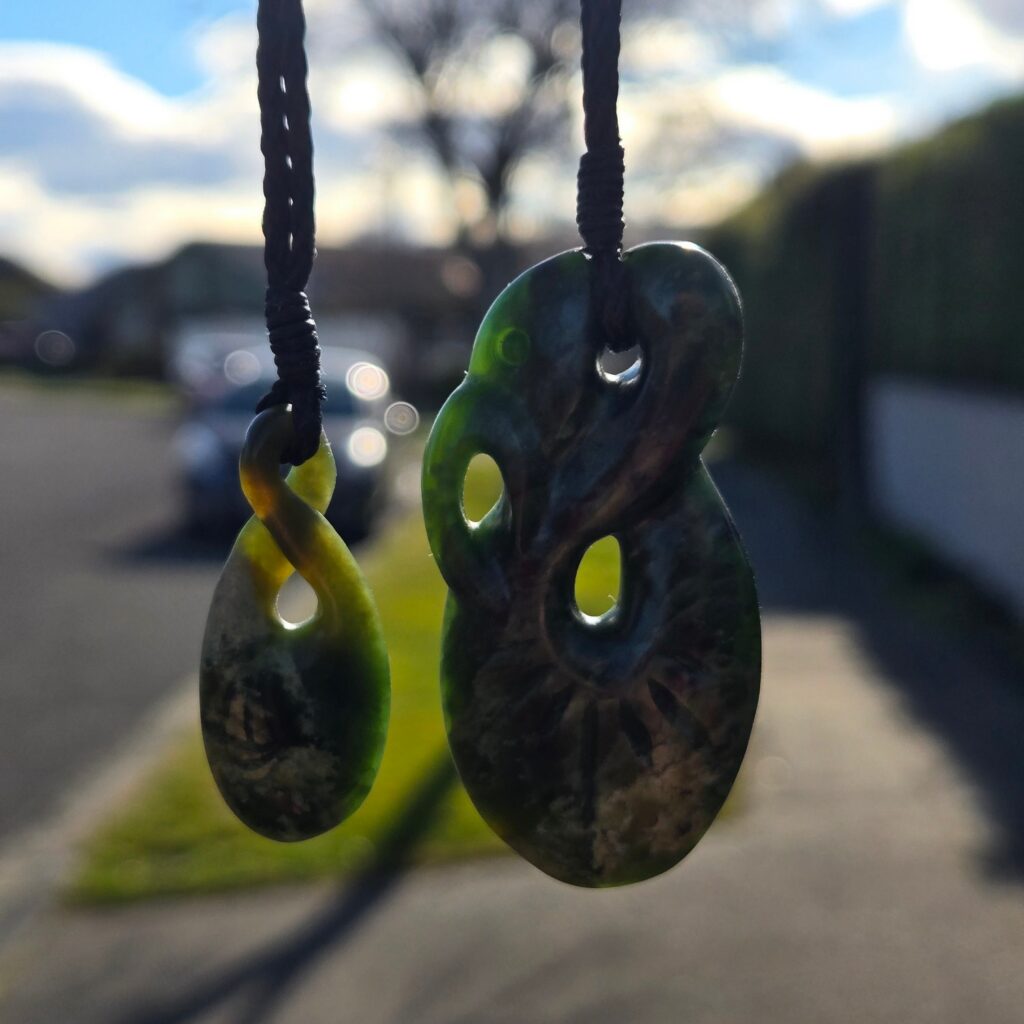
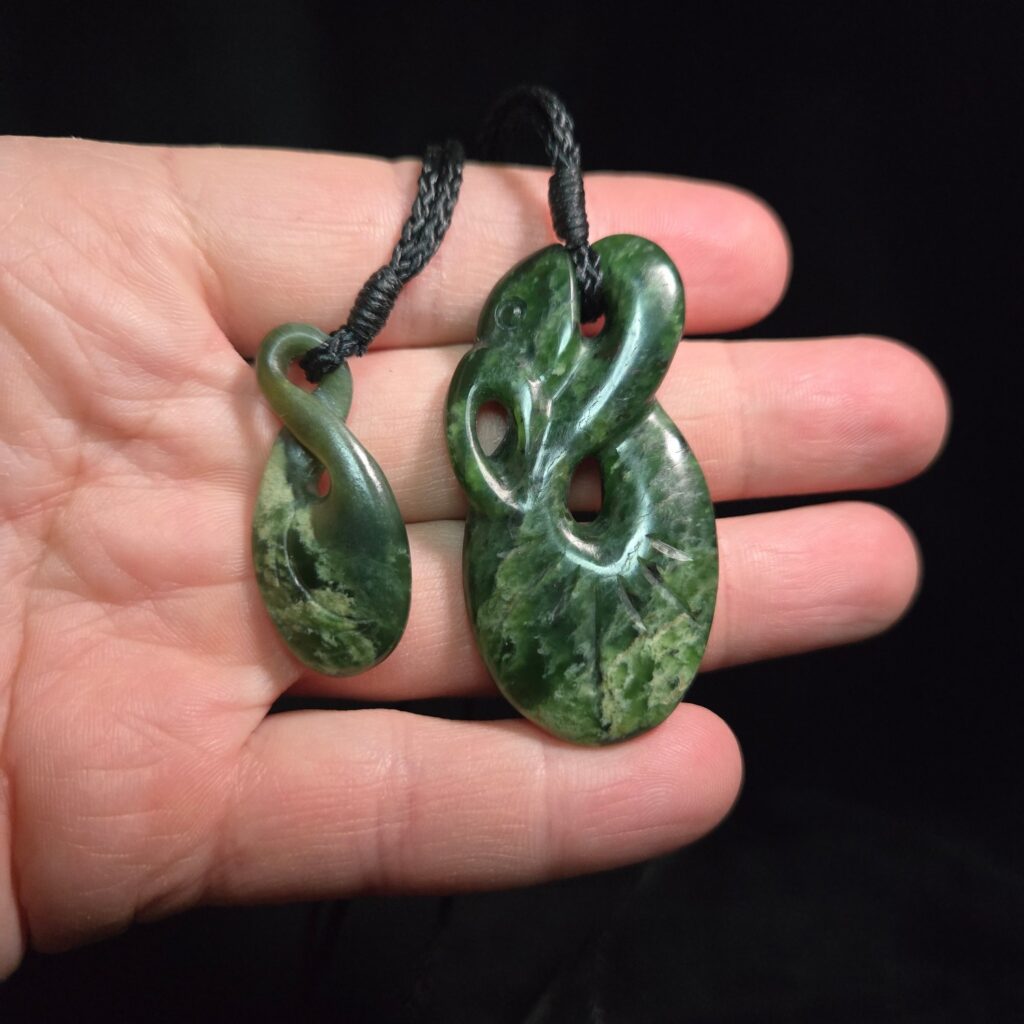
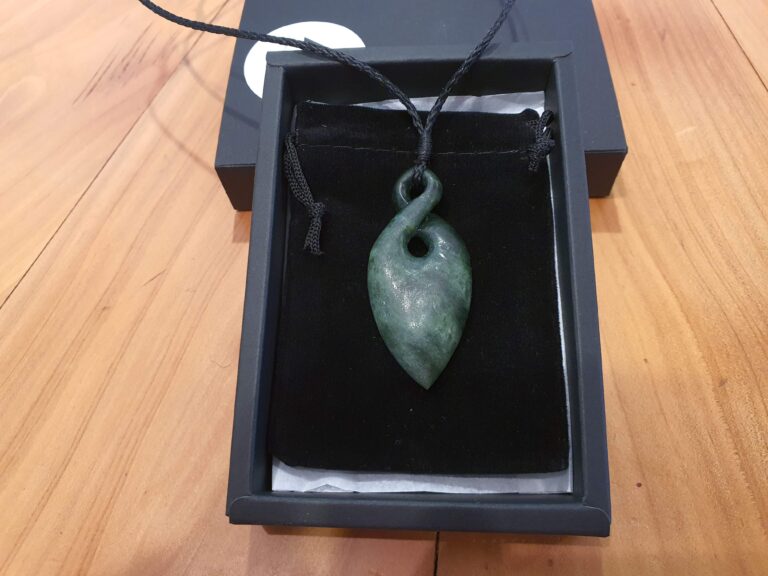
The smaller taonga is a 40 mm single pikorua, designed for comfortable everyday wear. The pikorua symbolises two lives becoming intertwined while allowing each person to retain their own identity and individuality. Engraved into the twist is a delicate crescent moon, representing calm, reflection, and the quiet strength that complements the sun.
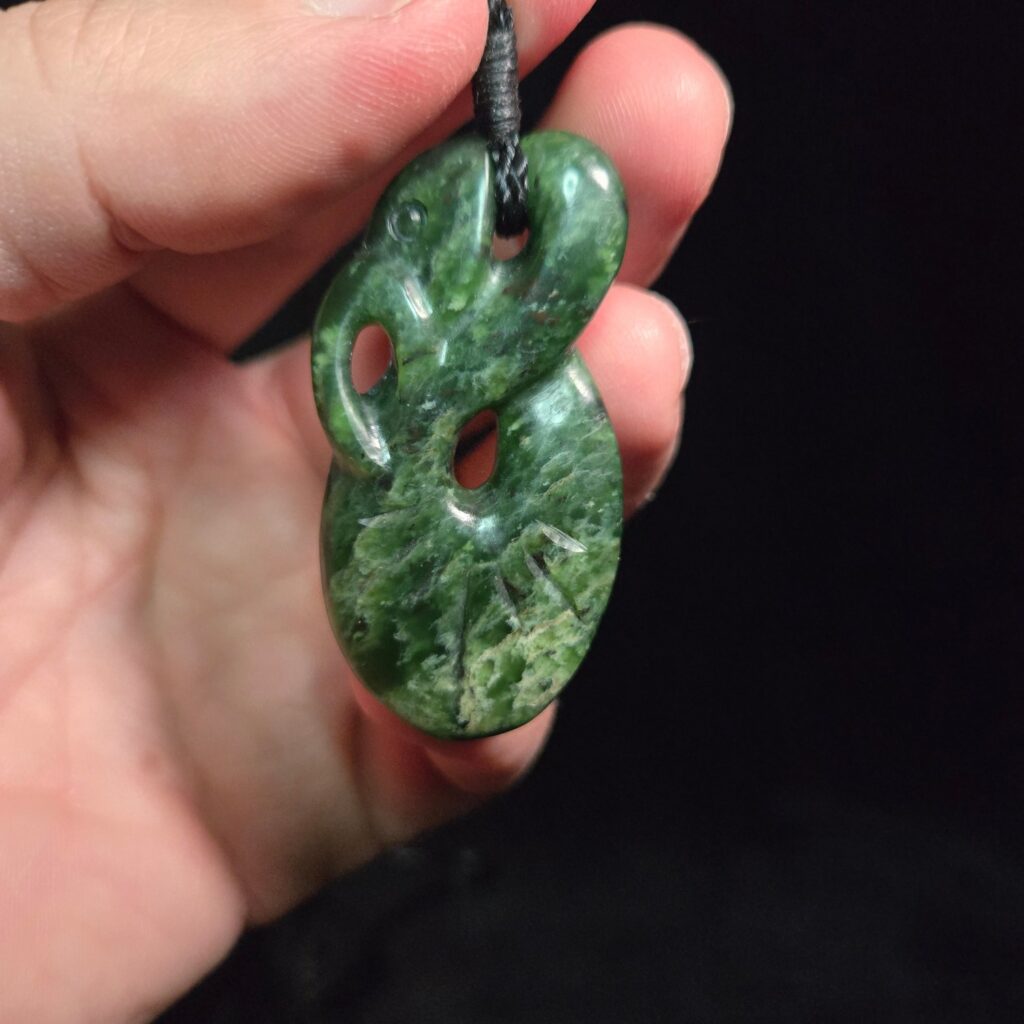
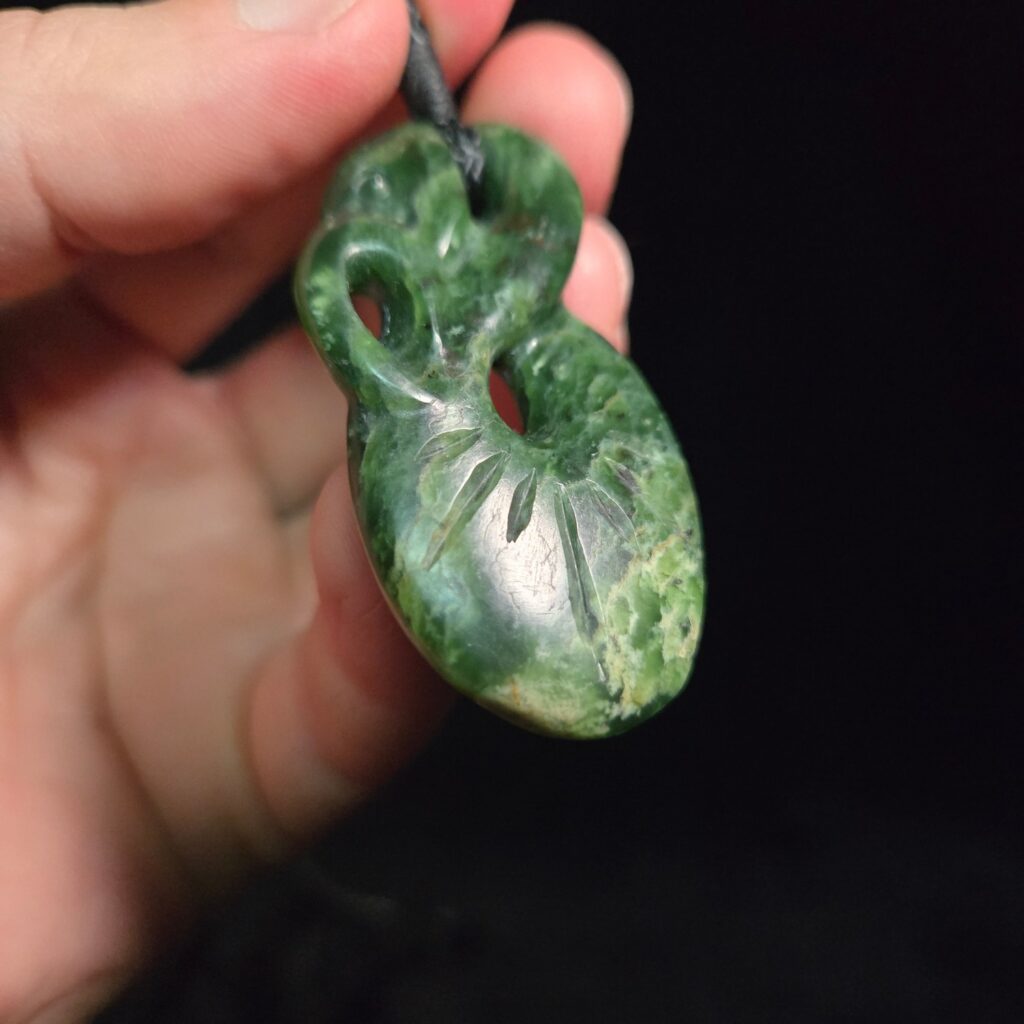
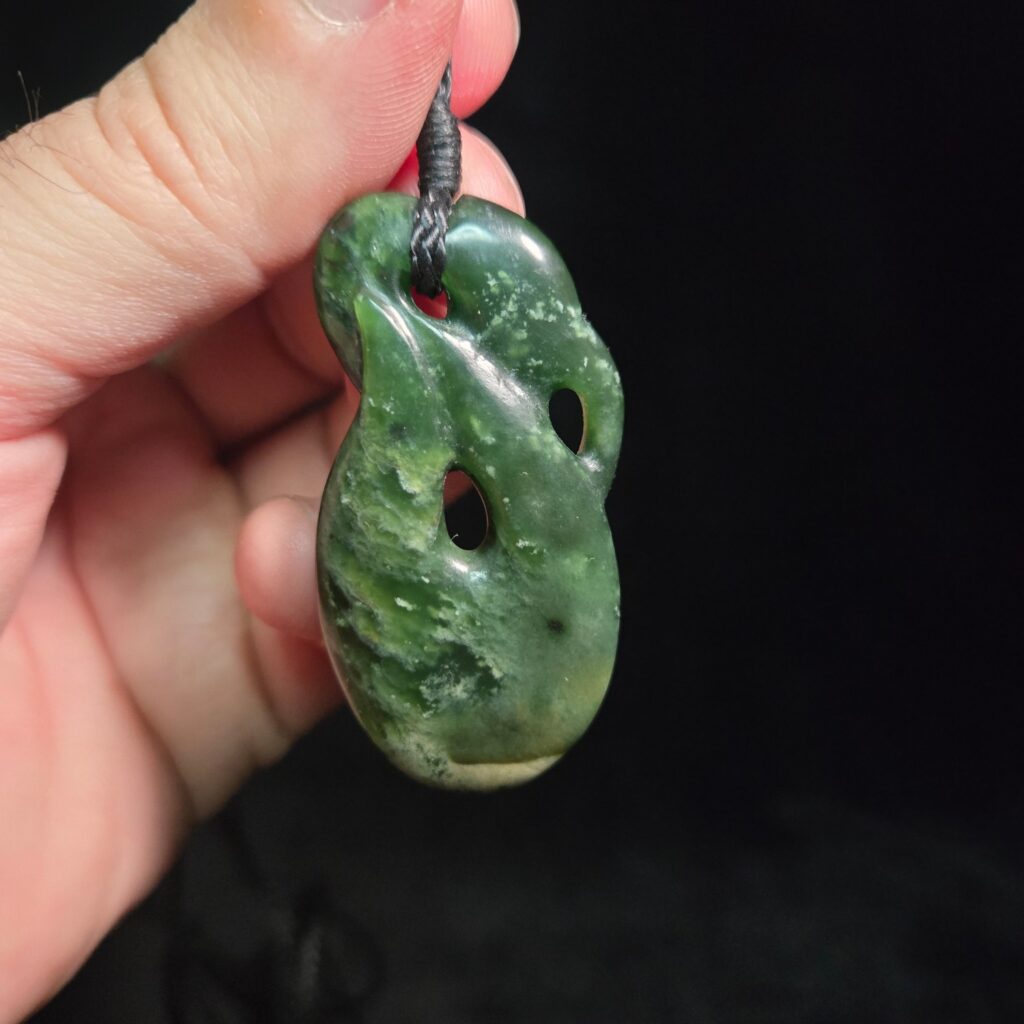
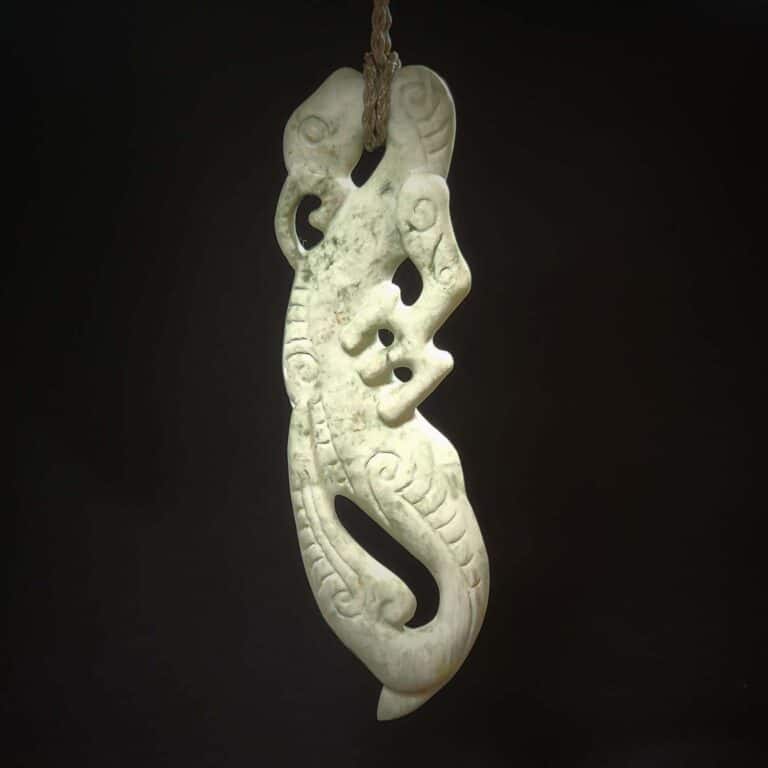
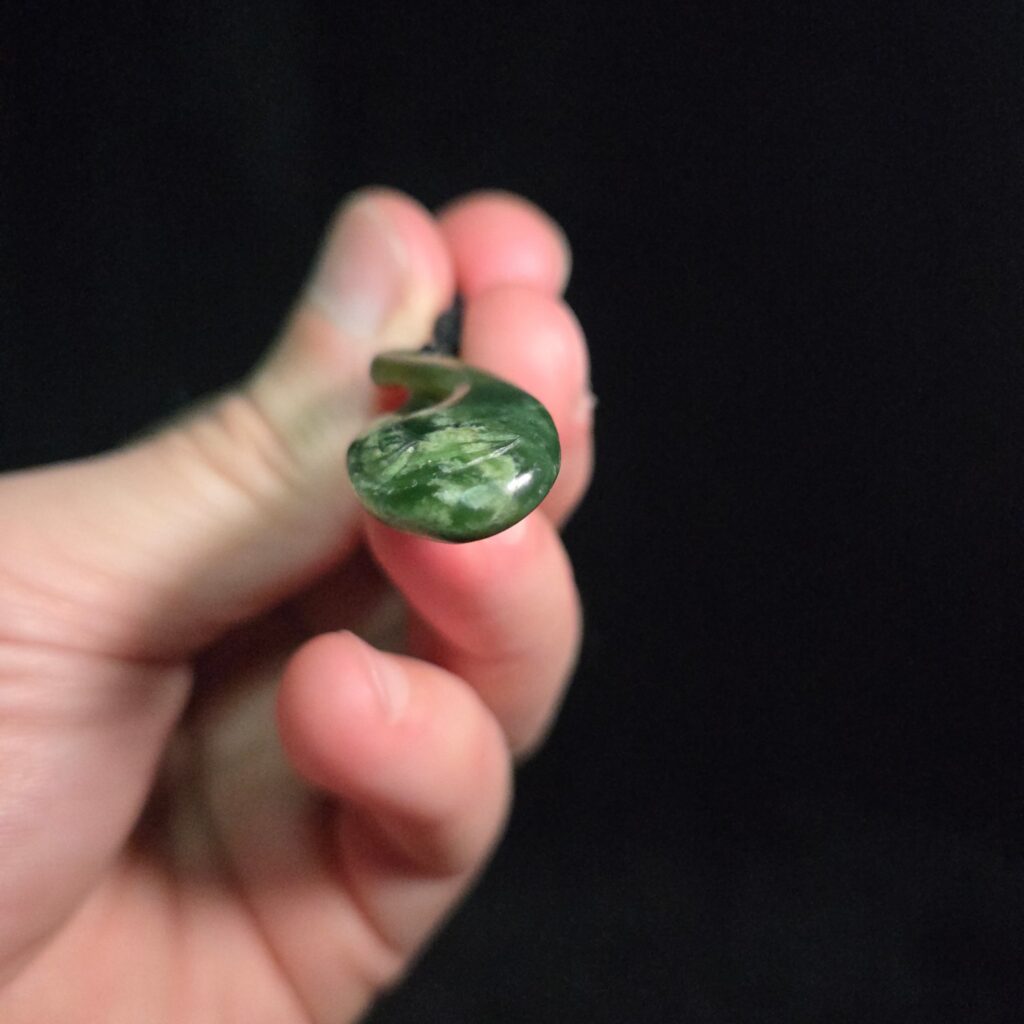
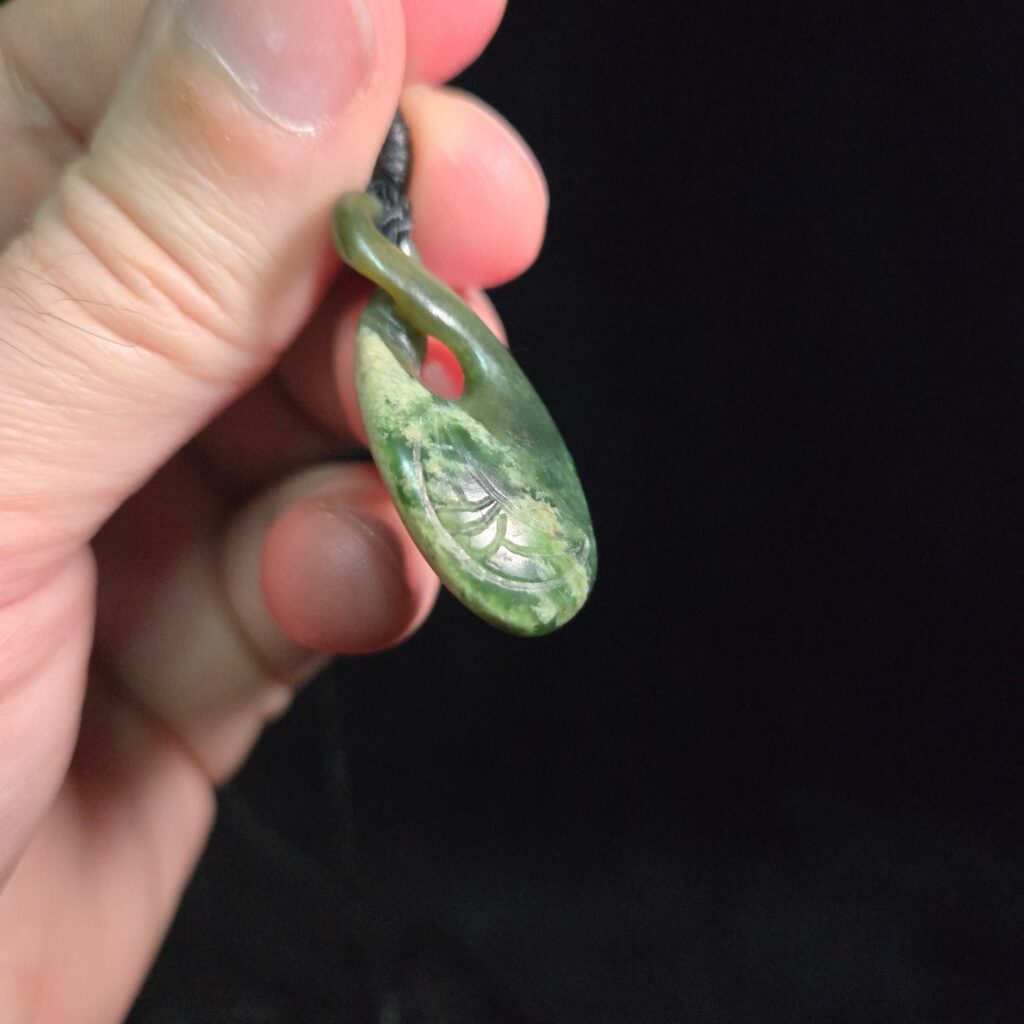
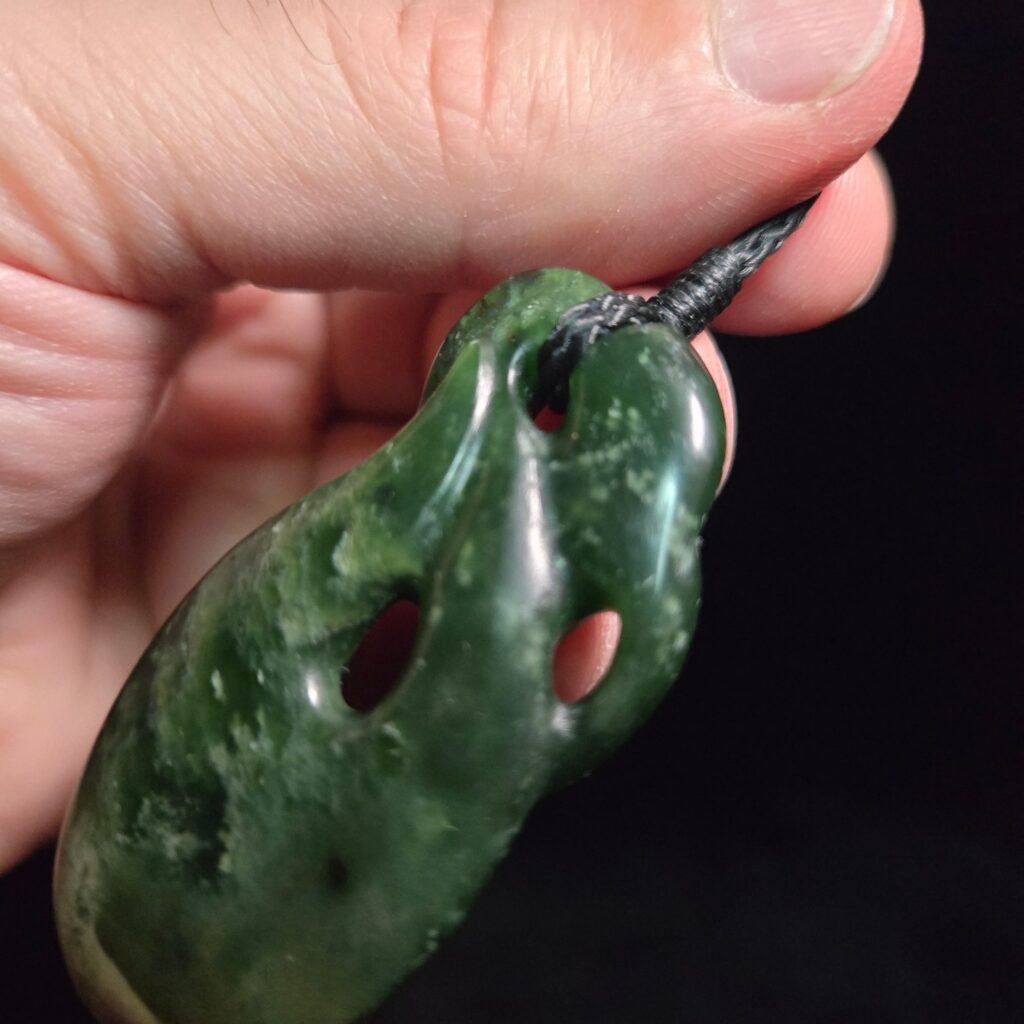
The second taonga is a 55 mm manaia. Its tail curves gracefully up behind its body, creating a flowing, balanced design. Around the lower body are engraved the rays of the sun, complementing the crescent moon on the pikorua. Together, the sun and moon complete the pair, reminding us that both are essential, each bringing balance to the other just as two people do within a relationship.
The manaia is widely recognised as a guardian, symbolising protection, guidance, and the connection between the earthly and spiritual worlds. Paired with the pikorua, which represents the joining of two lives, these taonga carry a powerful message of love, companionship, and looking after one another through every stage of life.
I always enjoy carving matching sets because they tell a story that a single taonga cannot. Knowing these two pieces will be worn by a couple on the other side of the world, while still sharing the same piece of Pounamu and the symbolism of the sun and moon, made this commission a particularly meaningful one.