Te Tirohanga Whānau
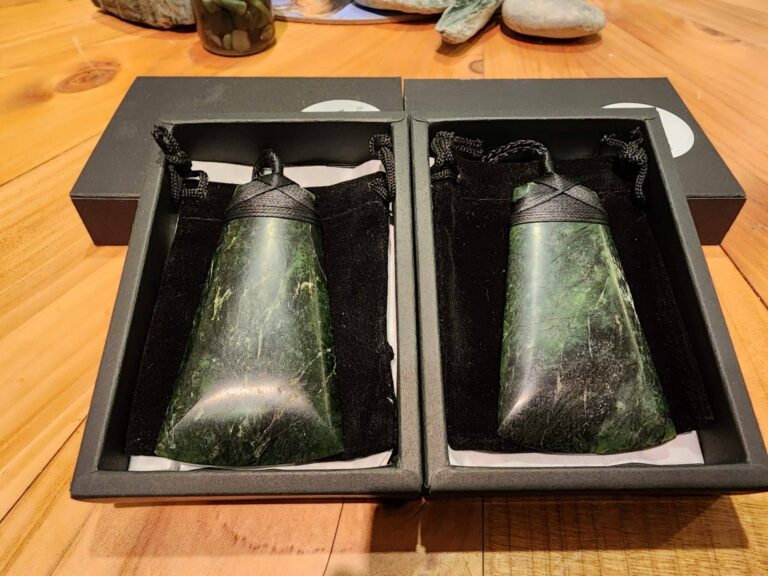
I carved this pair of toki as a special commission for a father who wanted to gift something deeply personal to his two daughters. I have named this set Te Tirohanga Whānau, which translates to “The Gaze of the Family,” reflecting the idea of parents always watching over, guiding, and caring for their children. The stone for these taonga was not chosen from my own supply. It was brought to me by him, collected by hand while diving off the ocean floor in Little Akaloa Bay on Banks Peninsula. From the very beginning, this commission carried a strong sense of place, effort, and intention.
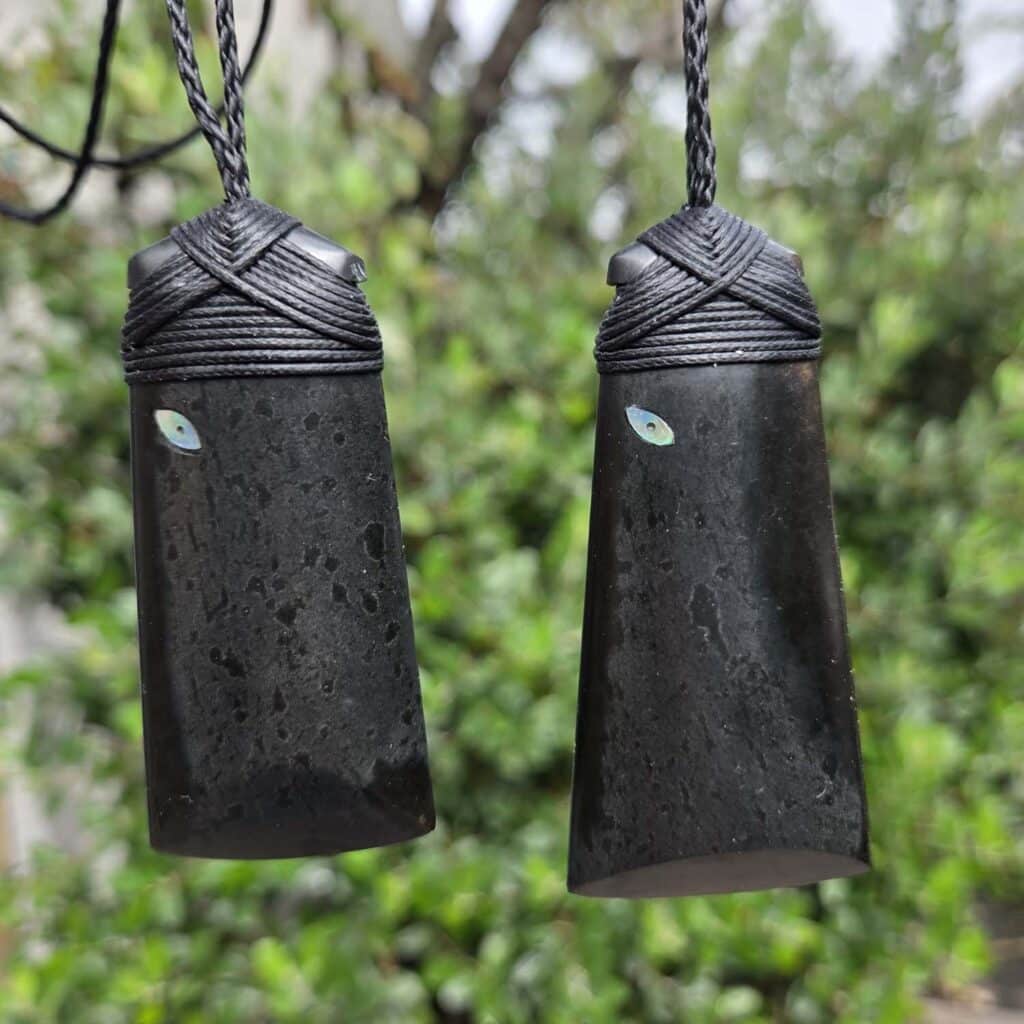
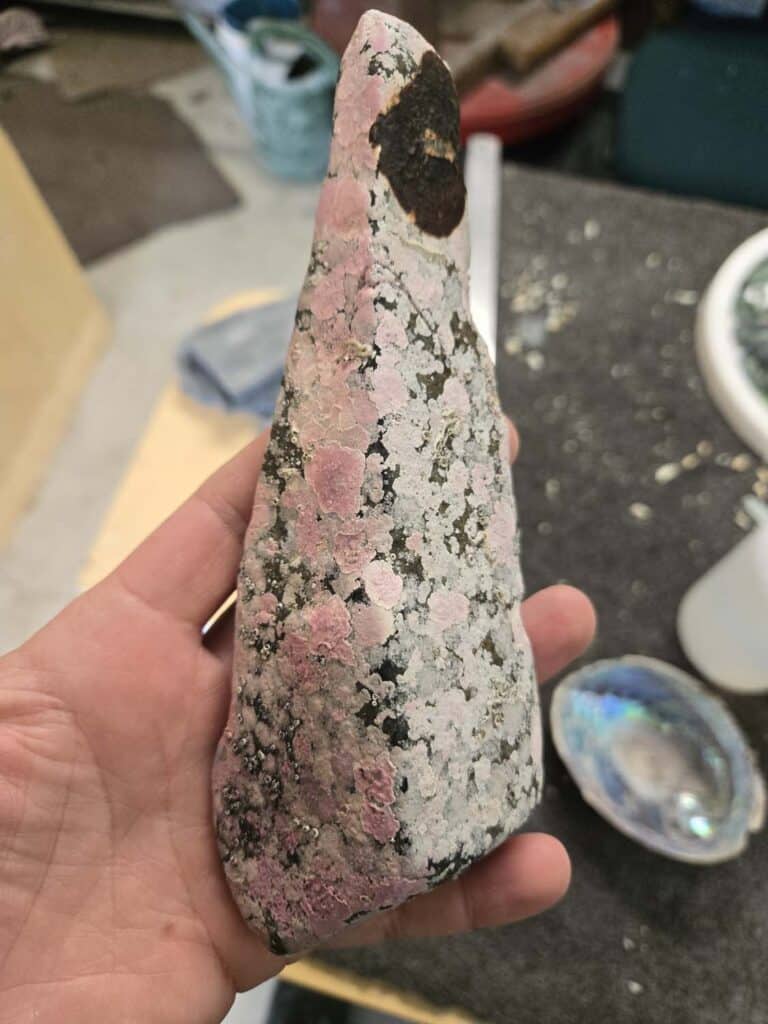
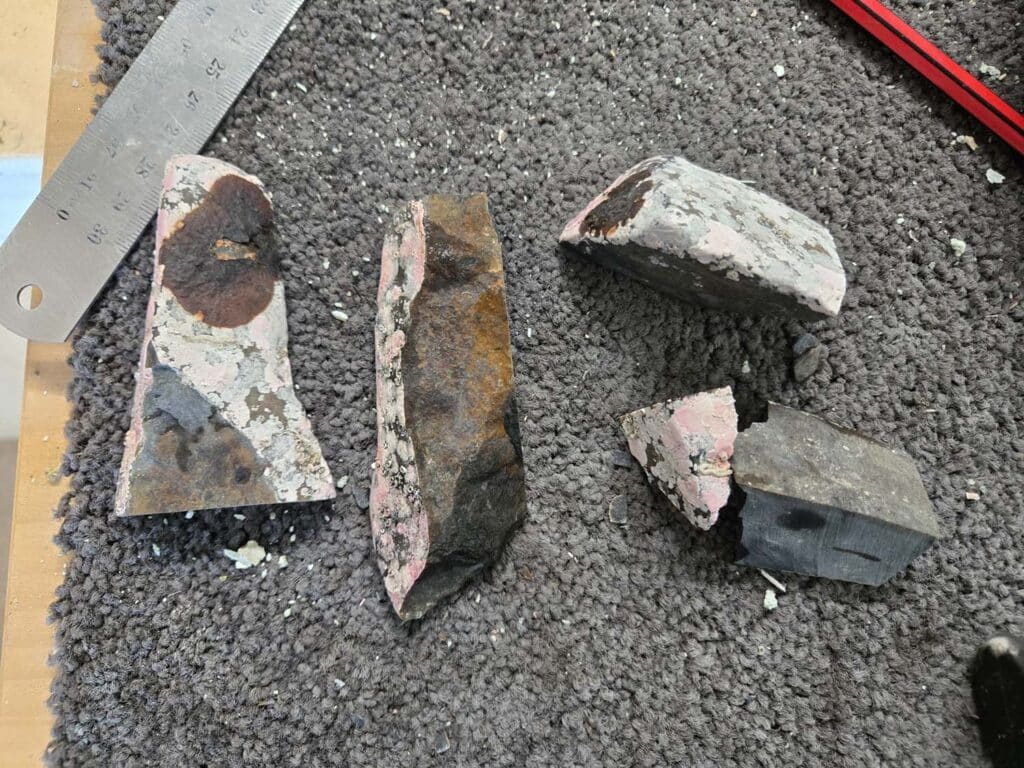
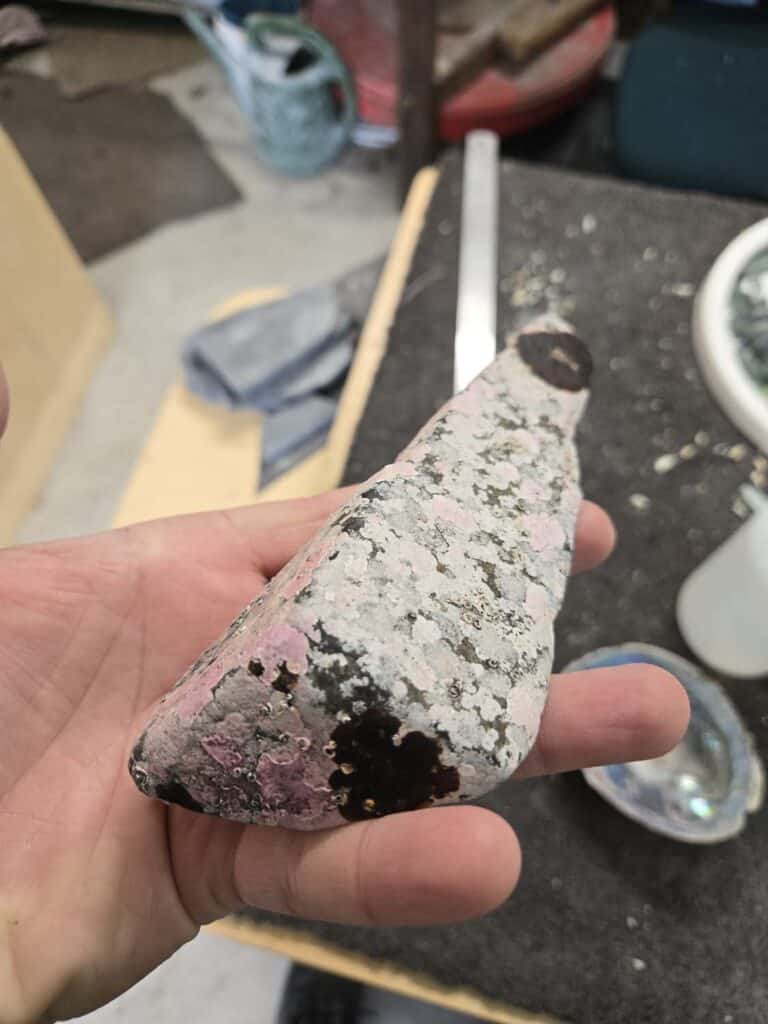
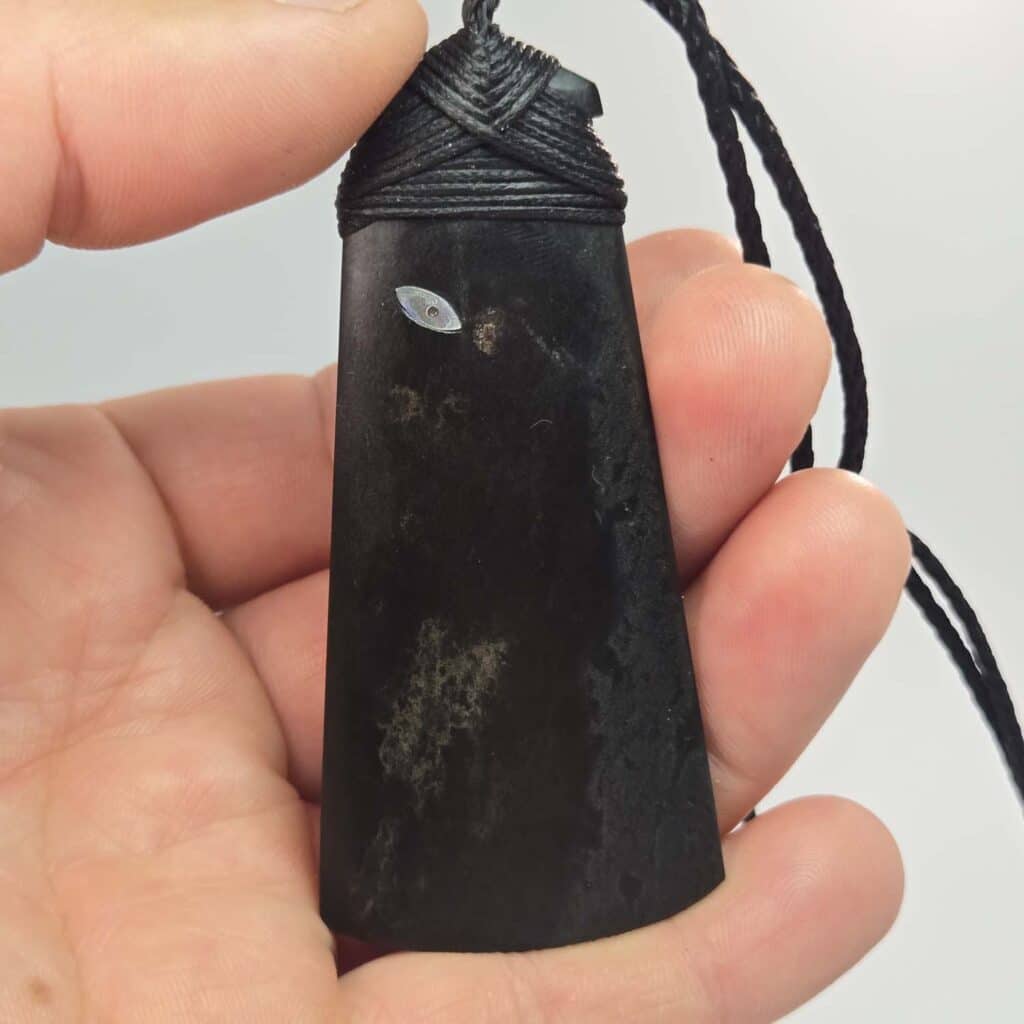
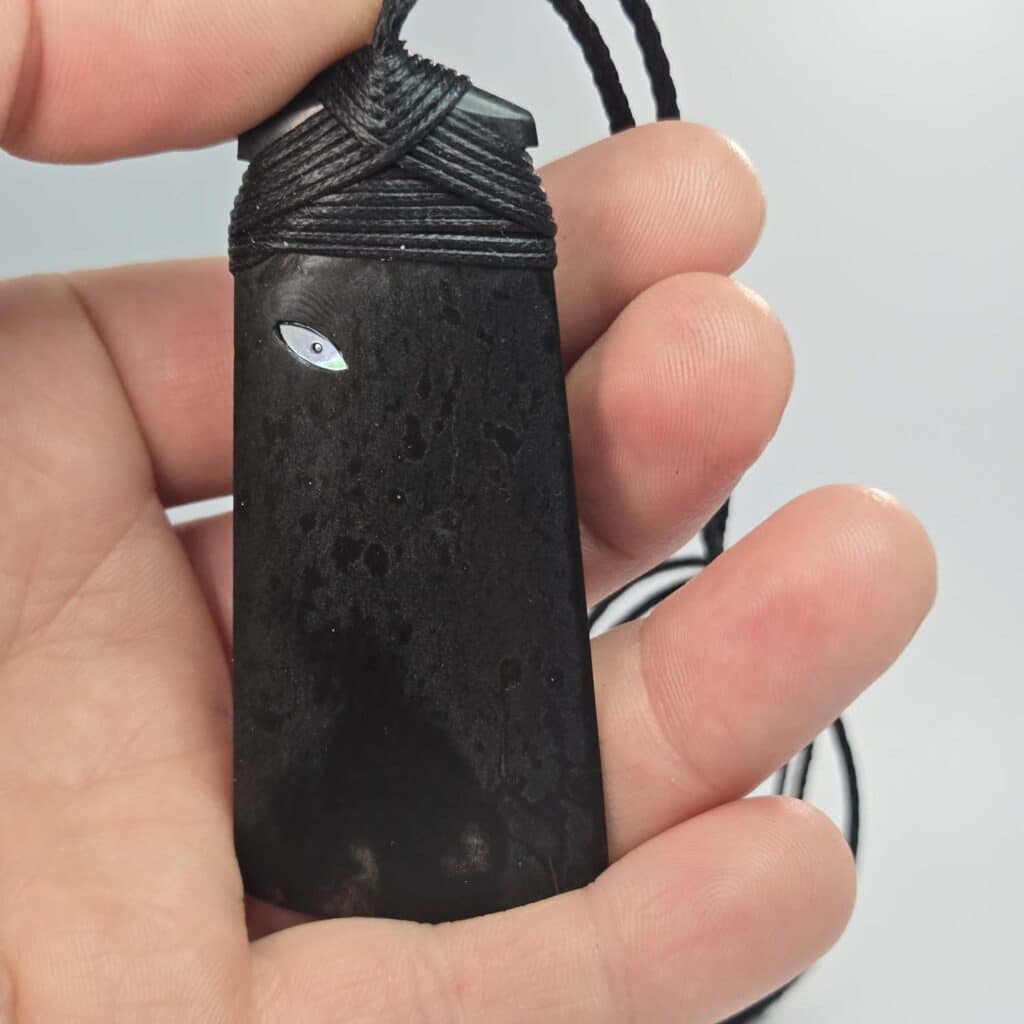
When the stone arrived, it was completely coated in a pink crustacean growth. The customer told me that every stone in that area was covered the same way. As I began grinding and shaping, that outer layer disappeared, revealing a dense, fine-grained onewa basalt beneath. Once opened up, the stone showed its true character: deep dark greys through to lighter inner greys, with subtle brown tones remaining in parts of the outer skin. None of the pink remains, but the journey from seabed to taonga is still very present in the stone.
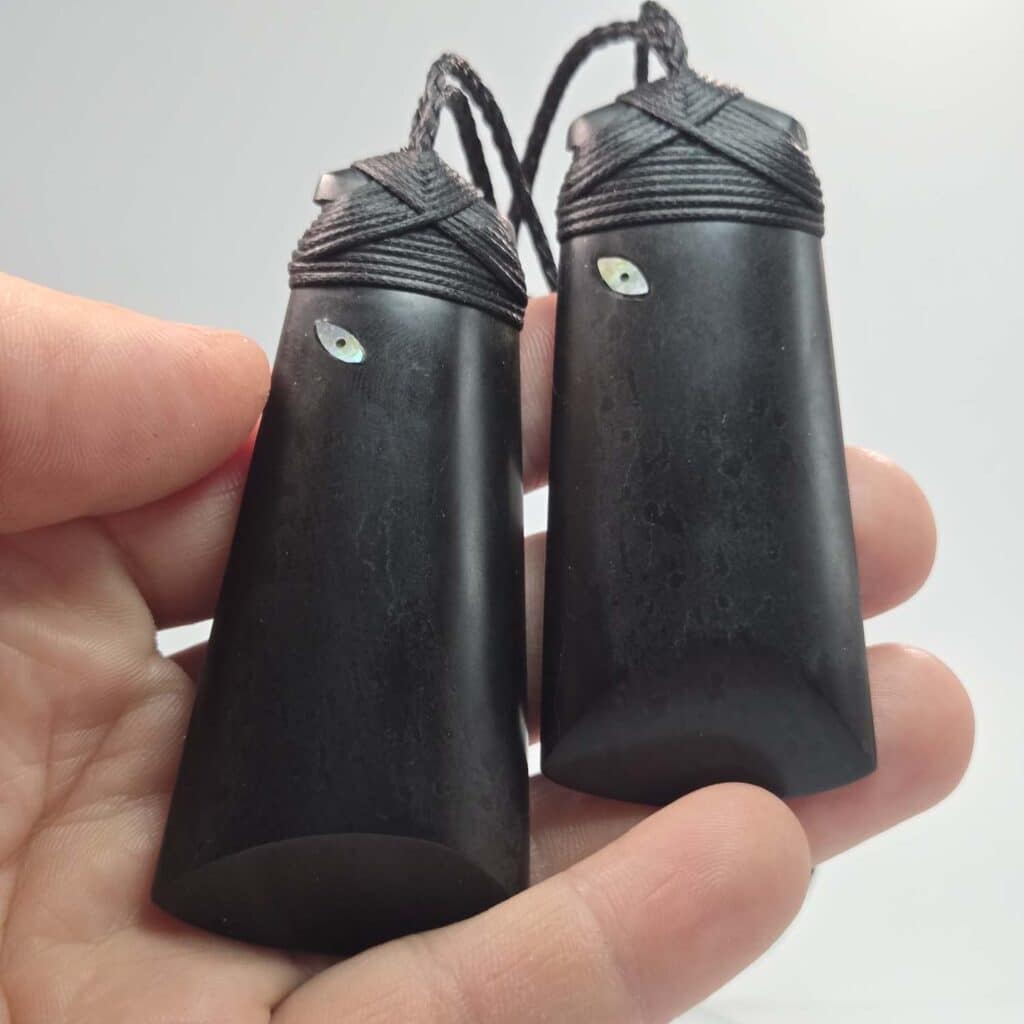
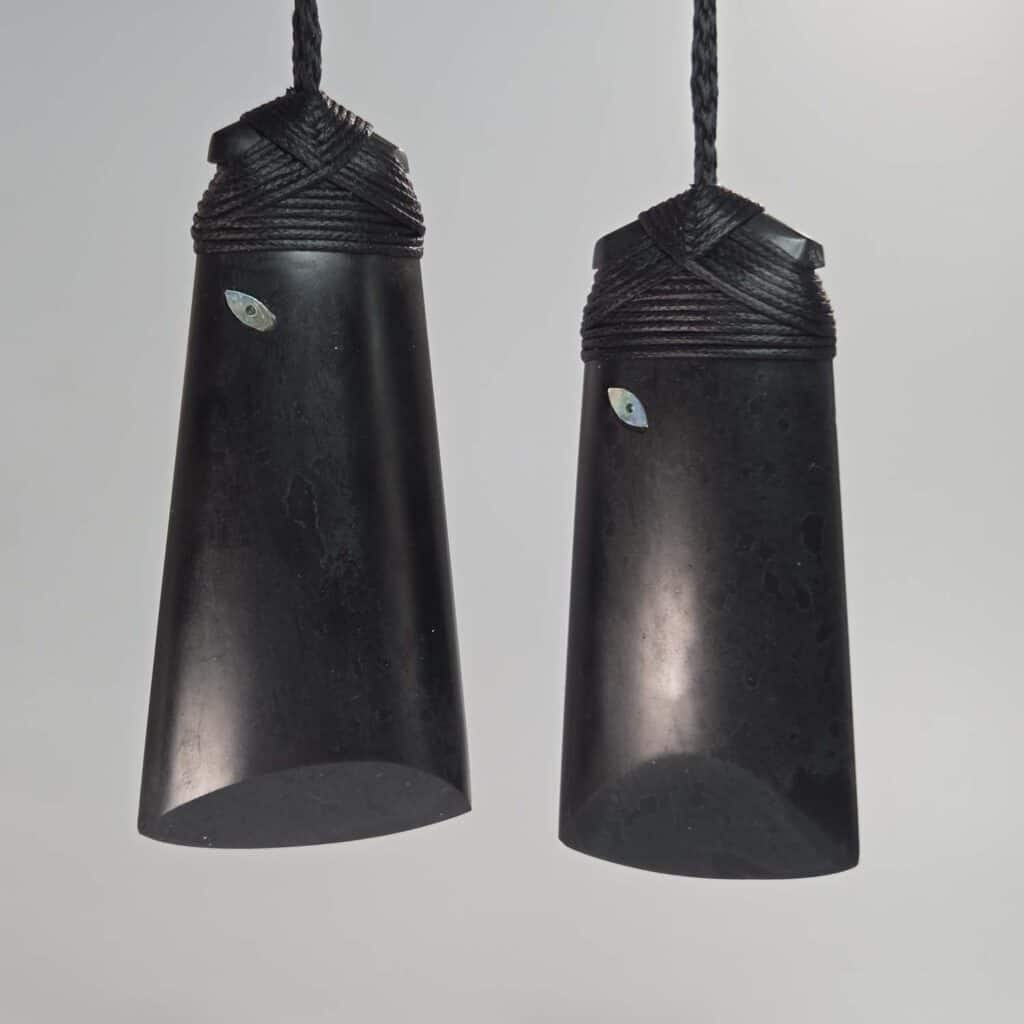
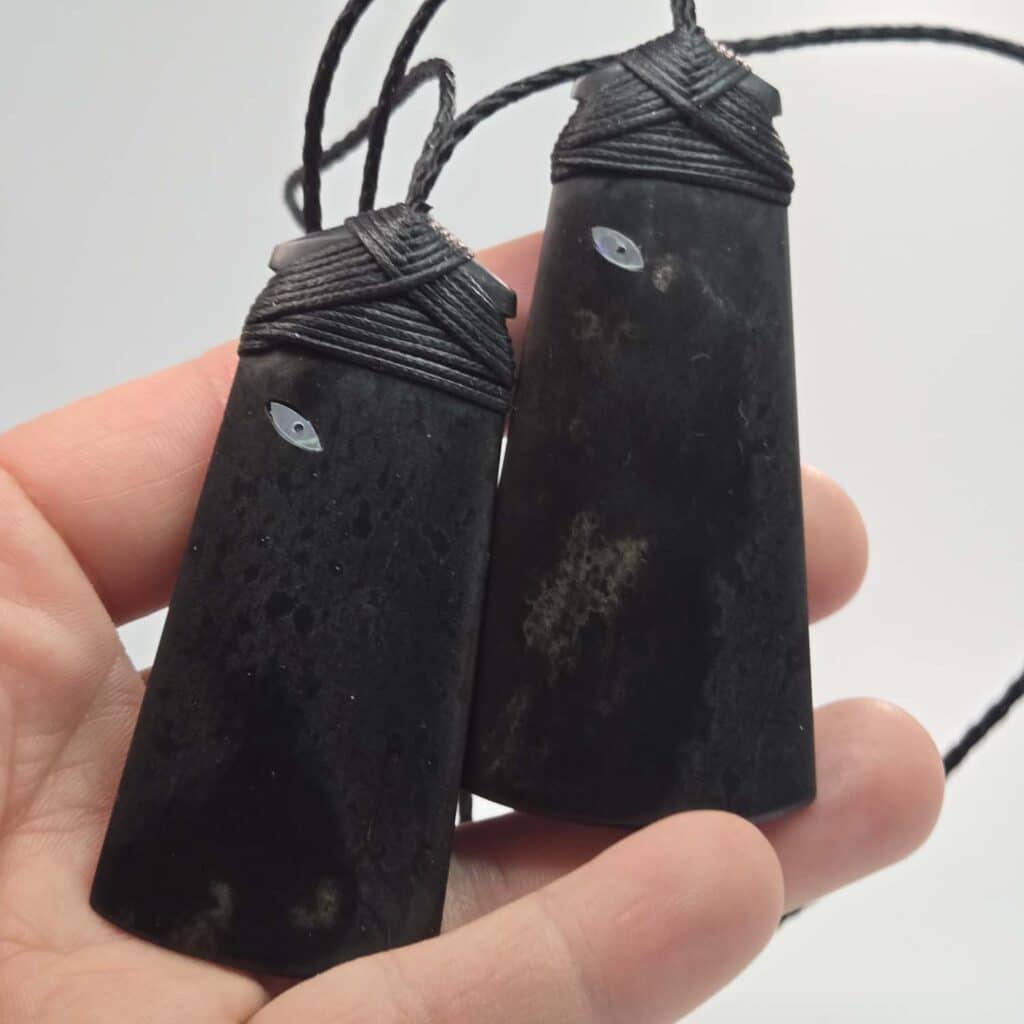
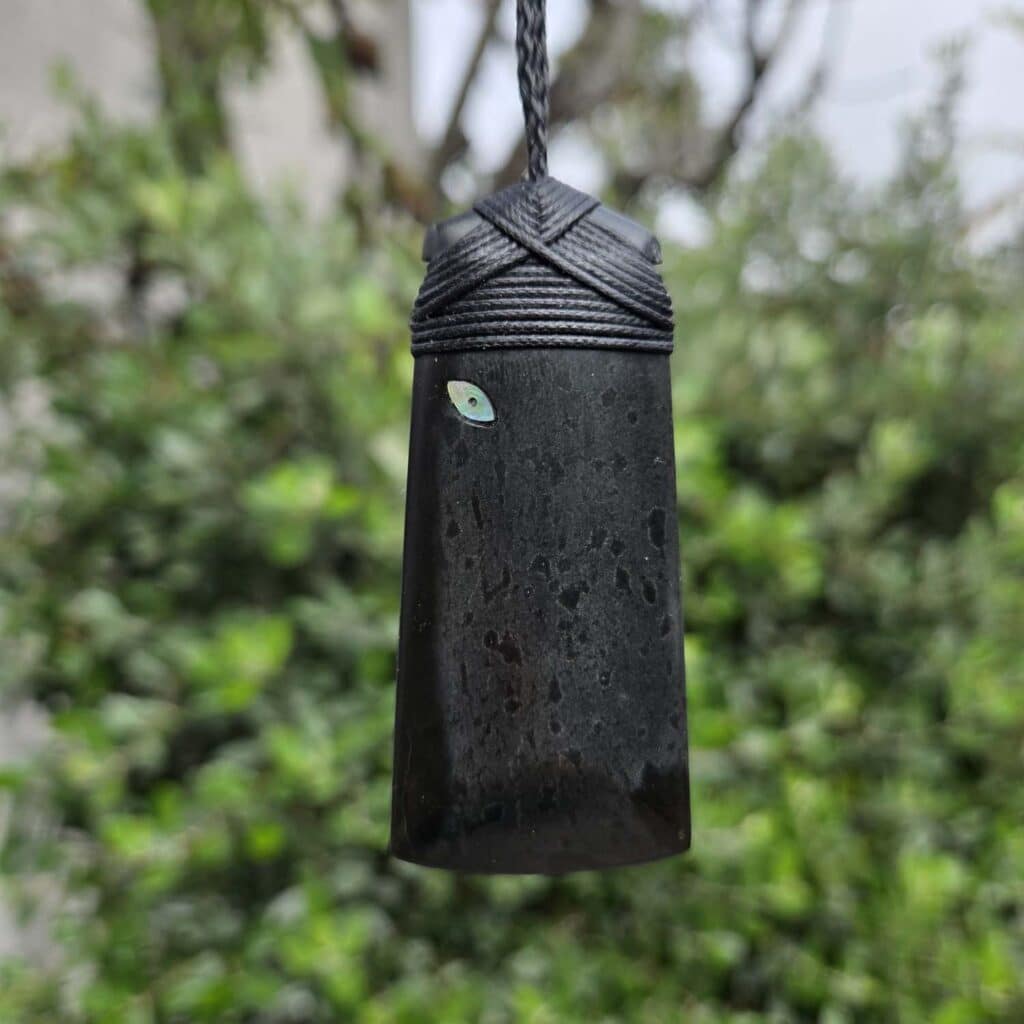
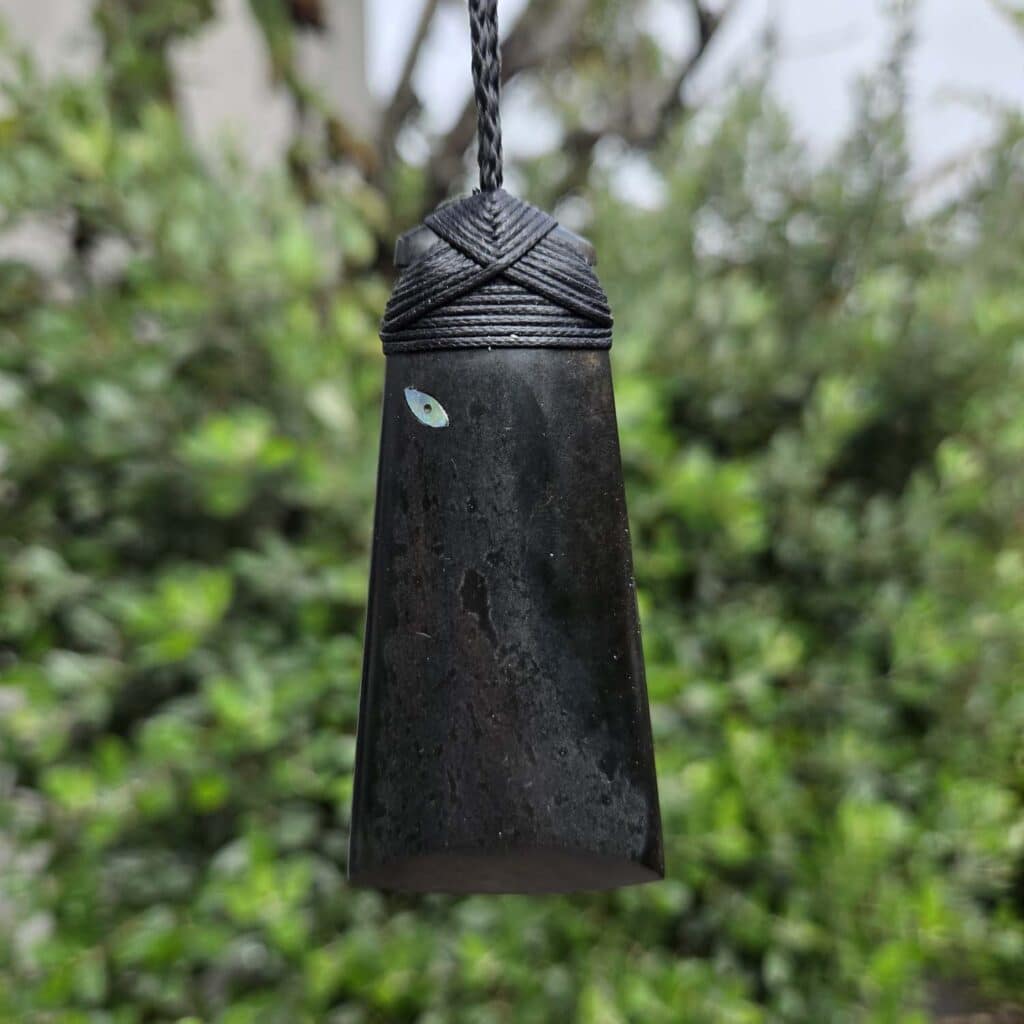
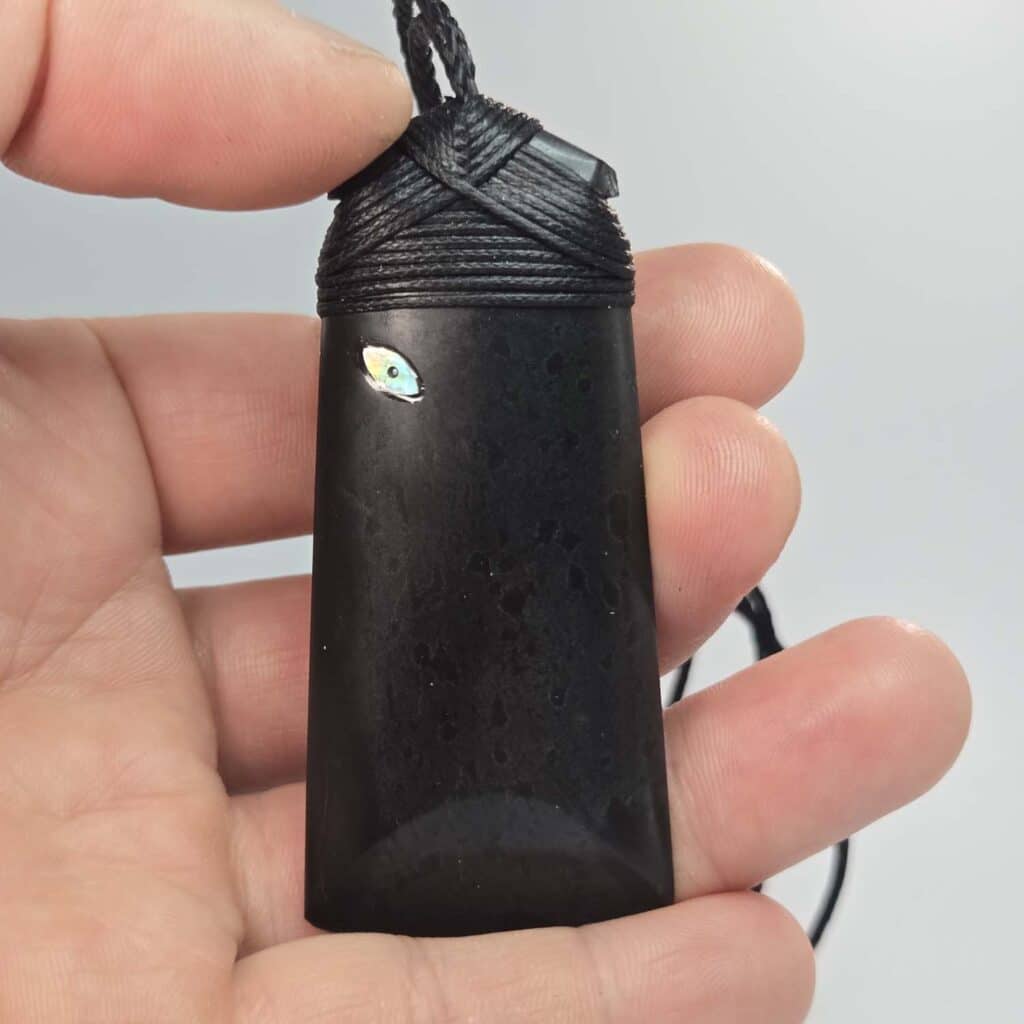
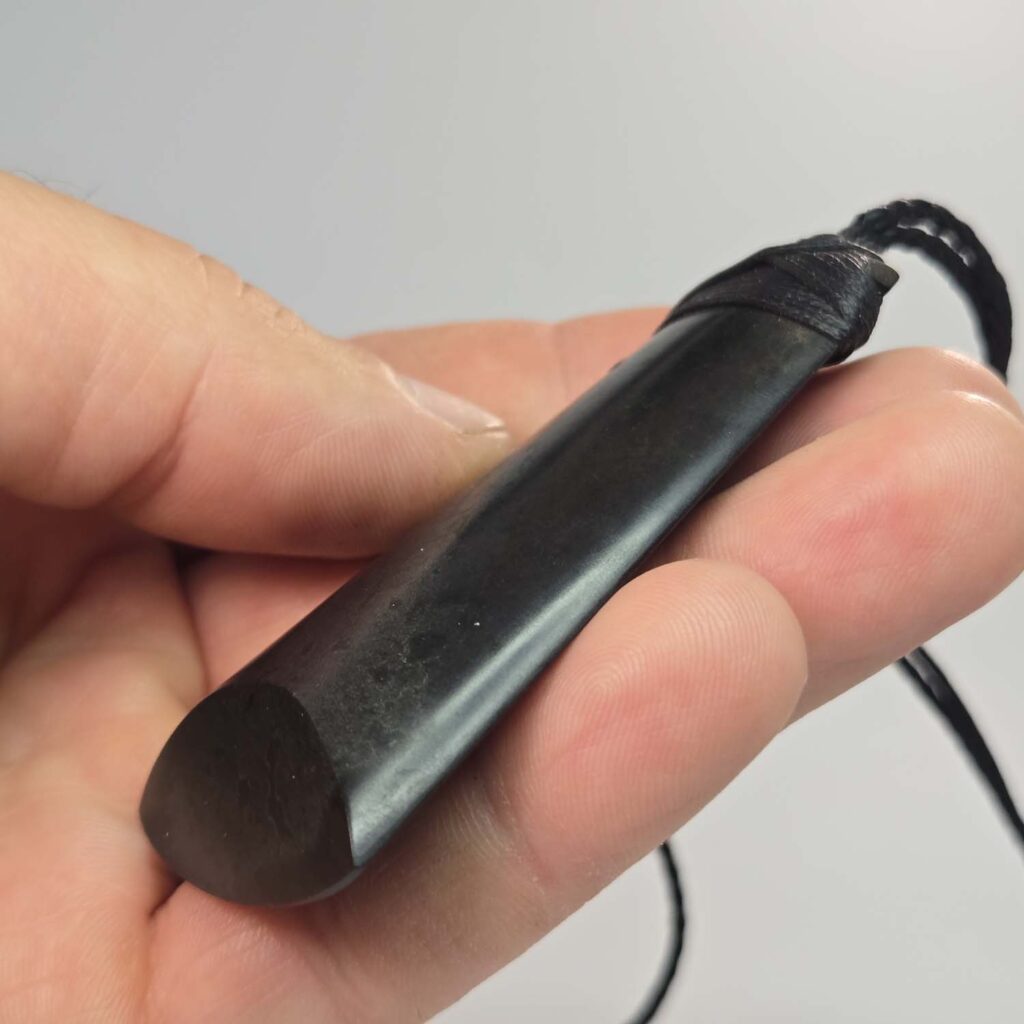
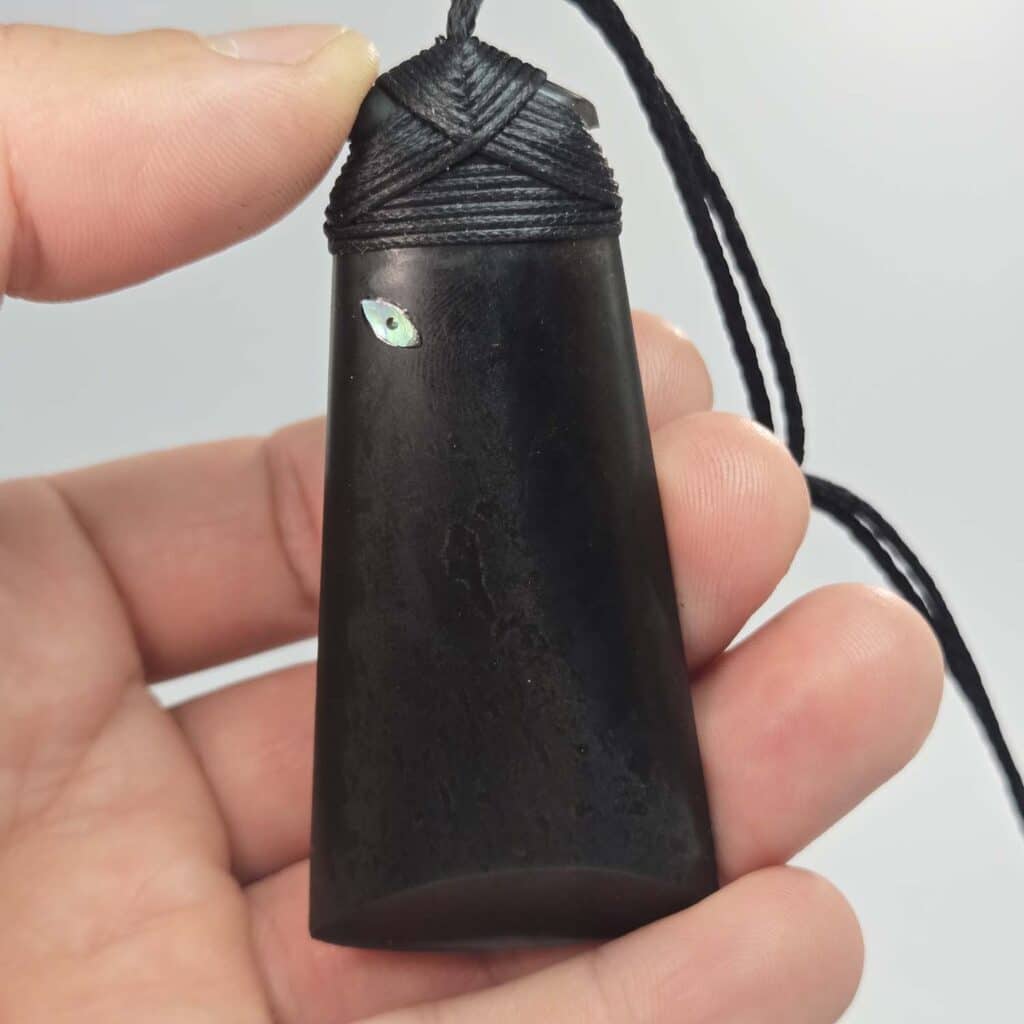
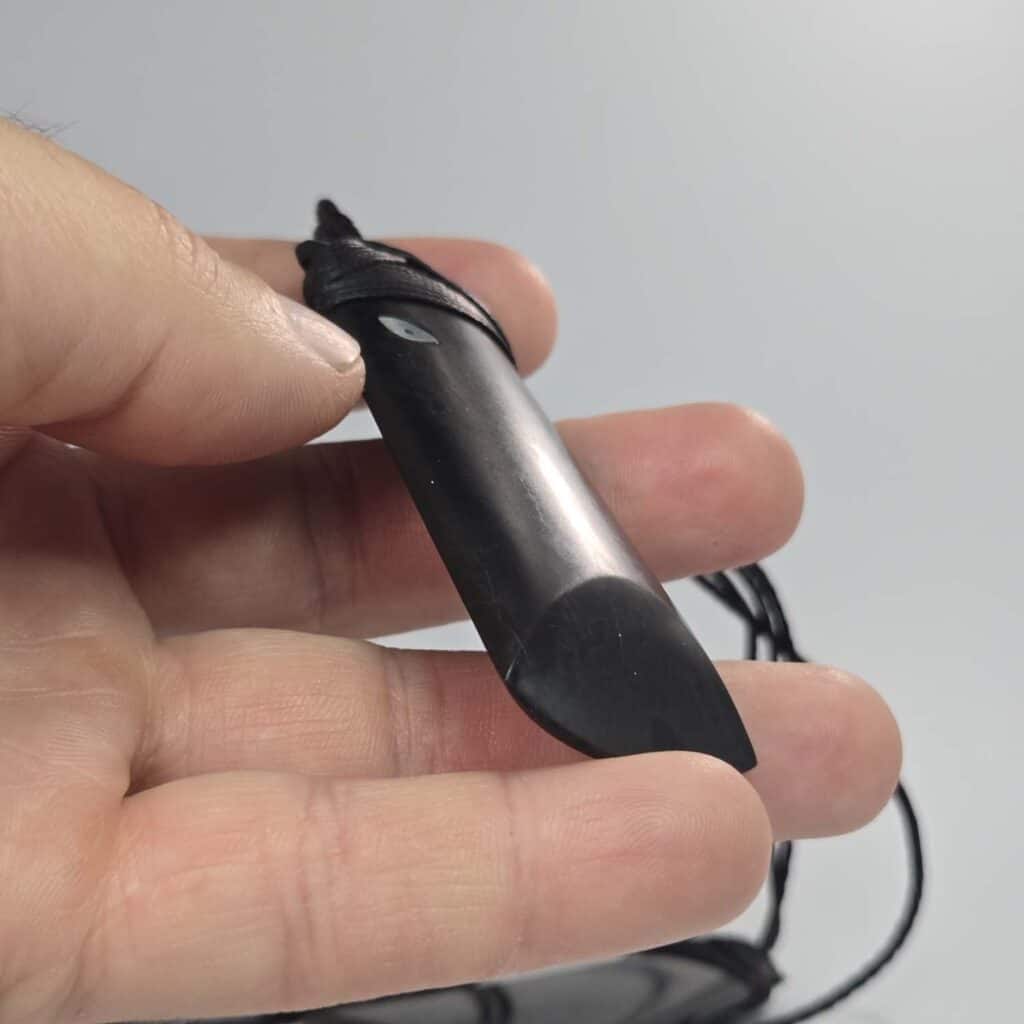
I carved two slender toki from this single stone, each around 75mm long. The forms are intentionally refined and gentle, reflecting that these taonga were made for his daughters. Because both toki come from the same original stone, there is a natural and enduring connection between them, a shared origin that mirrors their bond as sisters.
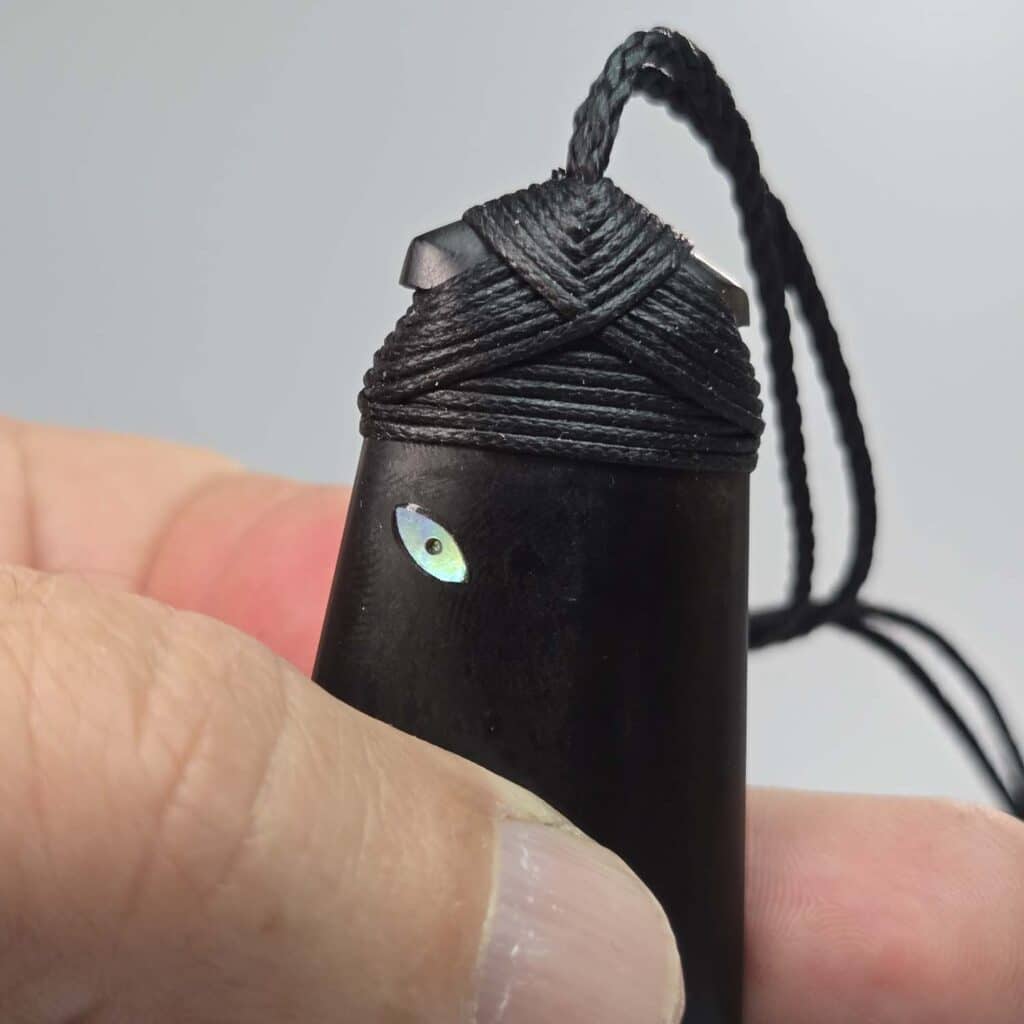
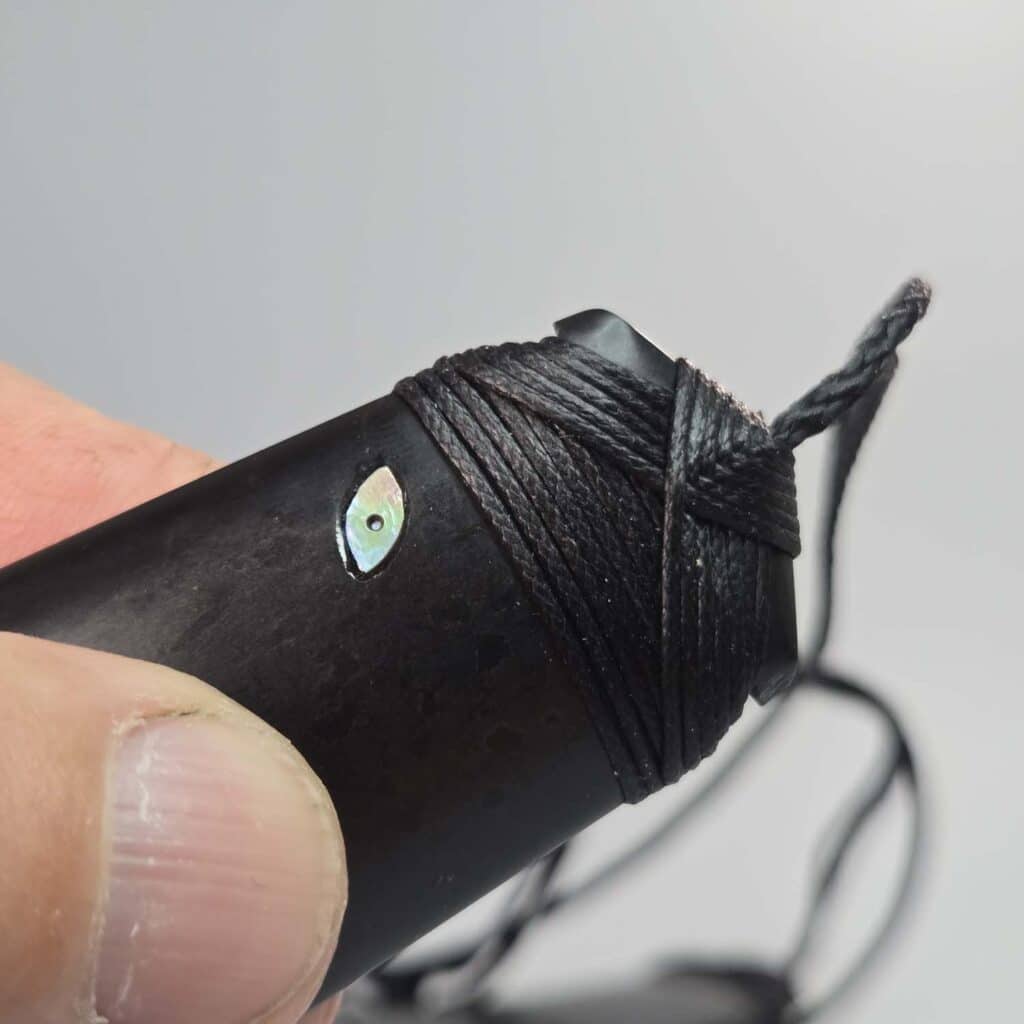
At the customer’s request, I inlaid pāua eyes into each toki. One pāua eye sits on the front and one on the back, positioned near the top. These eyes represent their parents, their mother and father, always watching, guiding, and caring for them. It is a clear expression of kaitiakitanga, of protection and presence, no matter where their daughters’ journeys take them. The pāua itself was also brought in by the customer, harvested by him for his whānau, adding another layer of personal history and responsibility to the taonga.
The toki form carries traditional meanings of strength, skill, and the shaping of one’s path through life. In this set, that meaning is softened and expanded by the story behind them: a father’s love, the guardianship of parents, the bond between siblings, and a direct connection to the moana where the stone rested for countless years.
Carving these taonga was a privilege. They hold the weight of intention, place, and whānau, and they stand as a reminder that some of the most meaningful taonga begin not in the workshop, but in the hands of the people who carry the story.