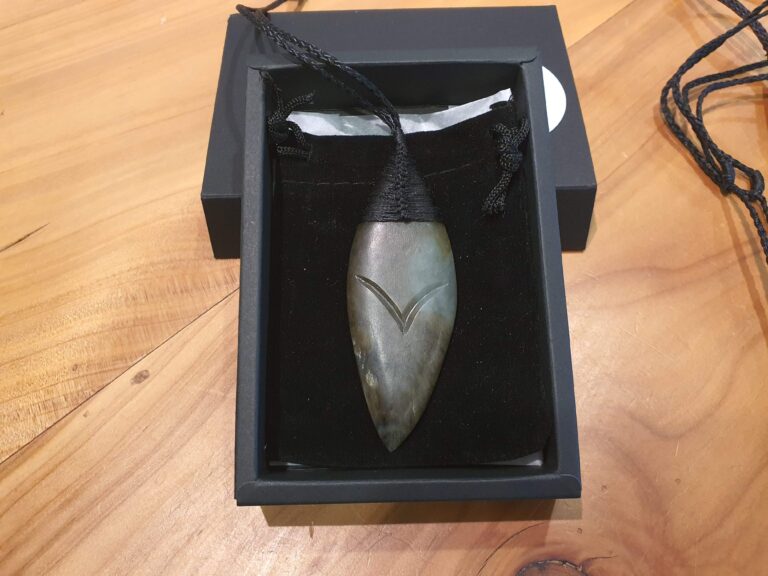
Argillite Wave Sculpture – Where the Mountains Meet the Sea
This sculpture brings together Ngā Maunga and te Moana in one form. Carved from dark grey argillite from South Westland, it represents the meeting of mountain and ocean — two forces that shape Aotearoa and define the landscape of places like Piopiotahi.
The stone was given to me by a local collector who asked me to carve something for his collection. When I held it in my hands, the natural shape immediately suggested movement. It felt like a wave rising. At the same time, the back of the stone carried the rugged texture of a mountain face. Rather than fight that, I worked with it.
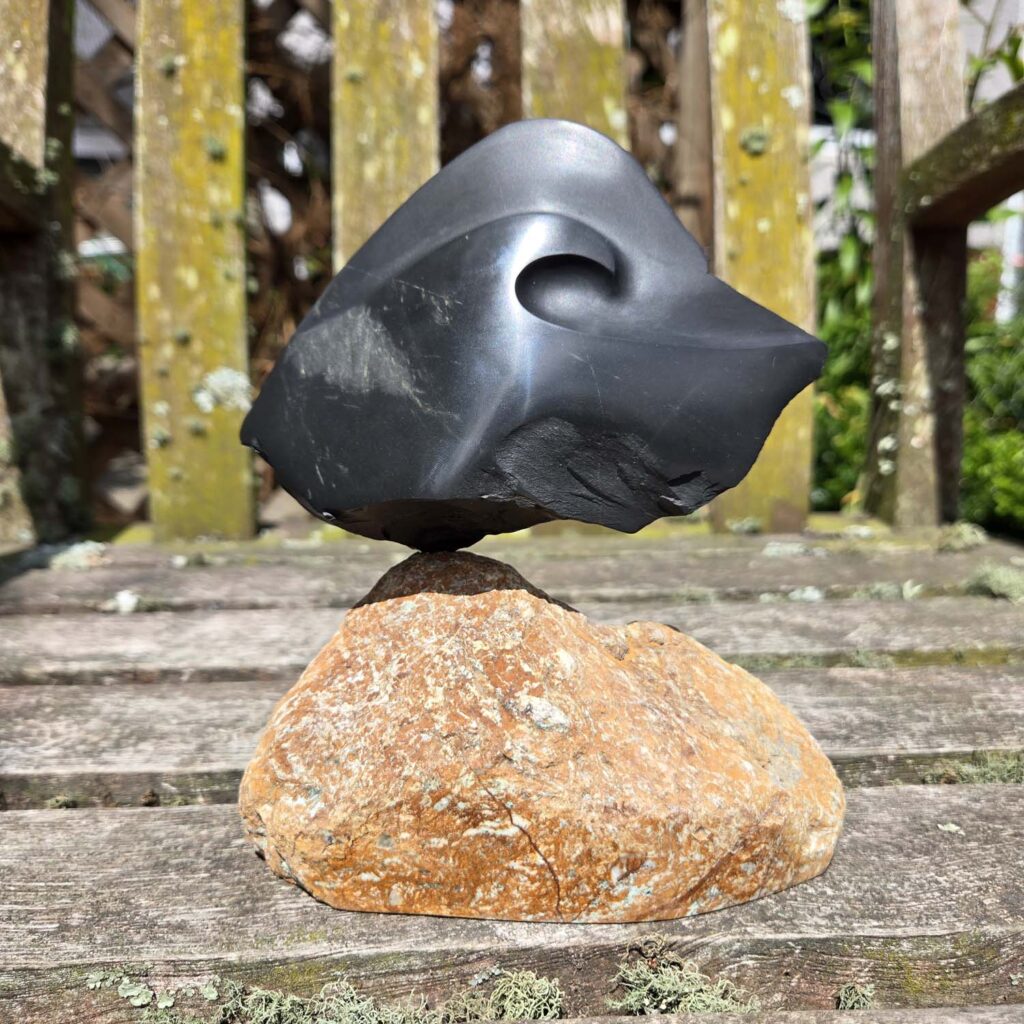
On the front, I carved a sweeping wave form. It rises cleanly from the body of the stone, strong and deliberate. The surface is smooth, refined, and controlled. On the back, I left the stone natural. From behind, it looks like a raw mountainous landscape — sharp, uneven, and weathered. The contrast between the carved front and the untouched back speaks to the relationship between human shaping and natural formation.
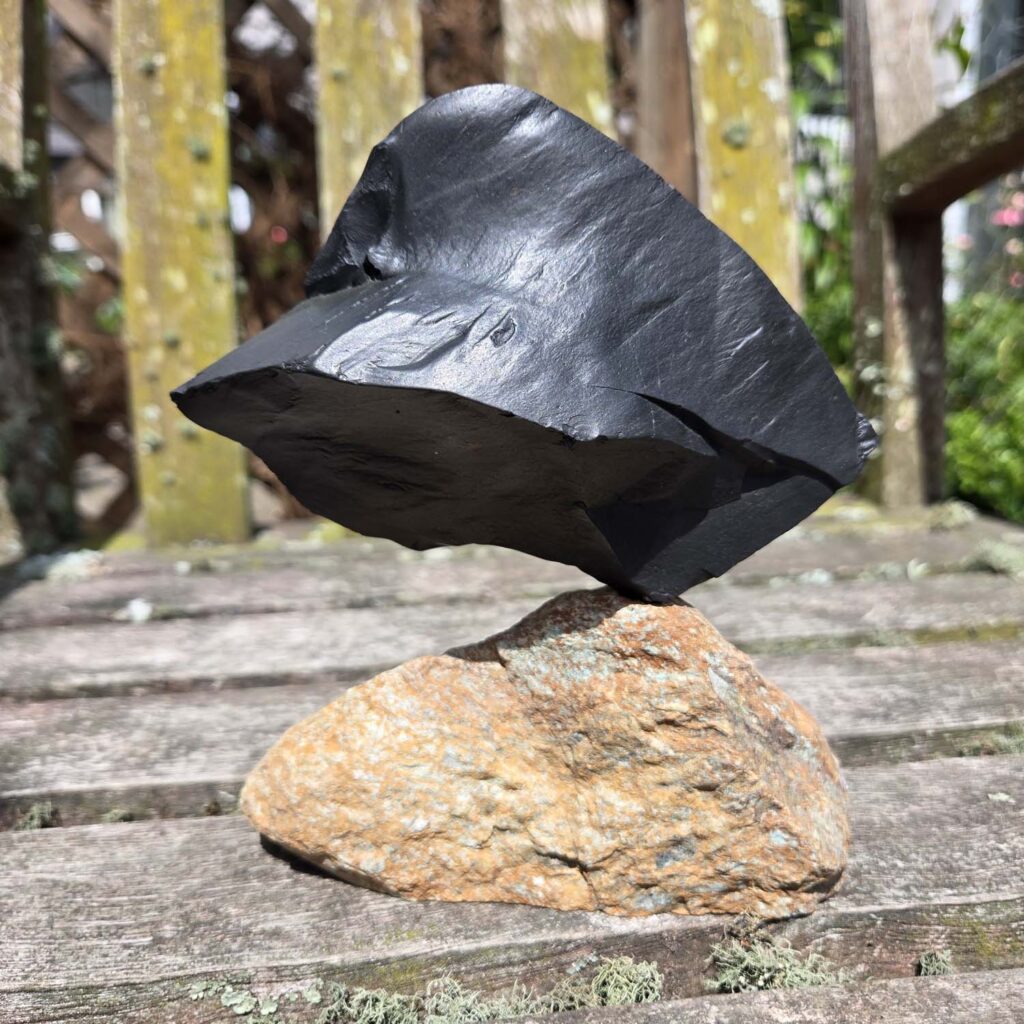
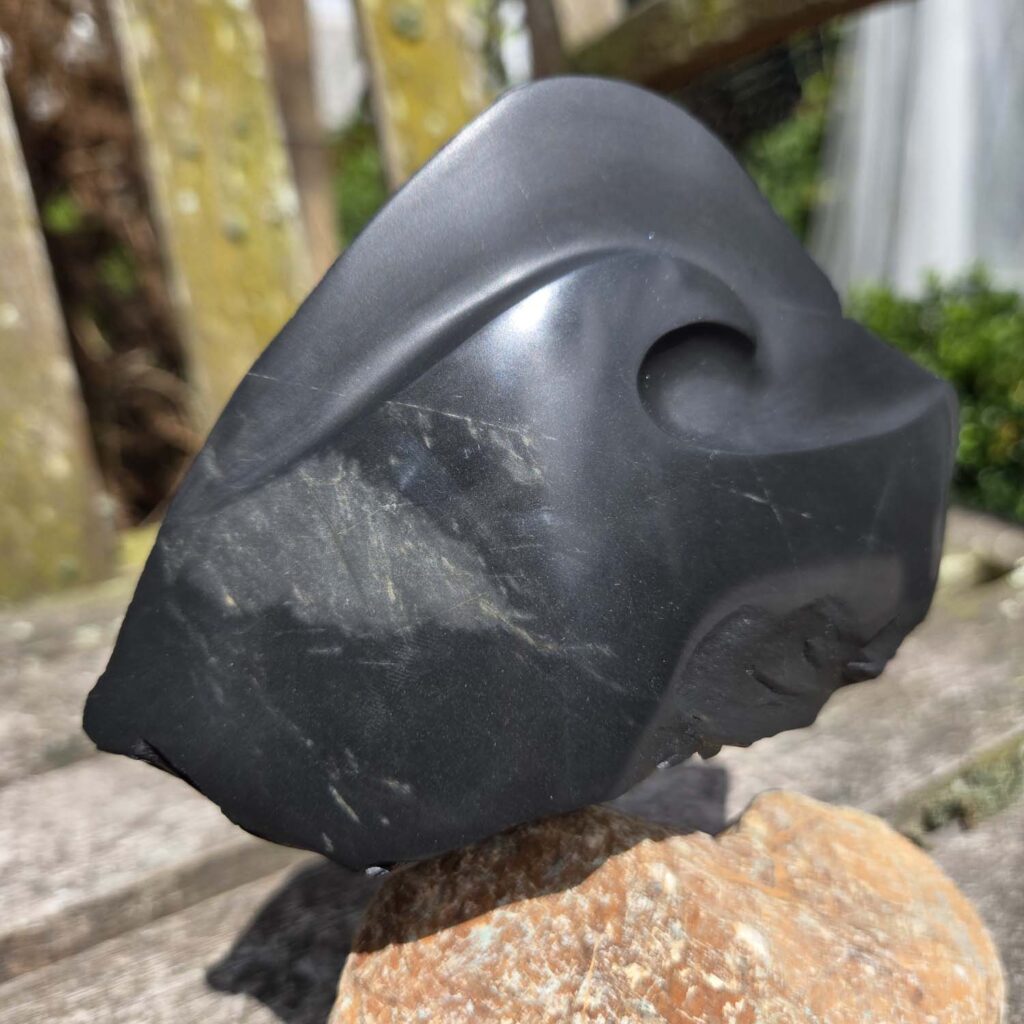
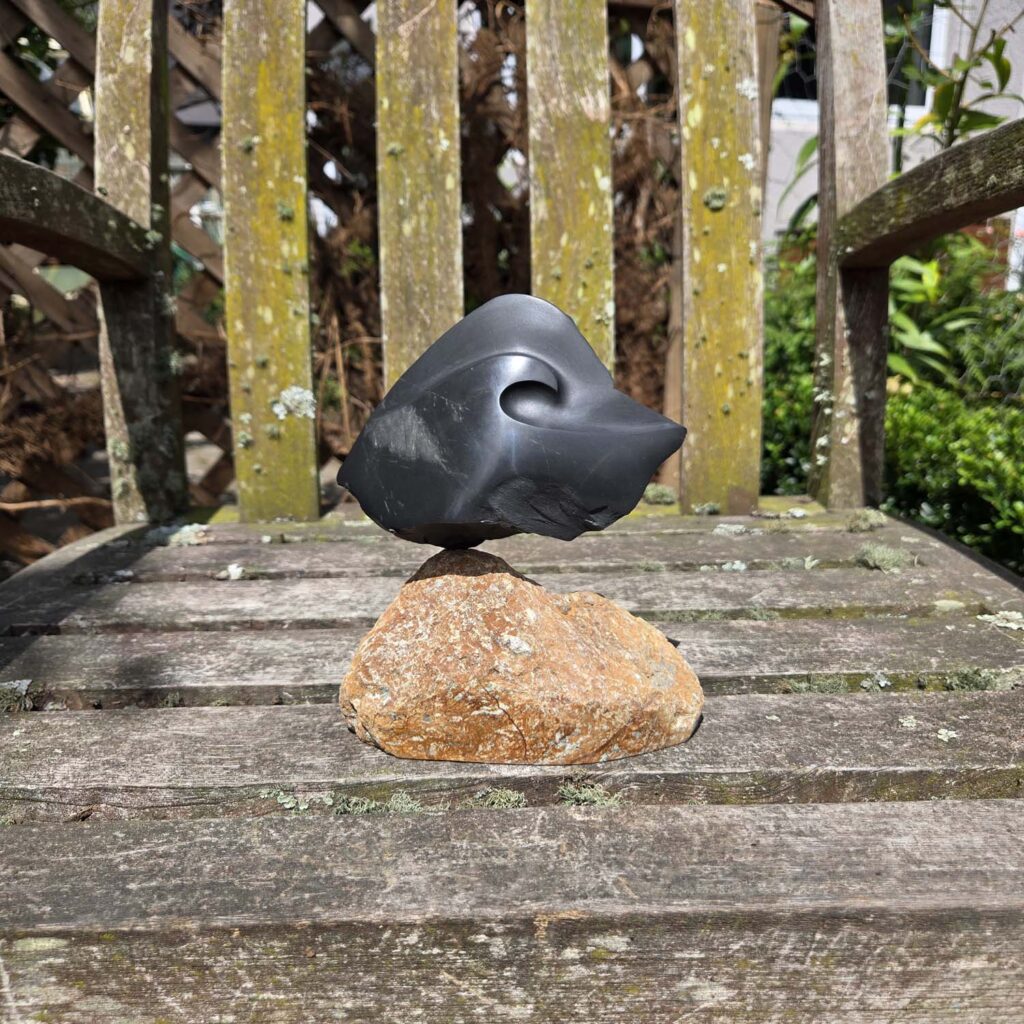
Argillite is a dark grey mudstone, very fine-grained, and this piece from South Westland carries depth and weight. Its colour holds the seriousness of stone shaped over time by pressure and water. The wave carved into its face symbolises movement, power, and the constant rhythm of the ocean. The mountainous form behind it represents endurance, grounding, and permanence.
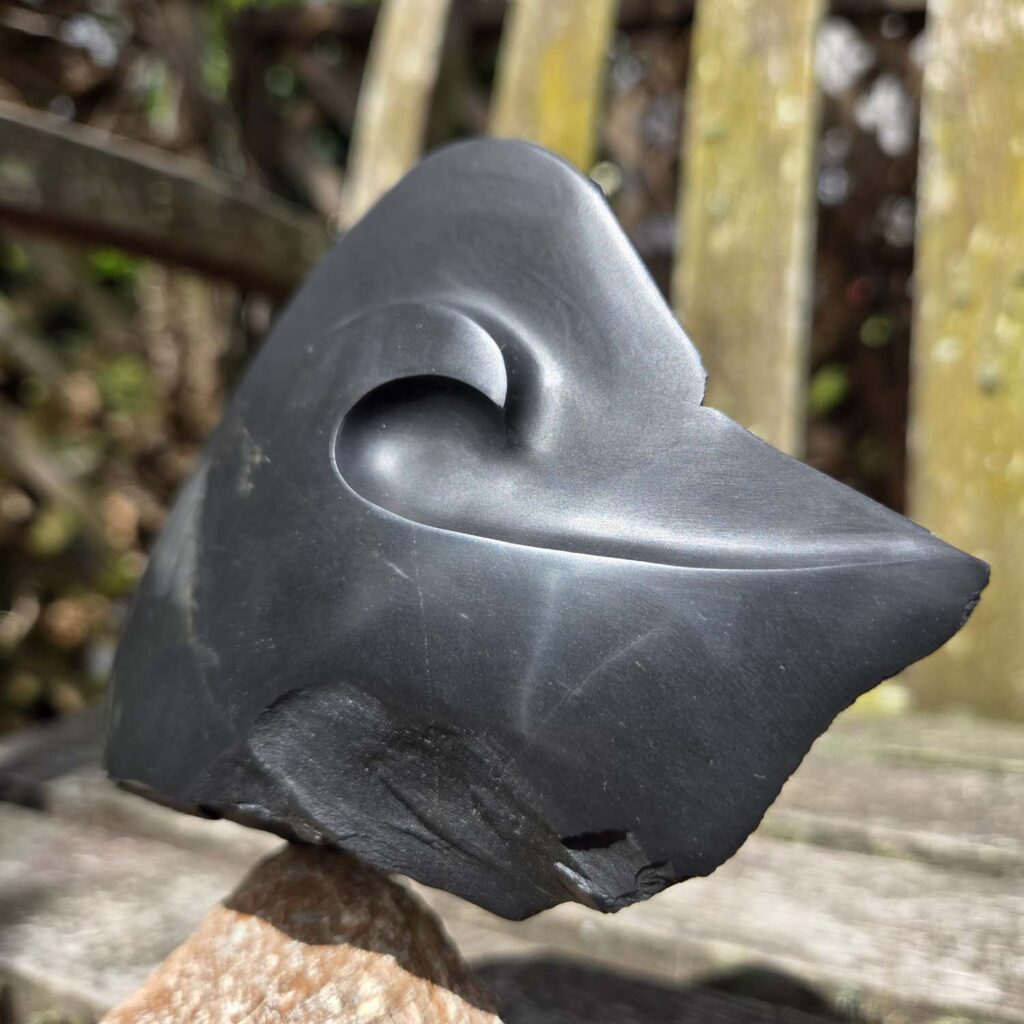
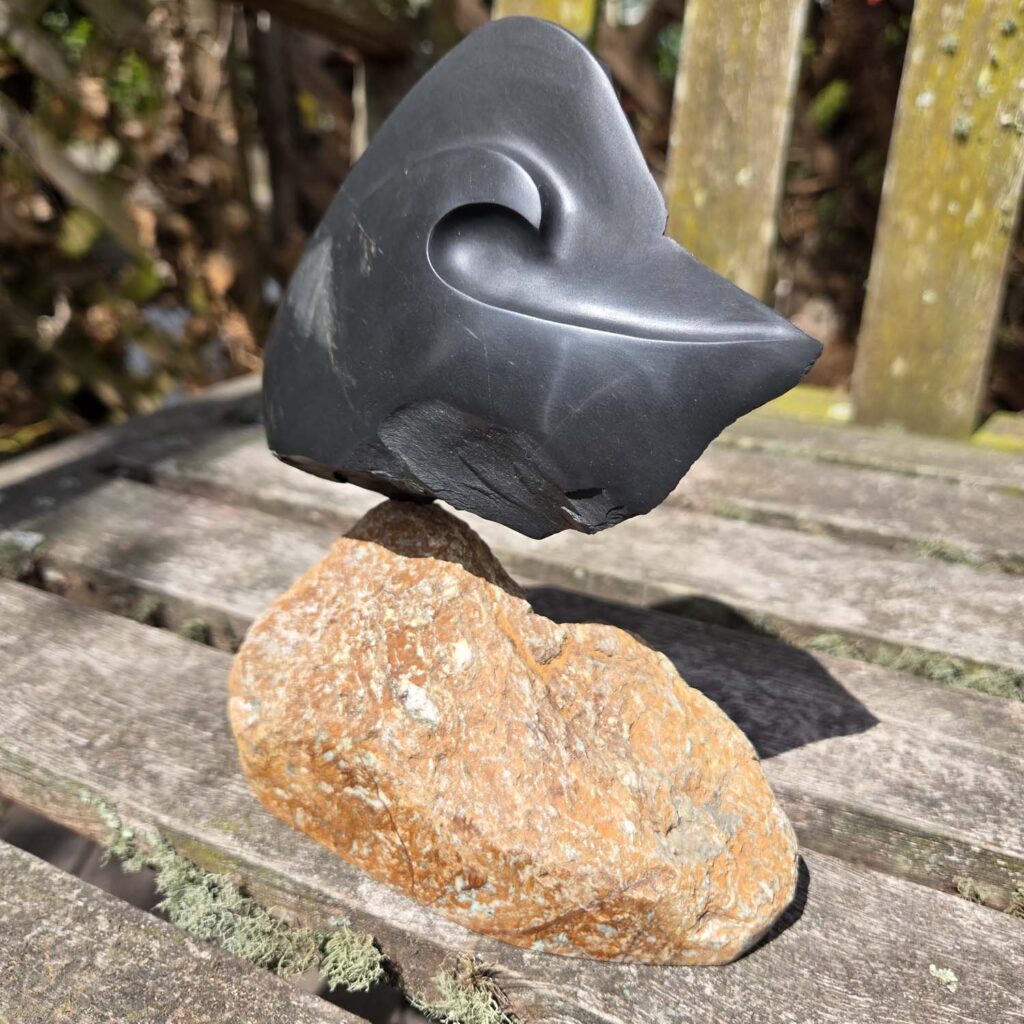
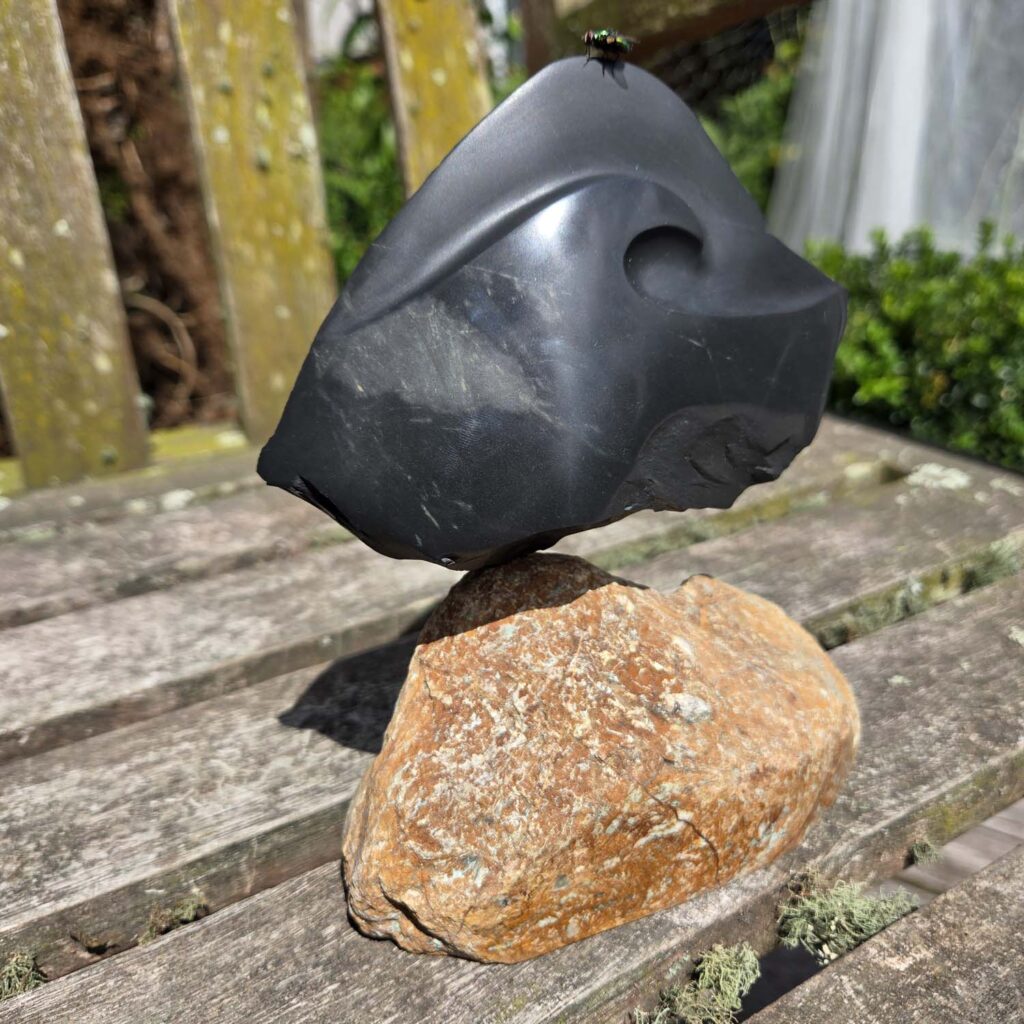
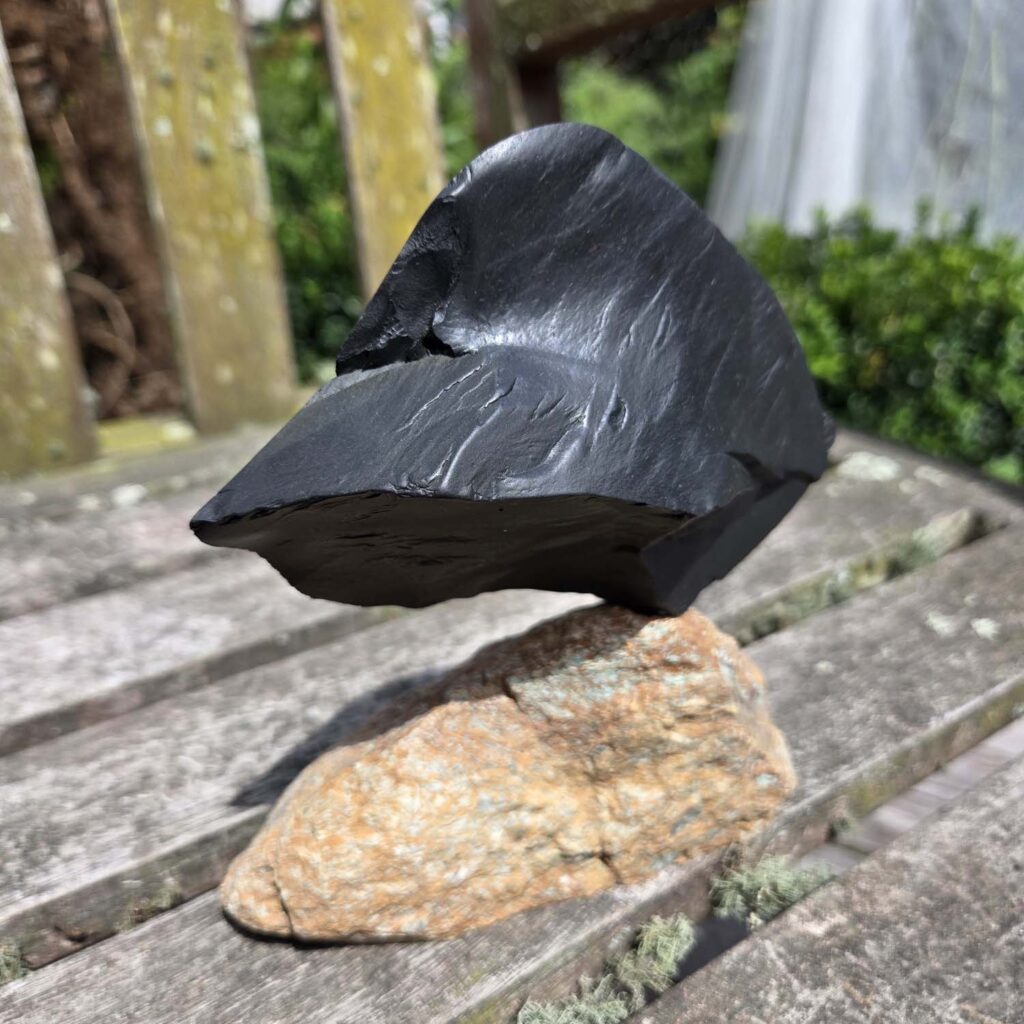
Set on a brown, earthy base stone, the sculpture stands with quiet strength. The base has a warm tan tone that contrasts with the cool grey of the argillite, anchoring the piece and emphasising the meeting of land and sea.
This sculpture is significant to me because it came from relationship — a stone gifted, a trust placed in my hands. It became a study of place. It reflects the dramatic landscapes of South Westland, where mountains fall sharply into the ocean. Carving it felt like honouring that tension and harmony at the same time.